In the industrial outskirts of Abeokuta, the morning air hangs heavy with the scent of starch and wet earth. Inside a modest processing shed, women in hairnets feed cassava tubers into a humming stainless-steel grater.
A year ago, most of this harvest would have been trucked out raw – sold cheaply, margins captured elsewhere. Today, it is dried, milled, fortified, packaged and branded for supermarket shelves in Lagos and for shipment to Europe’s ethnic food markets. The transformation is not cosmetic. It is structural. And it signals the next logical chapter in Nigeria’s Go Local story: value addition at scale.
For years, Nigeria has been the world’s largest producer of cassava. According to the Food and Agriculture Organisation (FAO), the country produces more than 60 million metric tonnes annually. Yet export earnings from cassava derivatives remain marginal compared with Thailand or Vietnam, both of which have built globally competitive starch and ethanol industries. The paradox is familiar across sectors: abundant raw output, limited processing depth, constrained export sophistication.
That is beginning to shift – not through rhetoric, but through necessity.

The Central Bank’s push for import substitution in recent years, combined with foreign exchange volatility and rising logistics costs, has forced manufacturers to rethink sourcing. Multinationals that once imported starch, sweeteners, or packaging materials are increasingly scouting local suppliers. At the same time, global buyers – from European gluten-free food retailers to pharmaceutical ingredient companies – are searching for diversified supply chains amid geopolitical fragmentation.
This confluence creates a rare strategic window: Nigeria can move up the value chain if it coordinates infrastructure, standards, and finance.
The cassava shed in Abeokuta is one node in that ecosystem. Its owner, a former banker turned agro-entrepreneur, secured concessional funding under the Central Bank of Nigeria (CBN’s) Anchor Borrowers’ Programme, which has supported millions of smallholder farmers since its launch in 2015. With that capital, she invested in flash dryers and quality control labs. Her margins improved not simply because she processed cassava, but because she achieved export-grade consistency.
Read also: Investors still bet big on T-bills post-MPC rate cut
The story is replicating elsewhere.

In Kano, tomato farmers have long watched as seasonal gluts led to waste while Nigeria simultaneously imported tomato paste from Asia. The National Bureau of Statistics (NBS) has repeatedly highlighted the scale of food import bills – running into billions of dollars annually. But recent investments in tomato processing plants, including public-private partnerships, are narrowing that gap. A modern paste facility can absorb thousands of tonnes per day, stabilising farm-gate prices while displacing imports.
The logic extends beyond food.
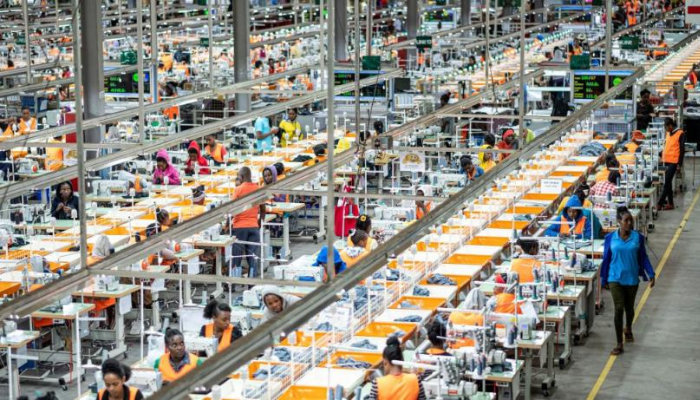
In Kaduna, textile revival efforts are quietly re-emerging. Nigeria once boasted a thriving cotton-textile-garment industry employing hundreds of thousands. Deindustrialisation hollowed it out. Yet the global fashion industry is under pressure to shorten supply chains and improve traceability. With the right certification frameworks and energy reliability, cotton grown in Katsina could be spun, woven, and stitched domestically before export — capturing multiple layers of value rather than exporting lint alone.
Energy, of course, remains the constraint threading through all of this. Processing requires reliable power. Nigeria’s electricity generation still averages roughly 4,000–5,000 megawatts for a population exceeding 200 million, according to data from the Nigerian Electricity Regulatory Commission (NERC). Manufacturers compensate with diesel generators, eroding competitiveness. However, decentralised power reforms and embedded generation models at the state level are gradually offering industrial clusters more stable supply.
The most compelling Go Local story, then, is not about a single sector. It is about industrial clusters.
Take the example of rice. Nigeria is Africa’s largest rice producer, yet smuggling and quality perception issues have long undermined domestic brands. Over the past five years, integrated mills in states like Kebbi and Ebonyi have invested in modern polishing, packaging, and branding. The result is rice that competes visually and qualitatively with imports. According to the United States Department of Agriculture (USDA), Nigeria’s rice production has increased significantly over the past decade, even as import restrictions tightened.
But the deeper lesson lies in ecosystem design. Where farmers, millers, packaging suppliers, transporters and retailers operate within coordinated corridors, leakages decline and margins expand. Value addition becomes cumulative.
Mining offers another frontier. Nigeria possesses commercially viable deposits of lithium, barite, limestone and gold. Global demand for lithium — driven by electric vehicle batteries — is projected to surge over the next decade, according to the International Energy Agency (IEA). Rather than exporting raw ore, the opportunity lies in beneficiation: crushing, refining, and eventually assembling battery components domestically. Several state governments have announced lithium processing initiatives, though execution remains uneven. If structured properly, this could mirror Indonesia’s strategy of banning raw nickel exports to force domestic smelting – a policy that multiplied export earnings.
Yet industrial policy without human capital is hollow. The untold dimension of Go Local is skills upgrading. Value addition requires technicians, quality assurance managers, logistics planners, export compliance officers. Nigeria’s demographic dividend – with a median age under 19, according to the World Bank — is both an opportunity and a risk. If aligned with vocational training linked to industrial clusters, it becomes a productivity engine. If not, it remains latent.
Finance is the other axis. Development finance institutions, including the African Development Bank (AfDB), have repeatedly emphasised agro-industrial processing zones as a pathway to structural transformation. These zones pool infrastructure – power, water, roads – reducing the cost of entry for small and medium enterprises. Nigeria has announced several such zones in partnership with multilateral lenders. The question is less about blueprint and more about disciplined implementation.
Back in Abeokuta, the entrepreneur watches as pallets of fortified cassava flour are shrink-wrapped for dispatch. She speaks not in abstractions about GDP, but about contracts. A European buyer requires consistent moisture levels, traceability documentation, and hazard analysis certification. Meeting those standards unlocked a higher price point. That incremental margin paid for a second drying line. That line hired 20 more workers. Structural transformation often begins this way: granular, technical, iterative.
The macroeconomic stakes are significant. According to the World Bank, countries that diversify exports and increase the complexity of goods tend to achieve more stable and higher long-term growth. Nigeria’s export basket remains heavily concentrated in crude oil. Expanding non-oil processed exports would not only generate foreign exchange but also dampen vulnerability to commodity price shocks.
The next logical Go Local story, therefore, is a narrative of compounding capability. It is about connecting farmers to processors, processors to exporters, exporters to global standards regimes. It is about energy reform intersecting with industrial clustering. It is about moving from volume to value.
There is no shortage of raw materials in Nigeria. The constraint has always been conversion – technological, institutional, financial. But across agro-processing sheds, revived textile mills, emerging lithium refineries and rice polishing lines, the outlines of a different model are visible.
In that sense, Go Local is less a slogan than a strategic doctrine. It argues that GDP growth and foreign exchange earnings are not extracted from the soil alone, but engineered along value chains. The women in Abeokuta are not merely processing cassava. They are demonstrating how a country moves from potential to performance – one calibrated, standards-compliant shipment at a time.