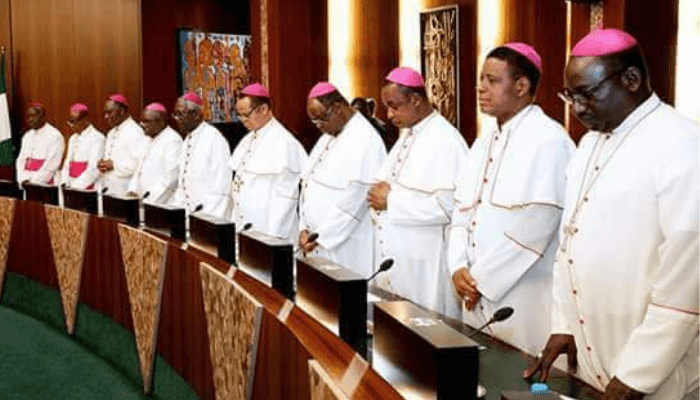
The Catholic Bishops’ Conference of Nigeria (CBCN) has raised the alarm over worsening insecurity, economic sabotage, poor leadership, and electoral malpractice in Nigeria, warning that the country is facing systemic challenges that threaten its stability and democratic legitimacy.
In a communiqué issued at the end of its First Plenary Meeting held at the Catholic Secretariat of Nigeria in Abuja from February 19 to 26, 2026, the bishops said that Nigeria continued to experience “senseless massacre, mass burials, endless tears, and grief,” despite ongoing security interventions by the government.
While acknowledging President Bola Ahmed Tinubu’s declaration of a national security emergency and increased recruitment of security personnel, the bishops noted that violent attacks persist across several parts of the country, particularly in the northern and Middle Belt regions.
They cited the killing of over 200 persons in Woro and Nuku communities in Kwara State, as well as repeated attacks on students, worshippers and farmers, lamenting that many citizens remain displaced and unable to pursue their livelihoods.

Read also: Catholic Bishops enjoin Nigerians to collectively work for social transformation
“Gunmen operate brazenly, freely and unchallenged,” the bishops said, urging governments at all levels to invest in modern surveillance technology, strengthen intelligence gathering, and ensure the prompt prosecution of terrorists, bandits and their sponsors.
The bishops also expressed concern over what they described as the public perception of government complicity, especially when suspected terrorists are not prosecuted promptly or are granted pardon and reintegrated into society.
On the economic front, the CBCN decried widespread illegal mining, oil bunkering and organised criminal activities, which it said have deprived the country of trillions of naira in revenue and fueled insecurity.
The bishops warned that proceeds from illegal mining of resources such as gold and lithium are being used to finance terrorist activities, while the government continues to accumulate debt without commensurate improvements in citizens’ welfare.

They urged authorities to deploy drones and artificial intelligence to monitor mining sites and curb illegal activities, and to provide security and subsidies to farmers instead of relying on food importation, which they said undermines local agricultural production.
The CBCN identified poor leadership and corruption as major drivers of Nigeria’s economic decline, insecurity, unemployment, infrastructural decay and widespread poverty.
“We observe that a major cause of our problem as a nation is poor leadership and the wrong idea of politics,” the bishops said, adding that leadership in the country is often seen as an avenue for illicit enrichment rather than service to the people.
They warned that manipulation of electoral institutions, including the electoral commission, security agencies and judiciary, undermines democracy and public trust.
The bishops expressed concern over declining voter turnout, noting that only 23 percent of registered voters participated in the 2023 general elections, while turnout in recent Federal Capital Territory elections dropped to just seven percent.
Describing the trend as dangerous for democratic legitimacy, the CBCN urged the National Assembly to strengthen electoral reforms, including mandatory electronic transmission of election results from polling units to prevent manipulation.
The bishops stressed that restoring confidence in the electoral process is critical to reversing voter apathy and ensuring credible leadership.
Despite the challenges, the CBCN expressed optimism that Nigeria can overcome its difficulties, urging leaders and citizens alike to work toward the common good.
“A better Nigeria is possible, and we enjoin everyone to contribute to building our nation,” the communiqué stated.