The freedom of movement is a perceived fundamental human right globally, and different cultures interpret this differently. However, no culture has yet to ascribe Public Transport (PT) as a basic human right. Large cities and developed economies with their rapid urbanisation, population growth, modern lifestyles, and economic conditions demand an effective, accessible and efficient system.
PT services are delivered both by private and public organisations, and (regardless of the party that delivers them) require substantial investment and usually attract high operating costs. Any potential PT service supplier has to consider various factors including service productivity and efficiency, while the government has to ensure that supplier meets the regulations for quality, performance, safety and security.
But PT is one of the most commonly used transport modes that provide the affordable mobility required in modern-day societies and is a key structure for the transformation of any city by governments of any society and must be included as a front burner in the improvement and value addition of the lives of its citizens.
Public transportation enables people to move along designated routes at minimum affordable cost and it is also known as public transit or mass transit and helps in the transportation of passengers by group travel system and is available for use by the general public.
It is typically managed on a schedule and operates on established routes that charges a certain posted fee for each trip. Some Examples of public transport systems include city buses, trolleybuses, trams (or light rail) and passenger trains, rapid transit (metro/subway/underground, etc.) and ferries.

Public transport between cities is dominated by airlines, coaches, ferries and intercity rail. High-speed rail networks are rapidly expanding across continents worldwide delivering fast, efficient mobility to numerous nations every day: Currently in operation in more than 20 countries such as the UK, France, Germany, Belgium, Spain, Italy, Japan, and China.
Although most public transport systems run along fixed routes with a planned set of embarkation/disembarkation points, with prearranged timetables and the most frequent services running with programmed and arranged headway, such as every 15, 25 or 30 minutes and it’s not usually scheduled for any specific time of the day.
Furthermore, urbanisation, and the increase in economic activity, are amongst factors contributing to the increase in transport demand in Nigeria. Since mobility is an essential part of human life, especially in cities, the government has no option but to ensure that the modern infrastructures are in place, and subsequently must be accountable for the regulation of the industry.
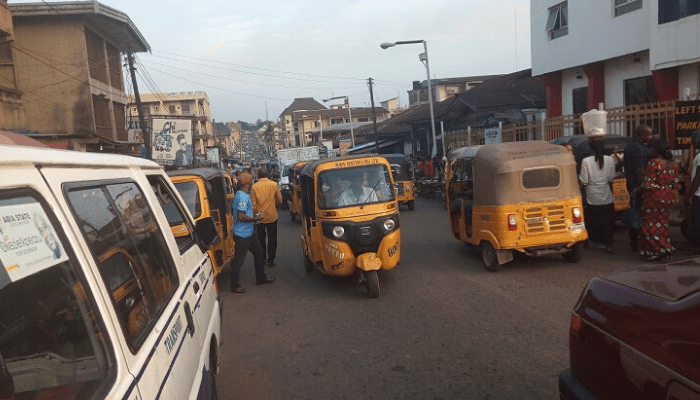
The other challenges facing the industry are the availability of very poor standard of public transport infrastructures, very large number of bad and untarred roads, poor and unplanned road networks, use of unsafe and rickety vehicles by road transport operators, lack of professionals and trained specialists in the management of the sector to inject new ideas and innovation to the system and last but not the least is lack of modern-day technology system needed to drive greater efficiency and productivity in the sector.
According to the Infrastructure Concession Regulatory Commission, Nigeria has about 195,000km of road network out of which about 32,000km are federal roads and 31,000km are state roads. In total, only about 60,000km are paved leaving 135,000km of road untarred and a large proportion of the paved roads are in bad conditions due to poor maintenance.

Public-Private Partnership intervention is possible (in theory) since Nigeria’s President Muhammadu Buhari on 25th January 2019 signed the 10-page Executive Order No.007 known as the Companies Income Tax (Road Infrastructure Development and Refurbishment Investment Tax Credit Scheme) Order, 2019. 007 describes Public-Private Partnership intervention to enable the government to leverage private sector participation.
To the public, however, the government still needs to be seen setting higher standards and restructuring the way National Union of Road Transport Workers (NURTW) is run. Urgent intervention in the way politicians are seen to be hijacking the purpose of the union for political gangsterism, with NURTW perceived to be a structure of extorting money unjustly from vehicles operators and furthering costly political ambitions.
The NURTW was originally established to be an independent Nigerian trade union, serving the interests of transport workers and operators in the road sector. It calls for social stability for all workers and operators in the transport sector as defined in its constitution.
If NURTW is properly restructured, it will help block the revenue leakages currently being experienced in the sector. And help reposition the way public transport services are delivered in the nation. It will help in fast-tracking the acquisition of modern-day transport infrastructures; help improve the quality of transportation services which is a very fundamental factor in delivering the dividends of democracy to the Nigerian citizens.
Access to employment and the product markets necessary for the sustenance of the citizens requires the Nigerian government to create an enabling environment while demonstrating more commitment towards investing in the planning and development of PT services, amongst all the other basic amenities such as regular power supply, basic education, health care and nutrition.
These are all very important factors because 2019 saw life expectancy in Nigeria increase 0.58 percent (from 2018) to 54.49 years. An increase in the liveability standard of our society will make life more comfortable for citizens and will also attract local and foreign players to boost the industry and Nigeria’s economy.