The adoption of an effective technology-driven model and an accurate database could boost Nigeria’s agriculture as well as improve farmers’ chances of acquiring funding from development financial institutions (DFIs).
At BusinessDay’s Foundation Trade and Investment Series, themed ‘Innovative Capital Architecture for Resilient Agricultural Value Chain’ on Friday, industry players highlighted that, without a sustainable technology model and accurate databases, more farmers will struggle to secure funding from venture capital and financial institutions such as the Bank of Agriculture.
Sean De Cleene, senior global advisor, shared with policymakers, agribusiness players and financial institutions present at the convening how Malawi’s adoption of technology boosted its agricultural value chain significantly.
According to Cleene, who is also a global food systems expert, while it might be considered radical to fully adopt a technology-driven model in ensuring that farmers across borders have access to traceable funding, it is a viable solution to de-risk the value chain.

“I moved to Malawi in 2003 and it was this that kicked me into agriculture financing and de-risking agriculture. At the time, Malawi was coming off its third famine in six years,” he started.
But he said, his team saw a need to invest in agriculture and technology played a significant role.
“Through electronic financing, we deployed fingerprint technology out, originally out of South Africa so that large numbers of farmers across the country were able to use fingerprint technology linked to electronic bank transfer and fertiliser subsidies which at the time was seen as incredibly radical… but it worked and created significant efficiencies throughout the respective value chains it was deployed,” Cleene added.
Due to the fragmentation of smallholder farmers in the agric value chain, he said digital data utilisation is important in helping investors understand where to locate farmers and the kind of investment they need.
Looking ahead, Cleene said: “In 10 years, I hope that we have been able to de-risk and support the work smallholder farmers do in supporting their families and nation. This allows them to focus on food production.”

Adding to the conversation, Adeyemi Aduwo, chief finance officer, Sunbeth Global Concepts Limited, also stressed that an effective database makes it easier for investors to locate farmers, especially given Nigeria’s fragmented smallholder farmers’ associations.
“Aggregators are the bridge between smallholder farmers and investors. They play a significant part in sourcing finance for farmers,” he said.
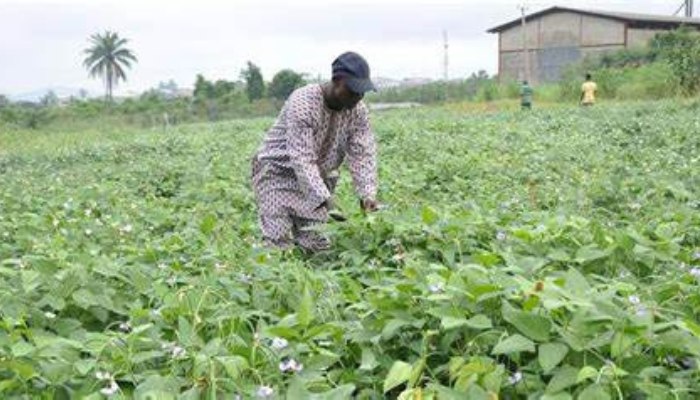
According to research, Nigeria’s roughly 38 million smallholder farmers, who produce 80 percent of the nation’s food, are heavily fragmented, operating on small, scattered, and often subsistence-level plots.
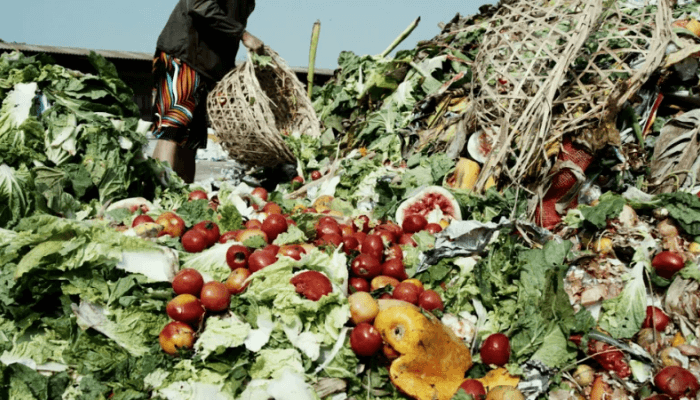
This fragmentation limits mechanisation, reduces economies of scale, causes 30–50 percent post-harvest losses, and hinders access to credit, markets, and modern technology.
For Jette Bierrum, Consul General Head of Trade & Economic Diplomacy, Denmark, Africa’s most populous nation is important in Denmark’s agricultural framework strategy.
She disclosed that Denmark has an African century strategy that was formally launched by the Danish government in 2024, with Nigeria standing out as one of the selected countries.
“Nigeria is defined as one out of four regional hubs on the African continent in that strategy. It goes across politics, economic diplomacy, development, finance, and all the trade collaborations we do across the sectors.”
Bierrum noted that building a resilient agriculture value chain requires finance models that bring together public institutions.