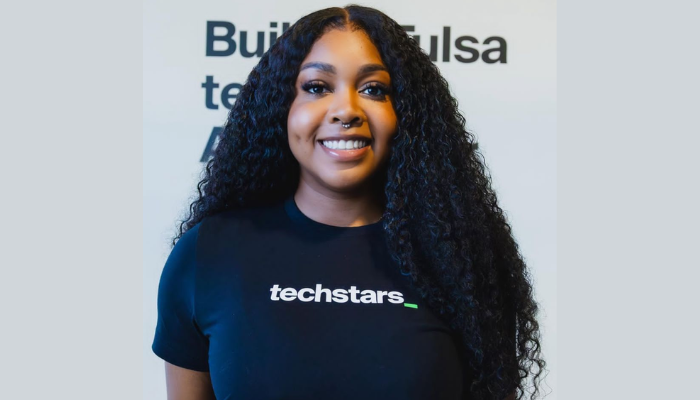
In a world where beauty often feels out of reach, Osazomon Imarenezor is redefining the landscape with skincare solutions grounded in science and powered by data.
As the founder of Osaz, a pioneering beauty tech company, she is not only innovating skincare but also harnessing AI to develop products specifically for melanin-rich skin. Her journey spans the bustling streets of Lagos and the cutting-edge labs of Chicago.
Osaz’s story began in high school, where Osazomon would sneak pH strips from the chemistry lab to create her own leave-in conditioner. As one of the top students in her district, she was determined to look her best. “I was just trying to figure it out,” she recalls with a smile. “Other girls would ask how I kept my hair flourishing. At that age? I was committed to standing out.” This blend of curiosity and self-care ignited her passion for developing skincare solutions for those often overlooked by mainstream brands.
“From there, I started researching skin cells and got published in 2015,” she says, her voice quickening with enthusiasm.

“I also joined an accelerator program and, with $10,000, launched my first beauty tech startup, Slay Beauty—a booking app for beauty services in 2016.”
However, as her business began to lose traction, Osaz faced the dual challenge of juggling her PhD and securing funding. “It was tough,” she admits. “I was doing everything I could, but when the funding didn’t come? That was a turning point.”
Realising she needed to pivot, she sought to create something more impactful.
“I wanted to do something that changed lives and, as a Nigerian, made me money,” she laughs. This led her to compare West African skin diseases with American ones over the last 20 years, revealing a significant gap: a lack of data on melanin-rich skin. As a PhD student in computational skin biology and a sales engineer, Osaz found herself at the intersection of science, technology, and business. Living in beauty hubs like Chicago and Miami, she gained insights into the complexities of beauty standards for people of colour, further sharpening her perspective.
“I paid attention to the numbers,” she said, leaning in. “There was limited data for melanin-rich skin, and that bothered me.” She recalled the gaps: “I noticed a lack of sunscreens catering to a wide range of skin tones, even lighter skin tones of people of colour. No one was addressing that.”

Her excitement grew as she reflected on demographic shifts in the U.S. “More people of colour were going to populate America, and it clicked,” she said, laughter in her voice. “Why not create something that would grow with the demographic while also saving it?” The logic seemed simple, but the path to creation would prove challenging.
Incorporating artificial intelligence became her next focus. “I tried a skincare API and thought it was really cool, so I decided to implement it in my own business,” she recalls.
“I didn’t overthink it at the time, but I’d already grown comfortable using the technology.” This experimentation would later shape the AI-driven solutions that now define her brand. To stand out in an industry already witnessing AI innovations like Sephora’s Smart Skin Scan and Unilever’s Beauty Hub Pro, Osaz focused on a more personalised approach. “I created a solution offering medical assessments, shade matching, and customised ingredient lists,” she explains.
What further refines the Osaz brand is its reliance on data—specifically data on skin of colour, a sector where information is scarce. “I saw a company doing something similar, but I knew their target audience wasn’t people of colour,” Osaz explains. The data used to train their models was primarily for non-melanin-rich skin. “Even the data that exists for non-persons of colour isn’t well annotated or focused on skin health.” This realisation, coupled with her passion for beauty, deepened her resolve to fill that gap.
The Osaz model is specifically trained on populations with melanin-rich skin, including Asian, Black, and Latin Americans. Osazomon explains how the model works: “It takes a person’s medical assessment from a dermatologist, analyses it, and generates solutions tailored to their skin type and lifestyle. From that alone, you can determine which ingredients aren’t necessary—whether someone has drier skin, keloids, or eczema. For eczema, they might need something more hydrating.”
In addition to dermatologist assessments, the model also draws from a variety of sources such as clinical studies, dermatology research, Reddit reviews, and feedback from users discussing their skin and the products they use.
She also highlights the importance of individual preferences: “There are key things someone knows about their skin versus what the model picks up. For instance, if someone with oily skin doesn’t like using oily sunscreen, we create one with less oil. Your skincare needs are also tied to your environment—a sunscreen that works in Australia likely wouldn’t be suitable for Alaska. So the A.I model helps us gather those active ingredients and create a bespoke solution.” This attention to personal needs underscores the precision of her approach.
Available on the Osaz main webpage are three products, with the Osaz Tinted Sunscreen currently for sale; the others are sold out. Osazomon explains, “We only allow people to purchase one product because when they subscribe, they receive a 10% discount and gain access to their personalised products.”
This strategy allows the business to effectively gauge customer interest. Consumers who subscribe but don’t make a purchase still benefit by participating in surveys, gaining valuable insights about their skin, which equips them to make more informed skin care decisions. “We understand that not everyone can afford a dermatologist, so the survey is free; we don’t pass that charge on to the customer. We firmly believe that such information is something everyone should have.”
Osaz avoids selling serums and cleansers, focusing instead on the “holy trinity” of dermatology: retinoic acid, hyperpigmentation cream with antioxidants, and sunscreen. These core products target common skin concerns like hyperpigmentation and wrinkling, often caused by sun damage and aging.
Osazomon believes in cutting through the noise of the skincare market. “There are too many distractions—too many products you don’t need. A 15-step routine isn’t necessary. By personalising these three essentials, we eliminate the fluff and address individual skin needs, especially in cities like Lagos, New York, and Miami.”
They also have sunscreen products for men and younger demographics in the pipeline. “For the younger ones, we also provide Adapalene, which is a milder option for kids with acne. But right now, the focus is on women,” she explains.
Osazomon’s dedication to providing skincare solutions for the younger generation, products she lacked in her own youth, reflects her unwavering commitment to her work. For her, this isn’t just about business; it’s a personal mission. “I believe that any good thing that’s meant to come my way will stem from this,” she said.
Being one of the few Black women in tech, particularly with a startup that focuses on computer vision, health diagnostics, formulations, and software, Osazomon understands the challenges she faces. Only 0.35% of venture capital funding in America goes to Black women, and when further narrowed by age group, the numbers become even more daunting.
In the field of generative AI, no Black woman has ever raised more than a million dollars. But Osaz hopes to change that.
“By God’s grace, we hope to change that narrative. It’s something I don’t take lightly. The pressure is on, but I’m just having fun with it.”
Osaz has been operating in Nigeria since Osazomon moved from the United States to Lagos in March. With new partners on board helping refine the brand’s public voice and target audience, Osazomon explains that the ideal demographic is the 25 to 35 age group.
However, she is also aiming to include younger influencers, particularly younger athletes who want to look good and feel good while doing it. “We completely focused on growing in communities and figuring where thier needs are and be a great provider similar to the things we’re doing in the U.S and Nigeria.
In redefining beauty standards, Osazomon Imarenezor is not just building a beauty-tech company; she’s creating a movement that places science, data, and melanin-rich skin at the forefront.
Her approach to skincare is personal, thoughtful, and disruptive, reflecting her desire to serve communities that have long been overlooked by the industry. With a blend of cutting-edge AI and deep cultural insight, Osaz is poised to change the landscape of beauty—one personalised solution at a time. And as Osazomon navigates the challenges of funding, technology, and entrepreneurship, her unwavering commitment to representation and inclusivity continues to inspire. She’s not just having fun with it; she’s shaping the future of beauty.