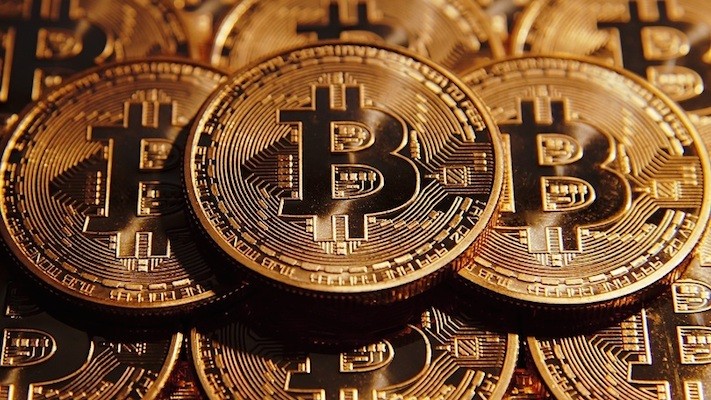
After the world’s largest cryptocurrency by capitalisation, bitcoin erased the all-time high it set in 2017 and set a new record at $24,000 a few days to the end of December, it retreated by nearly 6 percent to $22,000 leading to speculations that it could repeat the crash of three years ago.
That view may be short-lived because as of the time of writing this article, the price of one bitcoin is exchanging hands at $23,546 representing a 3.81 percent 24-hour growth rate, according to data from Coinmarketcap.
Quick recoveries have characterised the run to the new all-time high and could possibly lend credence to views that bitcoin has put the worst of 2018 when it crashed from about $19,000 to around $3,000, behind it.
“Many of our clients have been expecting for bitcoin to surpass its all-time high of $20,00 given the recent news from major institutional players like SGX and Mass Mutual openly endorsing bitcoin,” Scott Freeman, co-founder, and partner at JST said recently. “While this is a major milestone for this nascent asset class, like retail, institutional, and blue-chip investors alike allocate more capital to this space it would not be surprising to see other cons follow in BTC’s footsteps and for this upward trajectory to be sustained into 2021.”

The surge in the price of bitcoin has indeed rubbed off on other coins in the market. Ethereum, Litecoin, and Chainlink are some of the coins which have recorded new all-time highs in 2020 partly influenced by the growing confidence in the use case of bitcoin.
What then is driving the price of bitcoin in 2020?
Institutional participation
One of the most notable achievements for bitcoin is the transition of institutional investors from interested parties to active participants. Over the years, stakeholders in the cryptocurrency space have said that the involvement of global institutions in the market will help build investors’ confidence, grow more use cases and consumer adoption.
Paypal, the world’s largest payment company entered the cryptocurrency market in October by announcing that its users will now be able to buy and sell bitcoin and other cryptocurrencies using their PayPal accounts. Those virtual coins could then be used to buy things from the 26 million sellers which accept PayPal.

After PayPal, came a flurry of other financial institutions from MicroStrategy and Grayscale to JPMorgan and Goldman Sachs helping bitcoin to solidify its place in investment portfolios as the asset to hold as a hedge against inflation and currency devaluation.
COVID-19 pandemic
In a year in which many countries will like to forget in a hurry due to the spread of the COVID-19 pandemic which exposed the underpants of the economies of many countries, investors in the cryptocurrency market would most likely remember very fondly.
The COVID-19 which became a pandemic forced nearly every economy and the global financial system to shut down. Banks could not carry out banking activities efficiently, hence businesses and fiat-based investment assets suffered. Business owners and investors became desperate to move funds to financial assets considered safe. During the period, demand for gold as an asset grew but bitcoin grew even higher because it was possible to move it from one to another and also use it to make transactions, unlike gold.
“After being a wasteland since the infamous bull run of late 2017, crypto, and bitcoin in particular, are back,” Ayush Ansal, CEO of the hedge fund, Crimson Black Capital. “The COVID-19 pandemic has almost certainly contributed to the rebound in bitcoin. It has changed the order of things and that resonates with many investors right now.”
High inflation in emerging countries
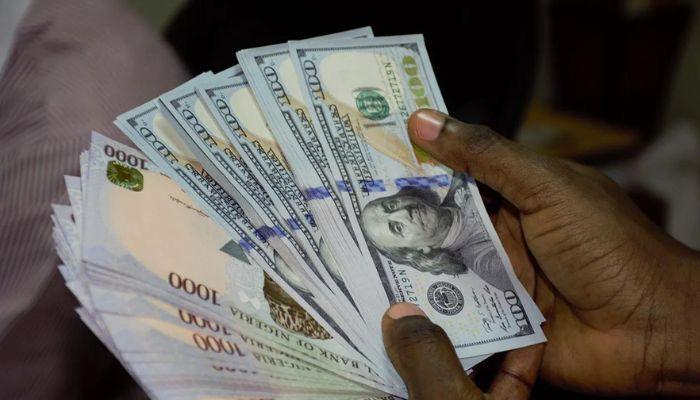
One of the major cryptocurrency activities came from countries grappling with high inflation and currency devaluation. For instance, in Nigeria where this is the case, the country emerged the second largest in terms of bitcoins traded next to the US on peer-to-peer marketplace Paxful.
Another data from Usefultulips shows that the country leads Africa in peer-to-peer lending in 2020, posting monthly PSP volumes of between $25.8 million, followed by South Africa and Kenya respectively posting about $8.2 million and $7.7 million monthly. Until recently, South Africa was battling with high inflation which led to a recession in 2020.
At a December 2020 meeting with reporters, Changpeng Zhao founder and CEO of Binance said research by the company has found a correlation between rising cryptocurrency activities and countries with high inflation and currency devaluation. Its research noticed significant spikes in the countries with high inflation most of whom were from emerging markets.
Changing regulatory disposition
The cryptocurrency market has come a long way in its relationship with regulatory authorities. Prior to 2020, the news used to be dominated by countries like China banning activities of exchanges and the Central Bank of Nigeria warning bank customers to stay away and threatening sanctions for banks that get involved in the market.
The narrative is starting to change gradually. Although the relationship is far from affectionate, it is more tolerant in 2020 to the extent that some central banks are giving serious consideration to creating their own cryptocurrencies known as Central Bank Digital Currency (CBDC).
Earlier in December, Michael Corbat, Citigroup CEO said his bank is helping governments “around the world” in creating sovereign digital currencies or CBDC. He describe the coming of CBDC as an “inevitable” development in the future of money.
While countries like Nigeria may not be actively desiring a CBDC, they are beginning to come around to the need for a regulatory framework for the cryptocurrency market. The Nigerian Securities and Exchange Commission (SEC) in September released a document in which it classified cryptocurrencies as securities and declared that it has the power to regulate the market.
Like institutional participation, experts say regulators’ involvement in the market gives investors a high level of confidence that their funds are protected. It also helps create some sanity by which entities that do not meet set standards are shown the door. Apart from imparting the price of bitcoin it also opens opportunities for the cryptocurrency to play an integral role in day-to-day transactions, a space which has eluded it for a long time.