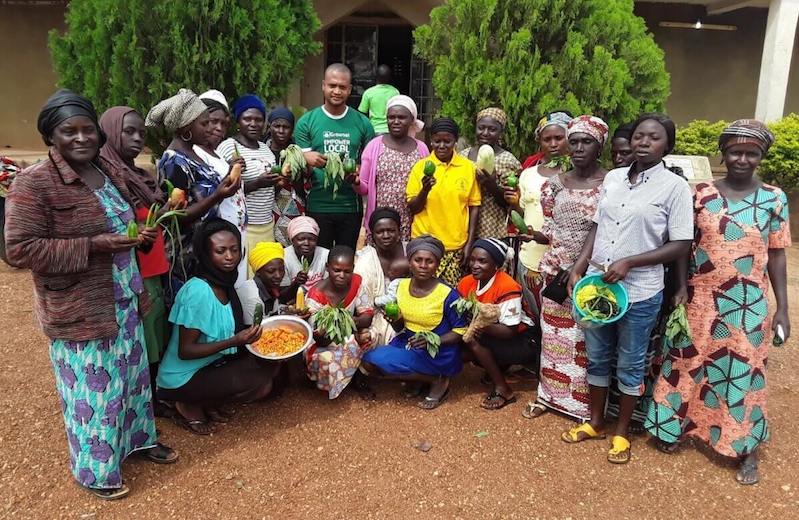
To ensure that Nigeria’s expectations from its agricultural sector crystallise and support the current diversification drive of the government, Growsel – a leading agricultural crowdfunding organisation is repositioning to support smallholder farmers with more finance.
To do this, the organisation recently registered its Growsel Microfunds Inc as a non-profit in the United States, to lift more smallholder farmers in Nigeria and other developing countries out of poverty by connecting them to global lenders.
As a result, Growsel is now adopting a global strategy in its efforts to attract the needed support and finance to empower smallholder farmers in developing countries. The organisation intends to leverage on donations and grants to aid its operations.
According to a statement made available to BusinessDay, the social impact model is expected to strengthen Growsel’s global crowdfunding initiative and further position it for attainment of at least eight of the United Nation’s sustainable development goals (SDGs).

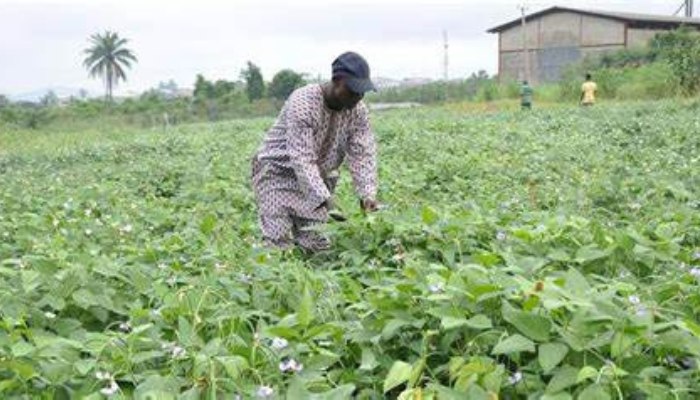
Francis Asinobi, field partner manager, Growsel recently disclosed that since 2016 when the organisation commenced operation, and now, it has evolved into a global lending platform positioned to connect underfinanced smallholder farmers to supporters from across the globe by providing them with access to capital via crowdfunding, farm inputs, and farm management solutions as well as training them on good agricultural practises.
“For two years or so, we have engaged seasoned professionals in testing various field models to define effective and sustainable processes to get an operating model that would deliver solutions to the challenges plaguing smallholder farmers in developing economies.
“Through various researches and experiments, we have gained a firsthand understanding of what works and what doesn’t work, when it comes to crowdfunding and smallholder farmers,” Asinobi said.
Agriculture has long been known to hold a great promise and has historically been Nigeria’s major source of revenue and foreign exchange.
In the 60’s and 70’s the country attained extra ordinary heights from its agricultural production as it generates bulk of its revenue. Then it all happened that oil was discovered in commercial quantity and Nigeria abandoned the sector.

But since the 2014 collapse of global oil crude prices at the international market, there has been renewed focus on the agricultural sector as the country attempts to diversify its economy away from oil.
The shift was necessitated by the growing statistics of youth unemployment and the vast agricultural potentials that can drive a more sustainable economic development in Africa’s most populous nation.
As a result, there is consensus across board that there is no better time to leverage the potentials of the agricultural sector than now, to diversify the economy and place it on the path of sustainable growth and development.
To do this, Nigeria must now to address the issue of finance, which is one of the factors that have continued to impede the sector.
Lack of access to adequate financing by farmers and other actors in the sector has remained a major impediment that prevents investments in basic farm inputs needed to raise productivity and sustain growth of the non-oil sector.
As a result, yields have failed to increase significantly, leading to pervasive hunger and poverty.
Similarly, agro entrepreneurs seeking to build businesses that could boost food production has continued to remain at a subsistence level in the country.
But with Growsel new strategy smallholder farmers and agro entrepreneurs in Nigeria and other developing countries can now have access to finance to boost their productivity and improve livelihoods.
“Initially, we came into the field excited about the impact we could make in the lives of million in Africa, who are mostly farmers living in extreme poverty. From then, our aim was to find the most effective model for delivering agricultural funding solutions, a mission we have pursued vigorously,” said Olabisi Abodunrin, communications lead at Growsel.
“Two years down the line, we are even more thrilled that, after numerous researches and field testing of various models, including the Commission-Based, Profit-Sharing and Out-Grower models, we can positively impact more lives and lift millions of farmers out of the poverty trap,” Abodunrin added.
Fielding questions from the press recently, Elcee McEdwards, chief communications officer, noted that social impact would be the game changer for Nigerian farmers who produce about 80 percent of the food consumed in Nigeria, but have little to nothing to cater for themselves and, by extension, their families.
“The Social Impact Model entails crowdfunding for smallholder farmers at zero interest rates through the support of lenders in developed economies who are willing to empower smallholder farmers to grow crops to support themselves and their families.
To further guarantee lenders principal, Growsel has developed a field partner program for screening and verification of farmers before registration, as well as off-taker arrangements to buy the farm produce from them at harvest, based on current farm prices, he said.
McEdwards added that the farm produce is sold to bulk buyers and off-takers, thereby guaranteeing commensurate economic returns for the farmers at the end of the planting cycle.
Growsel Microfunds Inc., operating through its crowdfunding platform www.growsel.org, continues to revolutionise the Nigerian agricultural space by leveraging on innovative technological solutions to tackle the unique challenges faced by underserved smallholder farmers in various local communities.
Furthermore, the nonprofit organization has unveiled its new identity elements and pay offline, ‘small seeds, big impact’ to drive home its course.
According to the organisation, the new logo represents global footprints of lenders, while the green tree indicates growth and cultivation by smallholder farmers.
Despite efforts targeted at increasing funding to the Nigeria’s agriculture sector, the role of commercial banks in financing the sector still remains minimal owing to the risky nature of the sector, low financial literacy among smallholder farmers and difficulty in determining their creditworthiness.
Successive governments and the Central Bank of Nigeria have introduced various financing initiatives to encourage banks to finance agric at lower interest rates.
But the government does not have enough resources to lend to all actors across the value chain, so the need to encourage organisations like Growsel to be at the forefront of agricultural financing can never be overemphasised.
Josephine Okojie