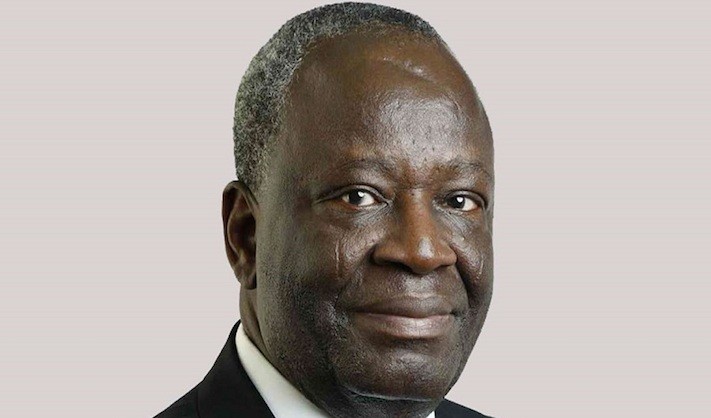
Ibrahim Agboola Gambari, former Minister of External Affairs and Nigeria’s ex-Permanent Representative to the United Nations, has warned that Africa is facing an unprecedented security crisis with no fewer than 1,000 insurgent groups now operating across the continent.
Gambari made the disclosure on Monday in Abuja while delivering his goodwill message at the maiden African Chiefs of Defence Staff Summit, organised by Nigeria’s Defence Headquarters, under the theme: “Combating Contemporary Threats to Regional Peace and Security in Africa: The Role of Strategic Defence Collaboration.”
Quoting a report by the African Research Network for Regional and Global Governance Innovation, at the Savannah Centre for Diplomacy, Democracy and Development in Abuja, Gambari said the rising number of insurgent groups underscores the continent’s worsening security landscape.
“There are now over 1,000 insurgent groups in Africa, and the number keeps rising.

“Regional Economic Communities, which were primarily established to drive economic integration, are now forced to devote much of their attention to terrorism, banditry, and insurgency. Unless urgent and practical measures are taken, Africa risks becoming a permanent war zone”, he said.
Gambari reminded participants that the idea of a joint continental security structure was first mooted in the late 1950s by Ghana’s first President, Kwame Nkrumah, who advocated for an African High Command.
According to him, the proposal was revisited at the 1964 OAU Council of Ministers meeting in Nigeria but never materialised.
“Nigeria later led regional security efforts through ECOWAS and its military wing, ECOMOG, which intervened in Liberia and Sierra Leone in the 1990s.
Read also: ‘Nigeria’s health system may cripple soon over health workers exodus’

“While those missions were seen as groundbreaking, Gambari noted that insecurity has only multiplied since then, spreading from the Sahel to Central, East, and even Southern Africa”, he explained
The former UN diplomat criticised the African Union (AU) for failing to operationalise its peace and security framework.
He noted that the African Standby Force, meant to be fully functional by 2015, remains largely theoretical, while the AU’s ambitious “Silencing the Guns by 2020” initiative has been postponed to 2030, even as conflicts rage in Sudan, South Sudan, the Democratic Republic of Congo, the Sahel, and parts of Southern Africa.
“Wars continue to displace millions and claim thousands of lives annually. Without joint military training, intelligence sharing, interoperable weapons systems, and investments in strategic airlift, Africa’s defence ambitions will remain mere rhetoric,” Gambari said.
He further called for investment in indigenous defence industries, arguing that dependence on imported arms undermines sovereignty.
In his address, Christopher Musa, Nigeria’s Chief of Defence Staff, reaffirmed Nigeria’s commitment to continental security.
Musa noted that Africa stands at a crossroads, blessed with a young population and vast resources but crippled by escalating threats ranging from terrorism and organised crime to piracy and climate-related conflicts.
He stressed the need for cyber defence, artificial intelligence, indigenous military technology, and stronger defence industrial bases to keep pace with modern security challenges.
“The battlefield is evolving. Today’s threats are digital, asymmetric, and often invisible. We must modernise our forces, strengthen interoperability, and embrace unity,” Musa said.
The Abuja summit is the first-ever continental meeting of Africa’s Defence Chiefs, bringing together top military leaders to chart a new path for strategic defence collaboration.
Both Gambari and Musa emphasised that the conference must go beyond rhetoric and deliver practical, realistic solutions to Africa’s persistent insecurity.
“Africa must design, own, and build a security architecture that guarantees our sovereignties and ensures human security in all its dimensions”, Gambari noted.