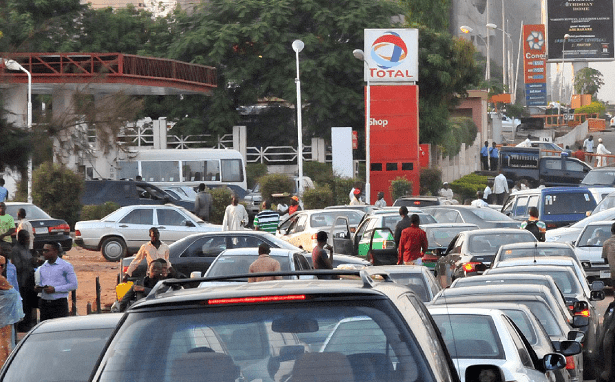
Nearly all filling stations in Lagos metropolis, on Wednesday, shut their gates to motorists with just a few which were seen selling petrol grappling with unprecedented queues which spilled onto major roads and highways causing heavy traffic challenge.
The filling stations claimed to have ran out of their stock of petroleum products particularly petrol. Several persons were seen carrying kegs and moving from one filling station to another in their desperation to buy the essential commodity.
A manager at one of the filling stations along Ikorodu speaking to BusinessDay on condition of anonymity said they ran out of fuel since Tuesday afternoon, and were awaiting new stock.
“We are not hoarding product as people seem to think. The fact is that we ran out of fuel since Tuesday. We hope we can get fresh supply today or tomorrow,” said the station manager at Onipanu.
The manager’s explanation notwithstanding, anxious motorists queuing around the filling station alleged it was a case of hoarding and sabotage, saying the station just suddenly stopped dispensing.
As a result of the queues, major roads including Apapa-Oshodi Expressway, Funsho Williams Avenue, Lagos-Ikorodu Road, Awolowo Way, Ikeja and Lagos-Abeokuta Expressway among others were choked, forcing motorists and commuters to spend pretty long hours in traffic.
READ ALSO: Pan African Towers aims at infrastructure rollout to serve underserved Nigeria
A motorist on Anthony bound lane of Onipanu area on Ikorodu, Kayode Thompson, lamented spending two hours on the road following the traffic build-up. Babatunde Edu, the general manager of the Lagos State Traffic Management Authority (LASTMA), speaking on the difficult traffic situation in the metropolis, also blamed it on fuel queues, saying motorists were displaying sheer indiscipline on the road by the way they parked their vehicles.
“The right of way should be given at all times to other road users who are going about their normal businesses rather than chaining them down without consideration to the fuel being burnt as a result of indiscriminate parking of vehicles from the filling stations onto the main road,” he said.
Edu, however, added that law enforcement agents have been directed to ensure compliance and defaulters sanctioned in accordance with the traffic law and further maintained that carriage ways are not an extension of petrol stations.
The scarcity of fuel in the country has also taken its toll on the aviation sector as flight delays and cancellations are now rampart.
To this end, airlines now divert to Accra, Togo and sometimes Port-Harcourt to lift fuel before heading to their destinations, a situation that is costing them a fortune.
Signs of the scarcity started manifesting on Thursday, April 23, 2015 when marketers were unable to meet the demands of the airlines.
For instance, Arik Air which by volume of its operations requires a daily supply of between 600,000 and 800,000 litres of aviation fuel could not get enough.
On Friday, Arik Air’s flight to London Heathrow had to go via Accra to take fuel.
Also on Saturday, the same London flight had to go to Cotonou, Benin Republic first to fuel before coming back to Lagos for the outbound flight to Heathrow.
In the case of the Johannesburg flight of Friday, the aircraft had to first go to Port Harcourt where fuel was available before