The federal government said it has paid some N152 billion to local contractors for verified projects in an effort to ease mounting tensions after repeated protests over unpaid bills at the Ministry of Finance in Abuja.
In a statement on Thursday, the Ministry of Finance said the payments were made after contracts passed multiple verification stages required under existing laws and regulations, a process it said was designed to protect taxpayers’ funds and ensure accountability and transparency.
The ministry acknowledged that delays had imposed financial strain on contractors but urged continued dialogue and engagement to resolve outstanding disputes.
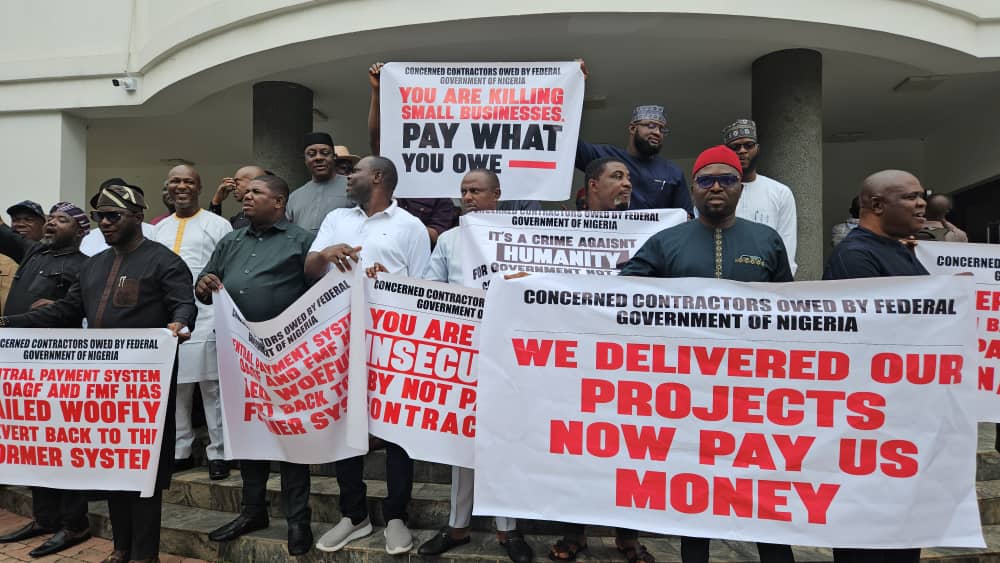
The confirmation follows renewed demonstrations this week by local contractors who say they are owed far more than the government has released.

On Monday, protesters blocked the entrance to the finance ministry, preventing Doris Uzoka-Anite, the minister of state for finance, from entering the complex.
The standoff briefly escalated when security personnel fired a shot into the air to disperse the crowd, causing panic but no reported injuries.
Read also: Nigeria’s security risks overhyped, economy rebounding, says Tuggar
The protesters, organised under the All Indigenous Contractors Association of Nigeria, say the federal government owes more than N4 trillion for completed projects and accuse authorities of reneging on commitments to settle verified claims.
According to the group, repeated assurances since last year have failed to translate into payments for many firms, despite documentation being submitted and approved.

“The government has failed to honour the agreement to pay contractors whose project details had been submitted and verified. Payments finalised before the closure of the payment portal at the end of December never reflected in our accounts,” Jackson Nwosu, president of the association said.
Officials maintain that significant progress has been made in clearing arrears, though contractors dispute that account. Protest leaders say only 30% to 40% of outstanding obligations have been settled, with payment warrants stopping in May 2025.
Many indigenous firms, they say, borrowed heavily to execute government contracts and are now facing loan defaults, asset seizures and mounting interest costs as delays persist.
The ministry said it remains open to constructive engagement and called on contractors to respect established procedures and ministry personnel, noting that officials have faced intimidation and harassment during the protests. It also pledged to continue processing payment requests in a timely and consistent manner in line with due process.
Contractors, however, argue that security responses to their demonstrations have been heavy-handed. “This is a peaceful protest. We are harmless. We are just sitting down peacefully, demanding our money, our payment,” Fredrick Agada, the association’s vice president, said.
The dispute has, however, drawn attention at the highest levels of government. In December, President Tinubu set up a multi-ministerial committee to address contractor arrears, which were then estimated at about N1.5 trillion. The panel includes the ministers of finance, budget and economic planning, works and housing, alongside senior budget and revenue officials.
Lawmakers have also stepped in, with a Senate committee summoning Wale Edun, minister of finance and coordinating minister of the economy to explain the delays.
In its 2026 budget proposal currently before the National Assembly, the federal government has earmarked N1.7 trillion to settle contractor debts.
Despite the latest payment confirmation, indigenous contractors say protests will continue until all verified claims are fully paid, arguing that local firms should not be treated differently from foreign contractors whose payments they say are processed without similar delays.