Mohammad Dahiru Lawal, the Head of Special Investigations and Fact-Checking at PRNigeria, has urged Journalists and traditional information gatekeepers to embrace fact-checking journalism as a core professional responsibility to combat hate speech, misinformation, and conflict-driven narratives.
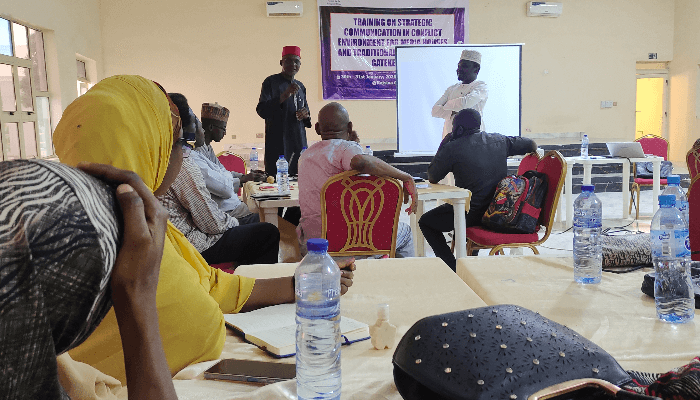
He made the call during a Strategic Communication in Conflict Environment training organised by the Centre for Democracy and Development (CDD) in Ketana, bringing together journalists from different media platforms, including eight information officers of Dandume, Batsari, Danmusa, Kankara, Sabuwa, Jibia, Safana, and Faskari held in Katsina.
Lawal described fact-checking as the missing link in contemporary journalism, especially amid the growing spread of hate speech and false information.
According to him, “Fact-checking or the job of information integrity is not just a job; it is the job of journalists. Everybody should ensure that all hands are put on deck to sanitise our information space and do away with fake news, hate speech, and dangerous narratives.

“Today, we are grappling with a new branch of journalism which has to do with fact-checking and verifying false news before reporting. Unfortunately, many journalists and media organisations are yet to fully pick up that passion,” he noted.
He further identified gaps in skills and resources as major challenges confronting journalists who wish to specialise in fact-checking. “Even where the passion exists, there is still a serious resource and skills gap. The availability of tools and expertise needed to key into fact-checking as a speciality remains a major pain.
“Training like this is very key because they help journalists understand the nuances of fact-checking, debunking false information, and maintaining credibility in the work they do for their audience,” he added.
Earlier, John Nanfa Lazing, CDD Regional Manager, North-West, said the training was designed to examine how information can influence conflict either positively or negatively.
He said, “Our intervention is wide-ranging and focuses on how information shapes the direction of conflict whether towards peace or violence. However, our interest is in how information dissemination can be used to drive conflict resolution”.

He explained that strategic communication often works indirectly by addressing underlying issues that could trigger conflict. “We may not always talk about the issue directly. Sometimes we focus on what can mitigate problems before they emerge, thereby preventing conflict from occurring.
“We appreciate all of you for finding time to attend this training. This shows your commitment to peace-building, communal cohesion, and responsible journalism. We are confident that this will be a productive engagement and that the objectives of the training will be achieved,” he added.