…as Women miners design framework for continental chapters
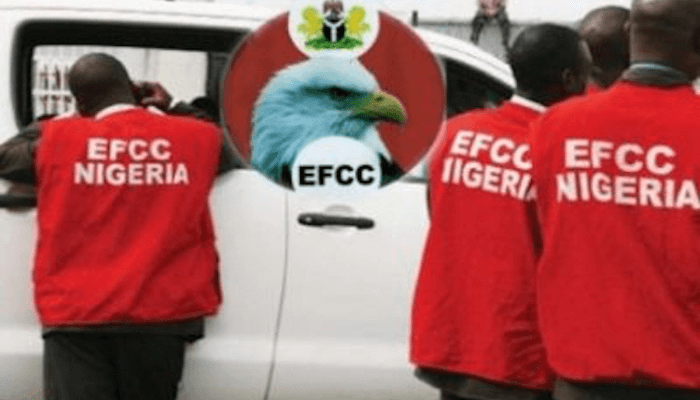
Operatives of the Uyo Zonal Directorate of the Economic and Financial Crimes Commission (EFCC) have arrested eleven individuals, including seven Chinese nationals and four Nigerians, for engaging in illegal mining activities in the Eastern Obolo Local Government Area of Akwa Ibom State.
The suspects were apprehended last week, on Thursday, in Emem-Asuk Community, where they were allegedly operating two illegal mining sites.
The EFCC disclosed the arrests in a statement signed by Dele Oyewale, Head of Media and Publicity for the Commission.

According to the statement, the suspects were found mining ilmenite, a black-coloured mineral locally referred to as “black sand,” without obtaining the requisite licences from regulatory authorities.
Read also: NIMC flags security risk as EFCC probes 12,000 youths selling ID data
The EFCC revealed that the group had already commenced mining operations at one site and was in the process of setting up equipment at a second location when operatives swooped in.
The arrested Chinese nationals were identified as Yang Chaobao, 32; Zhong Dun Yi, 33; Cheng Jiang, 35; Zhong Dun Long, 37; Pan Peiming, 33; Lai Yiping, 37; and Zhu Lekun, 35.
The Nigerian suspects include David Israel, 18; Jonah Bartholomew Jim, 24; Samuel Samuel Timothy, 20; and a 23-year-old female translator, Comfort Gabriel Ajaga.

Ajaga, the only female suspect, claimed during interrogation that her involvement was limited to translation services due to her fluency in Mandarin, the Chinese language.
“I am a student, and I am studying Chinese language at a learning centre in Anambra State. I only work with them as a translator,” she said.
The EFCC confirmed that investigations are ongoing and that the suspects will be charged to court upon conclusion of the probe.
Meanwhile, Women in Mining Africa (WiM-Africa) has launched a comprehensive framework designed to empower chapters across the continent and diaspora.
Read also: EFCC alerts public on new fraudulent promo scam
The guidelines introduce accountability measures and monitoring tools to ensure chapters align with WiM-Africa’s values, including gender equity, transparency, and local ownership, a statement by the organisation stated.
According to Comfort Asokoro-Ogaji, executive director of WiM-Africa, this framework is not about control, it is about consistency, credibility, and collective power to change narratives from the ground up.
She said, “We are building more than chapters, we are raising structured, accountable, and visionary platforms capable of delivering impact in mining communities, schools, cooperatives, and public institutions
“WiM-Africa is not just a network, it is an infrastructure for systemic change. The framework is a ‘shared compass for legitimacy, inclusion, and transformative leadership, guiding chapters to drive Africa’s mining narrative forward from the grassroots.”