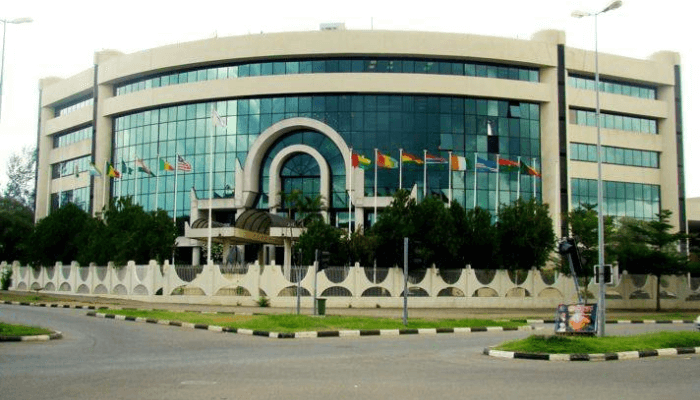
The Economic Community of West African States (ECOWAS) has set a growth target of 5% for the region in 2026, following what it described as a strong economic performance in 2025 despite global headwinds.
Omar Touray, President of the ECOWAS Commission, disclosed this on Thursday during a meeting with development partners, noting that the West African sub-region recorded an estimated growth rate of 4.6% in 2025, outperforming the continental average.
Touray said the Commission’s annual report showed that while global economic growth slowed in 2025 and uncertainty remained high, Africa continued to demonstrate resilience, with declining inflation, recovering growth and improved political stability in several regions.
Read also: How inefficiency quietly eats GDP

“Within our own West African community, this resilience is evident. In 2025, the region outperformed the continental average. Growth was 4.6% and is expected to reach 5% in 2026,” he said.
He attributed the region’s performance to reforms undertaken by Member States, increased investment in key sectors and improved macroeconomic management.
According to him, growth was driven by structural reforms, rising investments in mining and energy, improved regional trade facilitation, and a strong rebound in services, transport and tourism.
He added that although inflation remained elevated in some countries, it had declined significantly in others, helped by coordinated monetary policies and improved food supply conditions.
Touray also said fiscal deficits across the region had narrowed as governments strengthened revenue mobilisation and rationalised public spending, while debt-to-GDP ratios declined modestly due to strong nominal growth and better economic management.

“Our external position remains sound. The regional current account surplus has strengthened, bolstered by high export earnings from oil, gold and bauxite, as well as improved primary income balances,” he said.
The ECOWAS Commission President said insecurity remained a major concern, stressing that the organisation intensified preventive diplomacy, mediation and democratic support across the region in 2025.
He noted that ECOWAS continued to manage the implications of the withdrawal of Burkina Faso, Mali and Niger from the bloc, while keeping channels open for constructive engagement.
He added that the ECOWAS Committee of Chiefs of Defence Staff completed the rotation of the ECOWAS Standby Force and reinforced preparations for both the Standby Force and the 1,650-strong Counter-Terrorism Brigade.
Touray disclosed that assessment missions to The Gambia and Guinea-Bissau during the year highlighted the need for enhanced training, stronger monitoring and evaluation, and clear exit strategies for ECOWAS missions in both countries.
He said progress was also recorded in combating organised crime and terrorism, with the ECOWAS Commission formally taking over the West Africa Police Information System after 12 years under Interpol.
However, he acknowledged that reduced security cooperation with the Alliance of Sahel States (AES) bloc had complicated counter-terrorism efforts.
“While attacks declined slightly, fatalities increased due to the rising use of improvised explosive devices,” he said, adding that ECOWAS donated weapons-marking machines to four member states to improve arms tracing and accountability.
On regional integration, Touray said the second phase of the free movement and migration project was launched in 2025, alongside the validation of the ECOVISA online portal.
He revealed that seven member states, including Nigeria, were now implementing the ECOWAS National Biometric Identity Card.
He also said cross-border cooperation intensified during the year, benefiting border communities, especially women, while informal cross-border trade data collection improved, with Ghana publishing its first national report in 2025.
“As a community, we submitted the revised consolidated regional offer on trading services under the African Continental Free Trade Agreement, and nearly all member states have ratified the AfCFTA,” he said.
Read also: Building a digital-first economy: The pathway to Nigeria’s $1 trillion GDP goal
Touray disclosed that at least 1,300 small-scale cross-border traders and 50 women-led small and medium-sized enterprises benefited from capacity-building programmes, while digital skills training expanded economic opportunities for rural women.
He added that the inaugural ECOWAS Trade and Investment Forum and Exhibition was held in 2025 as part of activities marking the organisation’s 50th anniversary.
Within the Customs Union, he said ECOWAS expanded the electronic certificate of origin pilot, advanced tax harmonisation and connected six member states to the SIGMAT e-hub to fast-track customs procedures.
On social protection and humanitarian support, Touray said ECOWAS committed about 8 million dollars to humanitarian emergencies and disaster risk reduction, expanded drug rehabilitation services to 10 centres across the region, and scaled up education, technical and vocational training initiatives.
In infrastructure and energy, he said more than 42 million dollars was mobilised for preparatory studies on the Regional Roads Network, while preparations advanced for the Dakar–Abidjan corridor with support from the African Development Bank.
He added that regulatory agencies received support to design tariff models for renewable energy systems under the Pro-Sem2 initiative.
Touray also disclosed that Côte d’Ivoire, Ghana and Nigeria were identified as regional internet exchange point hubs, preparations for a second submarine cable were completed, and seven member states were now implementing bilateral roaming arrangements.
On environmental and food security issues, he said ECOWAS advocated globally for the protection of the Upper Guinea Forest and Futa Jalon Highland, established a regional carbon market framework, improved seed regulations, fortified food reserves and expanded school feeding programmes to over 30,000 children.
He said institutional reforms also progressed, with the completion of the 2025–2027 medium-term expenditure framework, validation of the ECOWAS risk management framework, and a mid-term review of the community’s strategic framework.
Touray noted that the ECOWAS Court of Justice delivered 45 judgments during the year, while the West African Health Organisation strengthened epidemic preparedness and procured essential medical equipment.
He also highlighted ECOWAS’ role in aborting an attempted coup in the Republic of Benin, stressing the bloc’s zero-tolerance stance on unconstitutional changes of government.
“ECOWAS took rapid and decisive action to send a clear message that the region stands firmly against coups,” he said.
On Guinea-Bissau, Touray said ECOWAS called for a short transition led by an inclusive government with a limited mandate to undertake constitutional and electoral reforms and prepare for free and fair elections.
He explained that the result of the disputed presidential election was destroyed, leaving the organisation with no basis to act on it, hence the decision to allow a brief transition period.