Wasiu Alli & Eniola Olatunji
The naira is projected to continue its steady appreciation on the back of the latest Eurobond sales and the CBN’s new FX trading platform till early next year as the United States and South Africa publish their inflation data.
Wednesday, December 11
South Africa’s inflation seen falling in November

Statistics South Africa is expected to release the inflation rate of Africa’s largest economy for the month of November on Wednesday where it’s projected to fall further.
The country’s inflation rate dropped sharply in October to its lowest level since the peak of the COVID pandemic, paving the way for another quarter point interest rate cut by the central bank.
Statistics South Africa said falling fuel prices were the primary driver of the slowdown in annual inflation to 2.8 percent from 3.8 percent in September, with slowing food inflation another important factor.
October’s reading is the lowest inflation that has been since June 2020, when South Africans were subject to one of the harshest COVID lockdowns worldwide. Inflation has only been below 3 percent in a handful of months in the past two decades.
As prices continue to cool, South Africa’s central bank opted for another small cut to its main interest rate, stressing a tough global backdrop and uncertain domestic outlook despite inflation falling below its target range for the first time in years.

The decision to lower the lending rate by 25 basis points (bps) to 7.75 percent was unanimous, with no discussion about a larger 50 bps cut, South African Reserve Bank Governor Lesetja Kganyago said.
Analysts are projecting a further decline in the consumer price as the food inflation and fuel prices continue to slow..
OPEC to release monthly oil report

The Organization of the Petroleum Exporting Countries (OPEC) will release its monthly oil market report on Wednesday.
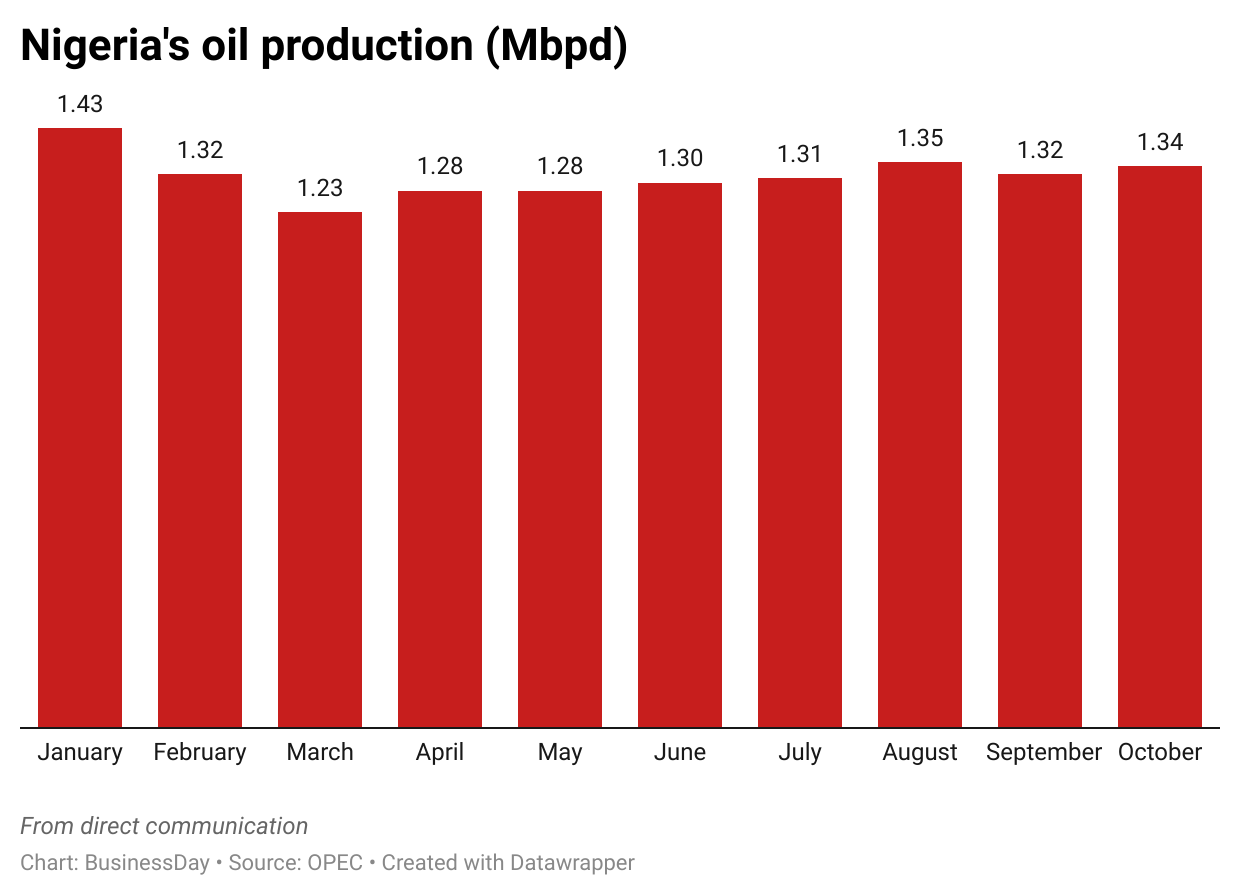
Nigeria, the largest producer of crude oil in Africa, recorded an average of 35,000 barrels increase in crude output in October, rising to 1.434 million barrels per day (bpd).
The Organization of Petroleum Exporting Countries (OPEC)’s latest oil market report revealed that Nigeria’s crude oil production rose from 1.399 million bpd in September, according to secondary data from Nigerian authorities.
Direct communication showed that Nigeria’s average crude oil production for October was 1.333 million bpd, an increase of 9,000 barrels compared to 1.324 million bpd in the previous month.
The Nigerian Upstream Petroleum Regulatory Commission (NUPRC) stated that the country’s crude oil production, including condensates, rose by 16.56 percent in October 2024, reaching 1.8 million barrels per day (bpd), up from 1.54 million bpd in September.
Thursday, December 12
US to release inflation report for November

The US Bureau Of Labor Statistics will be releasing the US inflation report for November on Thursday.
In October, the US inflation hit 2.6 percent, a 0.2 percent decline from September.
The core CPI accelerated 0.3 percent for the month and was at 3.3 percent annually, also meeting forecasts.
Despite signs of inflation moderating elsewhere, shelter prices continued to be a major contributor to the CPI move. Inflation-adjusted average hourly earnings for workers increased 0.1 percent for the month and 1.4 percent from a year ago.
The shelter index, which carries about a one-third weighting in the broader index, climbed another 0.4 percent in October, double its September move and up 4.9 percent on an annual basis. The category was responsible for more than half the gain in the all-items CPI measure, according to the BLS.
Used vehicle costs also rose, up 2.7 percent on the month while motor vehicle insurance declined 0.1 percent but was still higher by 14 percent for the 12-month period. Airline fares jumped 3.2 percent while eggs tumbled 6.4 percent but were still 30.4 percent higher from a year ago.
The readings took inflation further away from the Federal Reserve’s 2 percent goal and could complicate the central bank’s monetary policy strategy going forward, particularly with a new administration taking over the White House in January.
Naira to extend winning streak till 2025
The naira has seen steady appreciation since the Eurobond sales and the introduction of the Electronic Foreign Exchange Matching System (EFEMS).
Data from the Central Bank of Nigeria showed that the naira on Friday appreciated to N1,535/$1 at the Nigerian Foreign Exchange Market (NFEM). This is from N1,567/$1 on Thursday and N1,608 on Wednesday.
Analysts have projected that this appreciation will likely remain till early next year.
Last Monday, the CBN kick-started the EFEMS, an electronic platform introduced to tackle speculation and improve transparency in Nigeria’s FX market.
It automatically matches buy and sell orders, promoting fairness and efficiency in FX trading. Financial experts have expressed optimism about EFEMS’ potential to address persistent challenges affecting the naira and Nigeria’s FX reserves.
The EFEMS system allows authorised dealers, including commercial banks, to place buy and sell orders in real-time. Transactions are automatically matched based on predetermined rules, ensuring swift execution and real-time visibility for market participants and regulators.
Gbolohan Ologunro, portfolio manager at FBNQuest said that the country has seen more dollar inflows as Foreign Portfolio Investors (FPIs) have been quite active in the foreign exchange market and that’s because the yield on one-year bills has made it more attractive for them to hold more naira assets.
“If the platform continues to function efficiently and the yields continue to remain at current levels till next year, FPIs will continue to have faith in the naira and will continue to hold naira assets and this will increase dollar inflows.
“These inflows will be sustained by the sales from the Eurobond into the system by January which will likely drive reserves to $45 billion, and continue the naira’s appreciation to February,” Ologunro said