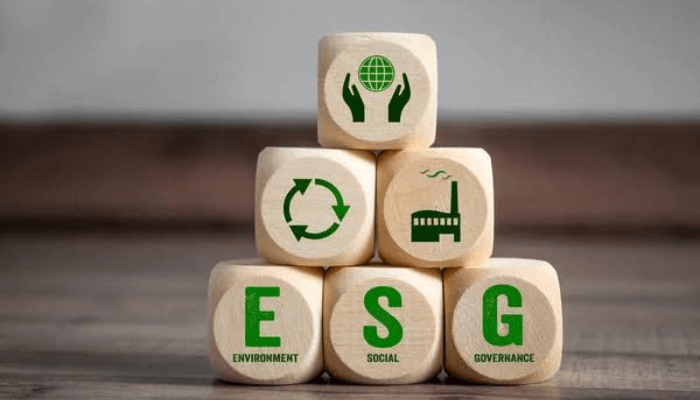
Sustainable communication policy has been identified as critical in achieving national development, investor confidence, and accountability in the implementation of environmental, social, and governance (ESG) goals in Nigeria.
Therefore, the need for National Sustainability Communication Standard (NSCS) to harmonise how government, businesses, and the media report on (ESG) issues have been canvassed.
The call was made during a virtual panel discussion themed “Sustainability Communication in Nigeria: Bridging the Knowledge Gap Through Strategic Stakeholder Dialogue,” hosted by Oluwatobi Abodunrin, Walter Micheal, Adedayo Okusanya, and Anuoluwatomi Olorundare, all MSc Media and Communication students at Pan-Atlantic University.
Panelists noted that Nigeria’s fragmented approach to sustainability communication was stalling national development, limiting investor confidence, and weakening accountability in the implementation of ESG goals.

Grace Ejims, a senior environmental systems and performance advisor at SCS Railways UK, observed that “government speaks in policy and SDG targets, businesses focus on ESG compliance, while the media reports crises and corruption.” According to her, “You can’t close a communication gap with more noise only with shared standards.”
Read also: How SMEs can scale faster with ESG
Grace proposed a mandatory, simplified reporting system requiring ministries, corporations, and media organisations to publish short annual sustainability updates that present key data in accessible formats for public understanding.
Also speaking, Michael Ogbuefi, a senior marine and offshore Environmental Specialist at NNPC Limited, stressed the need for participatory community engagement and real-time transparency tools. “When people see data in formats they can understand, accountability stops being a policy statement and becomes a shared community value,” he said.
Sustainability strategist Ese Ikponmwomba added that the public must see sustainability in relatable, human-centred terms such as “clean environments, better health, and income from recycling.” She emphasised storytelling in local languages and capacity-building for journalists as critical tools for public education.

CSR leader Blessing Ayorinde said current sustainability discourse “excludes the average citizen” and urged that ESG reports be translated into visual and human stories that connect with the realities of everyday Nigerians.
The panel also recommended that universities and chambers of commerce host national collaboration hubs to promote dialogue between government, industry, and the media. These hubs, they said, could support transparency through shared dashboards and annual accountability reports.
Summarising the discussions, Anuoluwatomi Olorundare said, “We cannot keep treating sustainability communication as a side conversation. It must become a shared national language that connects government plans, business actions, and citizens’ realities.”
The experts concluded that a unified sustainability communication framework could enhance investor confidence, attract green financing, and position Nigeria as a regional leader in sustainable economic growth.
The dialogue formed part of a Project-Based Internship (PBI) by Abodunrin, Walter, Okusanya, and Olorundare under the MSc Media and Communication programme at the School of Media and Communication, Pan-Atlantic University.