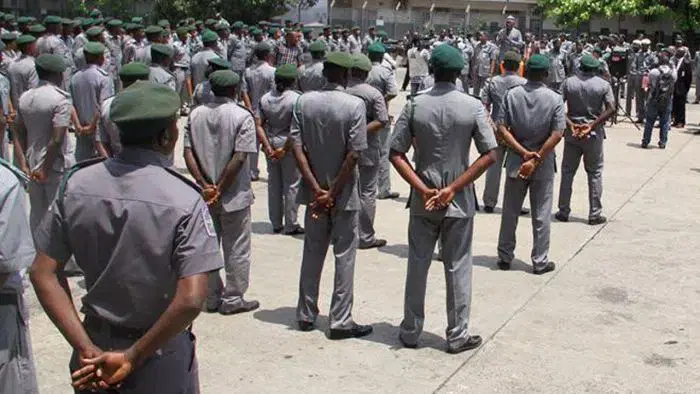
The Nigeria Customs Service has launched a nationwide sensitisation exercise to prepare stakeholders for the full automation of its licences and permits processes, with Zone A, covering Lagos, kicking off proceedings on Monday.
A, B. Mohammed, delivering the keynote address at the Customs Training College Auditorium in Ikeja, told an audience of traders, freight forwarders, and business operators that the era of paperwork, long queues, and manual processing was coming to an end.
“Stakeholders will no longer have to go to a Customs office simply to apply for or renew a licence or permit,” Mohammed said. “You will be able to do this from your office or even from your phone.”
The automation initiative was approved by Bashir Adeniyi, the comptroller-general of Customs, and is being rolled out simultaneously across all Customs zones in the country.

NJ Anozie, who heads the licences and permits, said automation will cut the cost of doing business and minimise movement risks for stakeholders. “They would no longer be jumping on buses or flights to and fro Customs Headquarters Abuja, paying hotel bills plus feeding for days to obtain or renew,” he said.
Under the new system, applicants will be able to submit requests digitally, track the progress of their applications in real time, and receive decisions through an automated platform designed to eliminate inconsistencies associated with manual handling.
Mohammed described the development as more than a procedural upgrade. “We are not just automating a process,” he said. “We are transforming the way we serve Nigeria’s trade community.”
Read also: Customs hold off on agents’ licensing rates hike
He acknowledged that transitions of this nature can be unsettling, but urged stakeholders to engage openly with the technical sessions that followed the opening address. The Comptroller of the Licences and Permits Unit led those sessions, walking participants through the new system step by step.

Zone A was chosen as a focal point given its status as Nigeria’s most commercially active customs zone. Lagos, which serves as the country’s main gateway for imports and exports, processes a disproportionately large share of the nation’s trade, making a smooth transition there particularly critical to the programme’s overall success.
Officials also called on those present to carry the message back to their associations and networks, noting that wider awareness among the business community would ease the shift to the new system.
The Service said the automation was a direct response to longstanding complaints from stakeholders about delays, opacity, and the administrative burden of the existing manual process. Also with Nigeria’s National Single Window scheduled to go live March 27, all government agencies are on the clock to reduce paperwork and automate their processes.
Read also: Explainer: What to know as Nigeria’s National Single Window goes live March 27
With the new platform, officials said processing times would improve significantly and the risk of record-keeping errors would be substantially reduced.
No date has yet been announced for when the automated system will go fully live, but the sensitisation programme is understood to be a precursor to imminent implementation.