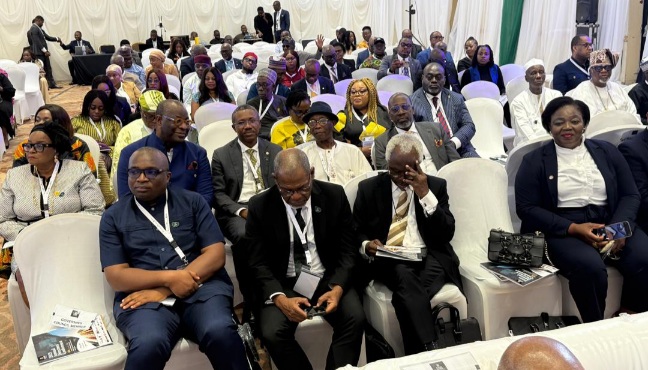
The Chartered Institute of Directors (CIoD) Nigeria has called for renewed commitment to sound corporate governance, inclusive enterprise development, and sustainable business practices as vital tools for steering Nigeria’s economy through global uncertainty.
Speaking at the opening of the 2025 Annual Directors’ Conference (ADC) on Wednesday in Abuja, Otunba Adetunji Oyebanji, president and chairman of the Governing Council, CLoD, said strong governance and visionary leadership remain the foundation for building enduring enterprises capable of withstanding economic disruptions.
“The need for sound governance and leadership is crucial to our nation’s quest to build enduring enterprises that stand the test of time,” Oyebanji said.
“Leaders must now balance profitability with responsibility, growth with inclusion, and innovation with integrity.”

The two-day conference, themed “Leading Through Change: Building Sustainable and Inclusive Enterprises,” brought together business leaders, policymakers, regulators, and diplomats to examine the evolving role of directors in shaping Nigeria’s economic future.
President Bola Ahmed Tinubu was represented at the event by Abubakar Atiku Bagudu, minister of Budget and Economic Planning which also had senior government officials including Tunji Alausa, minister of Education, Shamsuddeen Usman, chairman, Ministry of Finance Incorporated, who chaired the conference among several others.
The keynote address was delivered by Kola Adesina, group managing director, Sahara Power Group, who was commended for his leadership in transforming Africa’s power sector and advancing sustainable business innovation.
Oyebanji noted that inclusive governance and responsible leadership are key drivers of national prosperity. He cited a recent African-wide study showing that private sector credit expansion significantly enhances economic welfare, particularly in economies that prioritise the ease of doing business.
He further referenced a 2025 ESG-focused report which revealed that over 20 African countries now embed sustainability principles into their financial market regulations, while 15 provide incentives for green and sustainable assets — a sign of growing alignment with global responsible investment standards.

In Nigeria, he said, such inclusive strategies are most visible in sectors like renewable energy and fintech, where access to finance and youth participation are driving innovation. He stressed that SMEs — which contribute nearly 50 percent of GDP and 75 percent of national employment — remain central to inclusive growth, citing the joint NBS-SMEDAN 2021 MSME Survey.
“Despite notable progress, policy inconsistencies, infrastructure deficits, and limited access to affordable finance continue to constrain enterprise growth,” Oyebanji said. “Overcoming these challenges requires stronger public-private partnerships and innovative financing models designed to scale inclusive enterprises.”
The CIoD President announced that the “Business Meets Government Dinner”, scheduled for Thursday, would serve as a high-level platform for dialogue between policymakers and private sector leaders on fostering governance-driven growth.
In his welcome remarks, Otunba Bimbo Ashiru, chairman of the 2025 ADC National Organising Committee, said the conference theme was deliberately chosen to reflect the pressing need for Nigerian businesses to adapt to disruptive change and embed sustainability within their operations.
“Good governance is a practical tool for fostering economic resilience and sustainable progress,” Ashiru said. “Our sessions are designed to move beyond rhetoric — to challenge assumptions, share best practices, and drive tangible actions that strengthen our economy.”
He noted that this year’s agenda includes thematic sessions on policy reforms, technological disruption, boardroom diversity, succession planning, and stakeholder engagement, aimed at equipping directors with the skills to lead through volatility.
Read also: Nigeria must invest in workforce to stay globally competitive – Keyamo
Ashiru also commended the CIoD Governing Council, led by Otunba Oyebanji, for its consistent advocacy for governance excellence and corporate leadership development, while appreciating sponsors, partners, and delegates for supporting the institute’s mission.
The Chartered Institute of Directors Nigeria, established to promote professional directorship and ethical leadership, remains a key voice in policy advocacy, boardroom governance, and enterprise transformation in Nigeria.
As the conference continues, stakeholders are expected to adopt strategies that strengthen institutional resilience and reinforce Nigeria’s transition toward a more inclusive, sustainable, and investment-friendly economy.