After days of protests, Chilean president Sebastián Piñera has apologised for his government’s “lack of vision” and announced a reform package aimed at defusing the political crisis that has convulsed the South American country since a 3 per cent rise in metro fares triggered widespread protests and a state of emergency.
The package, which requires congressional approval, included a rise in the minimum wage, pension payments, health benefits and electricity subsidies and will partly be financed by raising taxes for the wealthiest Chileans.
“It is true that problems accumulated for many decades and that different governments were not able to recognise this situation in all its magnitude,” the president said late on Tuesday. “I recognise and apologise for this lack of vision.”
Read also: House of Reps urges FG to declare state of emergency on drug abuse

Quinn Markwith, analyst at Capital Economics, said the finance minister had estimated the total cost of the measures at $1.2bn, or 0.4 per cent of GDP. “That estimate seems quite plausible to us,” he said. “The key thing in this context is that Chile’s public finances are quite strong, and so they can afford this without causing bond yields to rise.”
Yet the proposals stopped well short of the demands of Mr Piñera’s most vocal critics.
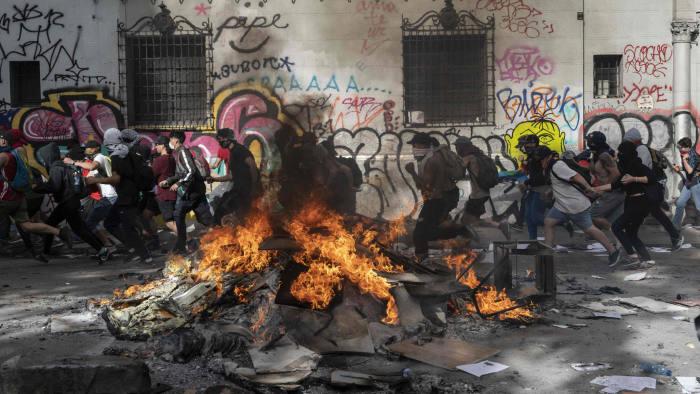
In recent days, Santiago has been convulsed by riots, looting and arson, pushing the government to introduce a state of emergency and suspend the rise in metro fares.
The protests have exposed deepseated anger among Chileans at an unequal system that has excluded them from the country’s remarkable economic performance in recent decades. The protests are “not about the 30-peso rise in metro fares, but 30 years of a faulty democracy that didn’t attend the needs of the majority of the people,” said Camila Vallejo, leader of Chile’s Communist party.