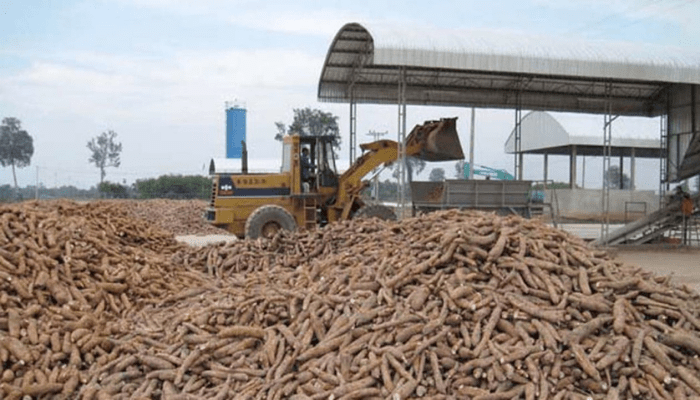
Nigeria is the world’s largest producer of cassava, but the well-known application of the product remains processing it into garri, as well as fufu, both staple foods.
While these products are essential for food security, they do not capture the value seen in more advanced cassava-derived goods.
There are other industrial uses of cassava which, if explored, can provide multi-billion-dollar returns, create jobs, and stimulate industrial growth.
Major industrial products from cassava include ethanol, industrial starch, cassava flour, glucose syrup, and sweetener, among others. These products are also raw materials for numerous industrial items, with limitless domestic and export market potential.

Growing global bioplastics market
Globally, cassava roots and their by-products are being used to create new, high-value products that speak to global demands for health, sustainability, and industrial renewal.
These examples offer important lessons for Nigeria, not because the same activities are happening here today, but because they demonstrate what is technically and commercially possible when the right ecosystem is in place.
With millions of tons of cassava produced annually, Nigeria can leverage this crop to drive economic growth and sustainability by tapping into the growing bioplastics market.
According to Nigeria Cassava Investment Accelerator (NCIA), an initiative of the Lagos Business School, Pan-Atlantic University, one of the most striking pathways is the emergence of cassava-based bioplastics and biodegradable packaging.

In Southeast Asia, starch extracted from cassava waste has been used to produce biodegradable films and packaging materials with tensile strength and flexibility comparable to conventional plastics.
Studies from the Philippines and Thailand show that cassava bioplastics can generate value between 14 and 22 times higher than raw cassava roots.
By redirecting peel and pulp into packaging, processors reduce waste and create materials that decompose under natural conditions, offering a low-carbon alternative to petroleum-based plastics.
This model demonstrates how a simple crop can feed into a circular materials economy that supports both environmental and industrial goals.
Cassava by-products, the NCIA noted, are also valuable as inputs for renewable energy.
In Asia and Latin America, cassava peels, pulp, and liquid effluent have been converted into bioethanol, biogas, and other biofuels through fermentation or anaerobic digestion.
These systems reduce the burden of agricultural waste while supplying energy to rural areas that often lack stable electricity.
They also cut methane emissions from decomposing biomass. Although many projects remain at pilot scale, they show how cassava waste can become a productive asset within a broader bioenergy system.
Read also: Stakeholders push for increased cassava processing, export capacity across Africa
Expanding cassava starch application
Further research by NCIA revealed that in Brazil, modified cassava starch is being explored as a binder in concrete and other construction materials.
This type of industrial starch can improve the performance of concrete mixtures while reducing the reliance on synthetic binders.
Globally, cassava starch already serves as a key input for paper, textiles, adhesives, and pharmaceuticals.
Research showed that industrial and modified cassava starches can deliver significantly higher value than raw roots, particularly when integrated into chemical and manufacturing supply chains.
Biodegradable products
Similar innovation is emerging in the packaging sector, where cassava produce has been used to produce biodegradable films with acceptable barrier and structural properties.
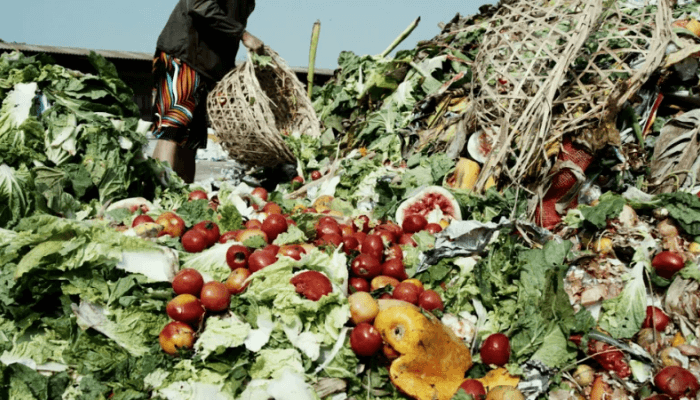
Because cassava processing can produce nearly nine hundred kilograms of waste for every tonne of roots processed, this type of waste-to-value model carries both environmental and economic implications.
It turns a disposal problem into new revenue potential while responding to growing global regulations on single-use plastics.
Next wave of driven innovation
Nigeria will need to strengthen several parts of its ecosystem. Processing infrastructure will need investment so that factories can handle both root starch and waste streams for industrial applications.
Policies and standards that support biodegradable materials, biofuels, and industrial starch will need to be developed. Financing will also play a central role, since many of these innovations require capital for research, testing, and quality upgrades.
Lastly, domestic and export demand for these cassava-based materials will need to be cultivated through partnerships with manufacturers, retailers, and global buyers.
Tapping the opportunities
Tapping into this opportunity will require private and public partnerships; the government has to put in place enabling policies and incentives that will catalyse capital and offtake agreements from the private sector needed to take these innovations to scale.
If these conditions can be built, cassava could shift from being viewed mainly as a subsistence crop to becoming a foundation for new green industries.
It has the potential to support rural livelihoods, reduce waste, generate renewable energy, and contribute to a more climate-aligned industrial future.
As other regions move forward with innovative cassava derivatives, Nigeria has an opportunity to learn, adapt, and chart its own path.
The raw material is abundant. The global demand signals are clear. The question now is whether the supporting ecosystem will evolve to unlock cassava’s next frontier.