Manufacturers and Micro, Small, and Medium Enterprises (MSMEs) are still awaiting the N200 billion intervention the Federal Government announced just over a month agoManufacturers and Micro, Small, and Medium Enterprises (MSMEs) are still awaiting the N200 billion intervention the Federal Government announced just over a month ago to cushion the impacts of petrol subsidy removal and naira devaluation.
President Bola Tinubu, in a broadcast on July 31, 2023, said his government would energise the MSME sector with N125 billion.
He said his government would spend N50 billion on a Conditional Grant to one million nano businesses between then and March 2024. “Our target is to give N50,000 each to 1,300 nano business owners in each of the 774 local governments across the country,” he added.
He said this programme would further drive financial inclusion by onboarding beneficiaries into the formal banking system. “In like manner, we will fund 100,000 MSMEs and start-ups with N75 billion. Under this scheme, each enterprise promoter will be able to get between N500,000 to N1 million at 9 per cent interest per annum and a repayment period of 36 months,” he added.

Read also President Tinubu launches ambitious fund to empower MSMEs nationwide
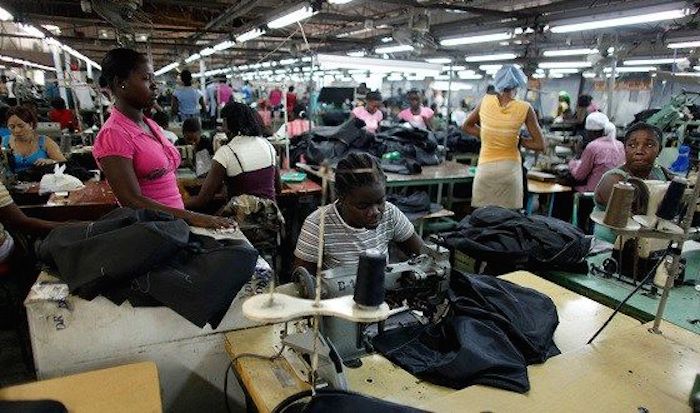
According to the president, N75 billion will be spent between July 2023 and March 2024 to strengthen the manufacturing sector and increase its capacity to expand and create good-paying jobs.
“Our objective is to fund 75 enterprises with great potential to kick-start sustainable economic growth, accelerate structural transformation and improve productivity. He said that each of the 75 manufacturing enterprises will be able to access N1 billion credit at nine per cent per annum with a maximum of 60 months of repayment for long-term loans and 12 months for working capital.
However, industry stakeholders told BusinessDay that they had yet to know the criteria for accessing the funds and the agencies to disburse them.
In recent months, rising inflationary pressures have weakened the purchasing power of consumers, even as businesses grapple with higher operating costs. This has forced many small businesses to close shop.

“What we just have is the announcement and nothing beyond that. There is no evidence that the funds have been released to the implementing agencies for the N125 billion for the MSMEs and the N75 billion for manufacturers,” Gabriel Idahosa, deputy president of Lagos Chamber of Commerce and Industry, said.
He said when the president announced, the chamber advised that implementing intervention funds should be done quickly, but that had not happened.
Read also Kudos, knocks greet Tinubu’s proposed fund for MSMEs, manufacturers
“If the money were released in June, for the whole of July, the implementing agencies would have rolled out the processes on how to apply and the conditions for it. And by the beginning of August, most businesses should have been able to access those funds,” he added.
Femi Egbesola, national president of the Association of Small Business Owners of Nigeria (ASBON), said the only information they had was the pronouncement from the presidency.
He said: “So far, there has been no directive about the terms and conditions, requirements, applications and screening in accessing the funds. We have not seen the first batch yet that are the first beneficiaries of the funds.
“And even before the pronouncement was made, there were no prior consultations with us to know or get justifiable criteria that will be equitable for businesses. I am confused because this is not how things should be done.”
Segun Kuti-George, national vice president of the Nigerian Association of Small-Scale Industrialists, said the government could be working on the modalities for the implementation. Still, at least business organisations should know where the money is, who will be in charge, and who will distribute it.
“A lot can happen in one month if nothing is done, as many businesses could shut down. But if a lifeline exists, the story will be different,” he said.
On May 29, Tinubu announced the removal of the petrol subsidy, and petrol prices have risen to as high as N617 per litre from N184, while the value of the naira has plunged following the floating of the currency.
The floating of the currency has increased the official rate from N463.38/$ to N738.18/$ as of Tuesday. The gap between the official and black market rates expanded to N187/$.
According to the National Bureau of Statistics, the inflation rate rose to an 18-year high of 24.08 per cent in July 2023 from 22.41 per cent in the previous month.
Read also Group urges Nigerian govt to pay attention to MSMEs to grow economy
The latest Purchasing Managers’ Index by Stanbic IBTC Bank shows that business activities in the country dropped to 50.2 in August, the lowest in five months, from 51.7 in the previous month.
“Rising price pressures impacted demand, with growth of both new orders and business activity softening as the second half of the year got underway,” analysts at Stanbic IBTC Bank said.
Data from the Nigerian Exchange Limited show that foreign investment in Nigerian stocks fell last month to its lowest level since Tinubu’s reforms, which sparked a massive rally in the equities market.
The total amount of stocks bought by foreign investors plunged to N9.45 billion from N22.72 billion in June.
Abdulrasid Yarima, president/chairman of the governing council of the Nigerian Association of Small and Medium Enterprises (NASME), said they were concerned as they were yet to hear from the federal government because the number of MSMEs closing shops was increasing.
“Just like everybody else, expected the interventions to start immediately. We have even requested a consultation visit to interact with the new minister, but she has yet to respond,” he added. “We did the same to the vice president, who is the chairman of the MSME council, but since June, he has yet to respond.”
Temitope Ajayi, senior special assistant to the president on media and public affairs, while speaking with BusinessDay on the delay, called for patience, saying the president “is mindful of his promises to Nigerians”.
“As you are aware, the ministers just assumed office barely a week ago, especially Wale Edun, the minister of finance and coordinating minister of the economy and Doris Anite-Uzoka, his industry, trade and investment counterpart, who will drive these programmes as they affect the manufacturing sector, small and medium-scale businesses,” he said.
He said the two ministers were working out the modalities for implementing these policies to ensure that all Nigerians benefit from the programme.
Egbesola of ASBON said even if the government were in the planning stage, that stage would have been done and dusted before pronouncement in an ideal environment.
“For the government to say that they want to do interventions means that they have already discovered that the economy is in terrible shape and that businesses are dying. And the only way out is to intervene,” he added.
BusinessDay reported in July that small businesses were shutting down due to the surge in petrol prices occasioned by the subsidy removal and the naira devaluation.
Read also Manufacturers, MSMEs await Tinubu’s N200bn intervention one month after pledge
According to NASME, about 10 per cent of the 40 million MSMEs in the country have shut down since the subsidy removal. ASBON projected that more than 20 per cent of their 27,000 members had been affected by the mounting economic woes.
“When you make such announcements, you create anxiety and expectations among businesses because, over the last three years, most of them have lost a lot as a result of the Covid-19 pandemic, elections, naira crunch, the petrol subsidy removal and naira devaluation,” an official at MAN who spoke on condition of anonymity said.
He advised that investors should be patient and lower their expectations quickly. “The government and ministers should also begin to create the criteria on who will get the funds, conditions and the percentage because if it is not well managed, it may be hijacked by the political class.”