In 1933, Joseph Goebbels stated that, “The modern structure of the German State is a higher form of democracy in which, by virtue of the people’s mandate, the government is exercised authoritatively while there is no possibility for parliamentary interference, to obliterate and render ineffective the execution of the nation’s will.” It is a measure of how far the UK has fallen that Boris Johnson, the prime minister, often sounds rather like this.
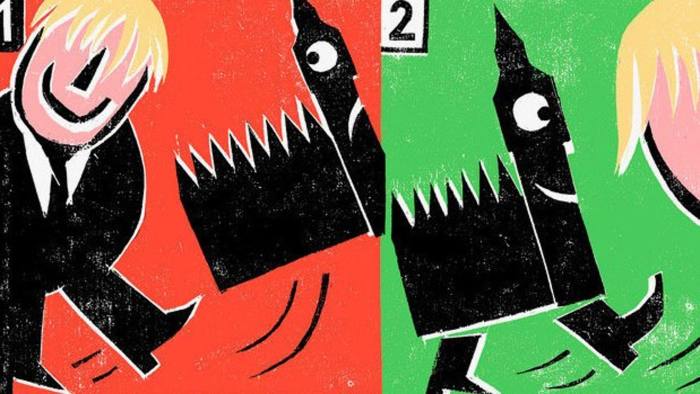
Mr Johnson sought to prevent “parliamentary interference” in Brexit negotiations, by proroguing (or suspending) it for five crucial weeks. He dissented from the Supreme Court’s unanimous decision that this was unlawful. He has suggested he could ignore the Benn Act requiring him to seek an extension to the Article 50 deadline, should he not achieve a deal. He condemned this legislation as the “surrender act”. Worst of all, he plans to frame the next election as a battle of “people versus parliament”.
Read also: UK appeals to EU leaders to engage on Brexit deal
How did the UK reach a position in which its prime minister regards parliament as an obstacle to be ignored? The simple answer is that it decided to insert a particularly ill-considered referendum on an exceptionally contentious subject into a parliamentary system. This created conflicting sources of legitimacy. Worse, the meaning of the option that won a small majority in that referendum was ill-defined. “Brexit means Brexit” is perhaps the silliest sentence ever uttered by a British prime minister. But it was also all that could be said.

Contrary to what Brexiters insist, parliamentary involvement is not an unwarranted intrusion. Any referendum requires legislation. This one also required negotiation and agreement. Alas, no majority exists for any option for a deal with the EU. Brexiters are as much to blame for this as Remainers.
Consequently, “no deal” has emerged as the fallback position. But the Leave campaign said essentially nothing about a no-deal exit. There is no mandate for what every informed observer, including the civil service, knows would be a disruptive and costly result. It would also be just the beginning of negotiations, not their end. But those talks would occur in worse circumstances. There would be pervasive economic uncertainty. This would be a mad choice. Governments exist to help their countries, not harm them deliberately.
Among the most important reasons for this outcome is the refusal, especially on the Brexit side, to try to understand the EU. They needed to comprehend that the EU is an existential project for its members, not just a trade deal. Application of European law, under the European Court of Justice, is a central part of that project. The EU, with 27 remaining members, was also sure to be an inflexible counterparty.