…KEDCO puts daily Loss at ₦100m
Several billions of naira have been lost by businesses across Kano State as the industrial action by electricity workers entered its second day, deepening concerns over the economic fallout of labour disputes in the power sector.
The management of the Kano Electricity Distribution Plc (KEDCO), hinted on Friday, that the company’s own share of the losses from the disruption is estimated to be about ₦100 million per day, since the strike started.
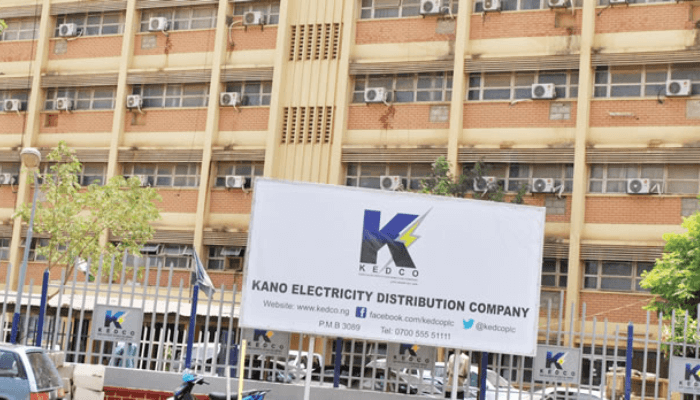
The strike, which involves the picketing of KEDCO’s headquarters in Kano, has disrupted electricity-related operations across the state, affecting commercial activities, small and medium-scale enterprises, and thousands of informal businesses that depend heavily on stable power supply.

According to KEDCO management, the prolonged shutdown is placing significant financial strain on the utility while also weakening electricity supply to consumers, with ripple effects on the wider North-West economy.
The company warned that if the industrial action persists, losses could escalate rapidly, compounding the already fragile power situation in the state.
The protest is being led by workers under the Senior Staff Association of Electricity and Allied Companies (SSAEAC) and the National Union of Electricity Employees (NUEE), who barricaded the company’s premises to press home their demands.
The workers are protesting alleged non-remittance of pension deductions, poor welfare conditions, and what they described as long-standing breaches of agreements by management.
Placards displayed by the protesters called for the remittance of over 90 months of outstanding pension deductions, improved working conditions, fair promotions, and the full implementation of performance appraisal systems.

As the action continued, markets, workshops, cold rooms, agro-processing centres, and digital service providers across Kano experienced widespread disruptions.
Many businesses were forced to rely on costly alternative power sources, while others shut down operations entirely. Industry stakeholders estimate that the cumulative losses to the state economy already run into several billions of naira, given Kano’s status as a major commercial and industrial hub in northern Nigeria.
Read also: KEDCO promotes 1,500 Staff, the largest promotion ever made by the company
Addressing the workers, the Deputy President General (North) of SSAEAC, Comrade Rilwanu Shehu, accused KEDCO management of failing to honour existing agreements, particularly on pension remittances and staff welfare. He said many employees were working in poor conditions without adequate tools or personal protective equipment, a situation he argued was eroding morale and productivity.
“We are not asking for new agreements; we are asking for compliance with what already exists,” Shehu said, adding that unresolved welfare issues were affecting service delivery to electricity consumers.
Similarly, NUEE Vice President, Ado Gaya, said the protest followed the breakdown of talks after an ultimatum issued to management expired. He alleged selective promotions, non-payment of the 13th-month salary, and continued deductions of pension contributions without remittance to pension fund administrators.
Reacting, KEDCO management described the protest as largely linked to legacy issues inherited by the current investors. Speaking to journalists, the Managing Director of KEDCO, Abubakar Shuaibu Jimeta, said staff welfare had been prioritised since the new management assumed office about seven months ago.
He noted that over 80 per cent of agreed pension remittances for 2025 had already been paid and that a recent promotion exercise benefited about 1,500 eligible staff.
Jimeta also highlighted recent investments aimed at improving power supply and stimulating economic growth in Kano, including a ₦1.3 billion investment in a new 33kV feeder serving the Dawanau International Grains Market.
According to him, electricity supply to the market has improved from three to four hours daily to near round-the-clock availability, boosting trading, storage, and logistics activities.
KEDCO said it was intensifying engagement with unions, investors, and board members to resolve the dispute, while ruling out a “no work, no pay” approach in the interest of industrial harmony. Analysts, however, say the situation underscores deeper structural challenges in Nigeria’s power sector, where unresolved labour issues, legacy debts, and infrastructure deficits continue to clash with the urgent need for reliable electricity.
For Kano State, the resolution of the dispute will be critical not only for restoring normal operations at KEDCO but also for safeguarding economic stability, investor confidence, and the livelihoods of millions of residents who depend on electricity for daily survival.