The taskforce charged with ensuring the free flow of traffic in and out of Apapa, Lagos ( home to Nigeria’s two busiest sea ports) is to step up operations in what will see its personnel enforcing traffic rules 24 hours a day.
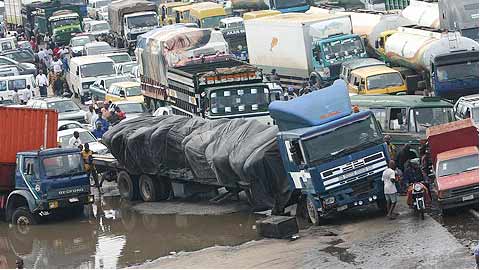
Motorists on this route still groan under intractable and suffocating traffic jams which disturb business as well as the flow of raw materials and other goods from the ports to factories across the country.
In the midst of torn up roads, the taskforce is well on ground doing its bit, as the new administration in Lagos continues the search for an enduring solution to the gridlock stifling business and unleashing hardship on Apapa residents.
BusinessDay gathered that the state governor, Akinwunmi Ambode, has asked the taskforce to extend their stay on roads and bridges leading into Apapa beyond conventional working hours, part of the reason being to ensure that hoodlums who usually take advantage of the gridlock to rob are kept abay, while the route is freed up for motorists.

Ambode constituted the taskforce days after visiting Apapa on June 8 for an on-the-spot assessment of the traffic menace and the poor state of roads within the ports precincts.
The taskforce draws personnel from the army, navy, police, Lagos State Traffic Management Authority (LASTMA) among others.
The governor, who is said to be somewhat impressed with what the taskforce has been doing, it was gathered, wants more done to further ease movement in Apapa and prevent the continued relocation of residents and businesses from the area.
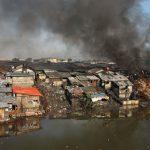
For about three years running, businesses have been relocating from Apapa, owing to increasingly difficult operating environment, leading to high vacancy rates and dwindling property value in the once highly sought after business and residential environment.

The situation is worsened by the fact that over 3,000 tankers arrive Lagos daily to lift fuel, most of them heading for Apapa where over 57 tank farms are located, putting lives and other business at risk. The roads and bridges leading to Apapa are blocked most times, while the residents live in fear, with the presence of the highly inflamable oil tank farms in their neighbourhoods.
The last three weeks have seen motorists and commuters entering Apapa with some ease, as soldiers, naval personnel, the police and LASTMA officials are seen on the roads and bridges, enforcing compliance with the rules agreed to by stakeholders in the transportation sector and concerned Apapa residents.
When BusinessDay went on an assessment tour of the road at the weekend, it was discovered that part of the challenges faced by the taskforce was the poor state of the expressway which the Federal Government claims it has done substantial rehabilitation work on.
The whole stretch of the expressway from the Tin Can First Gate to the Second Gate on the Apapa bound carriageway is in very bad shape, with a large pool of water which even the tankers and trucks have avoided, leading to their parking right at the centre of the expressway.
At the peak of the gridlock on the expressway early this year, the Federal Government terminated its contract with Borini Prono—the Italian firm that was to handle the reconstruction of the expressway from the Liverpool end to Sunrise Bus Stop by Beachland Estate bridge—and awarded the contract for emergency repairs of the bad portions on the expressway to Julius Berger.
“Julius Berger did a very good job within the stretch of the expressway from Coconut Bus Stop to Sunrise Bus Stop, but from Coconut back to Tin Can Second Gate is a disaster, with deep potholes on both sides of the expressway, such that only one lane on the Apapa bound carriageway is motorable”, Emmanuel Ameke, a port operator, told BusinessDay.
Ameke lamented that all business activities around the Tin Can port first or second gate were paralysed, explaining that because of the state of the expressway within that axis, commercial buses avoid the route “and no business survives where there is no human and vehicular traffic”.
Efforts to reach the officials of the Federal Ministry of Works to find out why the emergency repair stopped midway, were futile, as the South West Zonal Controller in the ministry was said to be out of office.
Franco Borini, an official of Borini Prono, told BusinessDay on telephone that his company, which is handling the construction of the 500-capacity Trailer Park opposite Tin Can Second Gate, was still waiting for the Federal Government through the Ministry of Works for the completion of the work.
CHUKA UROKO & JOSHUA BASSEY