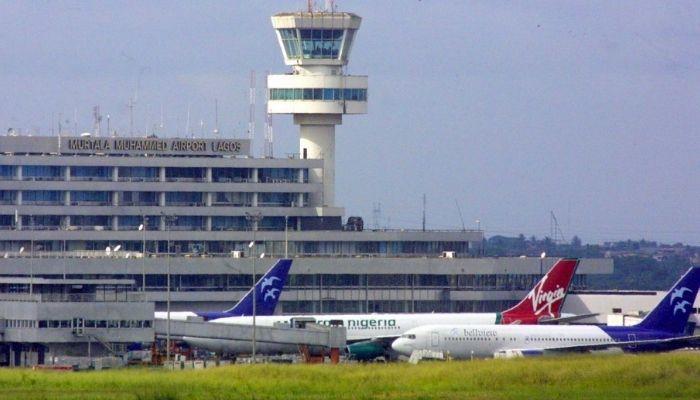
African airlines have recorded a 18.2 percent year-on-year increase in demand for air cargo in January 2026, the strongest growth of all regions which was driven by the growth of global goods trade and a decrease in aviation fuel prices.
The capacity for the African region also increased by 6.5 percent year-on-year.
This was contained in data released by the International Air Transport Association (IATA) for January 2026 global air cargo markets.
Several factors in the operating environment which led to the growth, as recorded in the report, include the global goods trade, which grew by 4.9 percent year-on-year in December 2025. Also Jet fuel prices decreased by 6.5 percent year-on-year in January.

Read also: African airlines see 15.6% rise in cargo demand on holiday timely delivery
Global manufacturing sentiment strengthened in January, with the global Purchasing Managers’ Index (PMI) rising above the 50-point expansion threshold to 51.8, its highest level in over a year and a half.
The PMI for new export orders climbed to 49.9, slightly below the growth threshold but the highest in 10 months, reflecting mixed but cautiously optimistic industrial growth.
Globally, total demand, measured in cargo tonne-kilometres (CTK), rose by 5.6 percent compared to January 2025 levels (+7.2 percent for international operations).
Capacity, measured in available cargo tonne-kilometres (ACTK), increased by 3.6 percent compared to January 2025 (+5.7 percent for international operations).
“The demand for air cargo had a robust start to 2026, recording 5.6 percent year-on-year growth in January. At the regional level, the story is more polarised. Carriers in Africa, the Middle East, Asia-Pacific, and Europe all reported faster growth than the global average. In contrast, carriers in the Americas reported aggregate contractions.

“The resilience of air cargo will continue to be tested in the coming months. In addition to the long-running uncertainties of evolving US trade policies, the outbreak of hostilities in the Middle East will weigh heavily on global supply chains.
Addressing these topics will add extra importance to discussions at the upcoming World Cargo Symposium in Lima, Peru (10-12 March 2026) where strengthening air cargo’s adaptability and efficiency through digitalisation and other measures will be a key focus,” said Willie Walsh, IATA’s Director General.
Asia-Pacific airlines saw a 7.8 percent year-on-year growth in air cargo demand in January, maintaining the region’s role as the primary engine of the industry expansion. Capacity increased by 3.3 percent year-on-year.
Read also: Global air cargo demand achieves record volume in 2025 on e-commerce strength
North American carriers saw a 0.5 percent year-on-year decline for air cargo in January. North America was the only region showing a capacity decrease, slightly declining by 0.2 percent year-on-year.
European airlines saw a 6.9 percent year-on-year increase in demand for air cargo in January. Capacity increased 4.9 percent year-on-year.
Middle Eastern carriers saw a 9.3 percent year-on-year increase in demand for air cargo in January. Capacity increased by 9.9 percent year-on-year, the strongest rise of all regions.
Latin American and Caribbean carriers saw a 2.0 percent year-on-year decrease in demand for air cargo in January, the weakest performance of all regions. Meanwhile, capacity increased by 2.3 percent year-on-year.