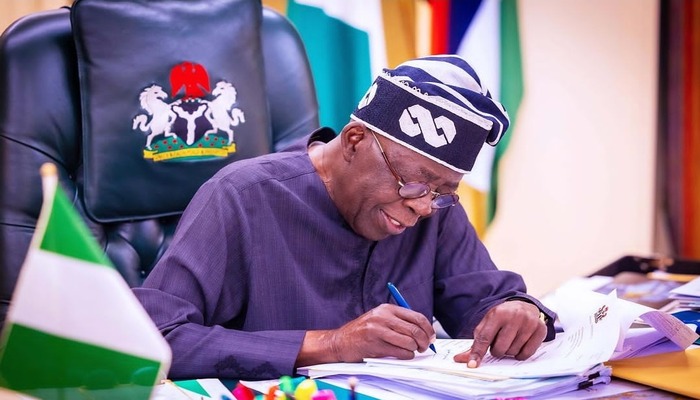
Aigboje Aig-Imoukhuede, vice president of the Nigerian Stock Exchange (NSE), has charged stock exchanges in Africa to partner with each other in order to unlock the continent’s growth potential and advance the development of its financial markets.
“African financial hubs (South Africa, Nigeria, Kenya and Egypt) must continue to remain relevant and competitive at the global level,” said Imoukhuede at the building African Financial Markets Seminar held at the Johannesburg Stock Exchange.
“We must do so by attracting a critical mass of international financial services institutions, and major multi-national corporations and firms, allowing us to act as intermediaries connecting national, regional and international financial services participants directly.”
In his keynote speech, he revealed five existing opportunities in which impact could be made by African Exchanges. They include: capital formation, income inequality and the wealth divide, economic policy and planning, sustainability and best practices.

“By reconsidering our current priorities and building on our knowledge base of models and practices that enable us leapfrog from current third world realities to higher levels of development, we can change the Africa Rising narrative and make it ‘Africa has arrived,” he said at the event.
Africa, recorded an average growth rate of five percent over the past 10 years, and is expected to further lead global economic growth, following its resilience to regional and global headwinds.
Of the ten fastest growing economies in the world currently, seven are within Africa. The highest growth rate, recorded by South Sudan stands at 24.7 percent.
Economic growth rate for Sierra Leone is at 13.3 percent, Liberia, 8.1 percent, Cote d’Ivoire 8.0 percent, and Ghana 7.9 percent.
In Nigeria’s Q2 GDP report, the economy recorded a 6.54 percent growth rate.

As a measure, Nigeria’s capital market constitutes only about 20 percent of GDP, while that of South Africa is 184 percent of GDP.
This compares with 114 percent in the US, and 135 percent in the UK (World Bank 2012 figures).
Investor confidence, driven by policy consistency in African capital markets is considered as a critical success factor.
In Nigeria, measures to improve competitiveness of the NSE include the recently developed Corporate Governance Rating system (CGRS) for listed companies, done in partnership with the Convention on Business Integrity (CBI), according to Imoukhuede.
Some problems faced by African capital markets include issues such as dearth in the quantity of stocks traded and low liquidity.
According to Imoukhuede, African security exchanges must drive change by prompting governments to implement enabling policies that will encourage the flow of capital and investment in the continent.
“Regulators have a responsibility to drive wealth creation, taking learning from the experience of other markets, while considering the nuances of their environment,” he said.
To attract more companies to list, African Exchanges must partner with policy makers to take full advantage of developmental initiatives which required massive mobilisation of capital. He gave the example of sector-wide policies calling for recapitalisation and consolidation by operators, and other privatisation/commercialisation programmes in sectors such as telecommunications, extractive industries.
The seminar, established to promote the growth and development of African financial markets by giving market players the opportunity to deepen their operational knowledge about topical subjects, was organised by the JSE and the African Securities Exchange Association (ASEA), with support from the World Bank Group.
Edozie Ifebi