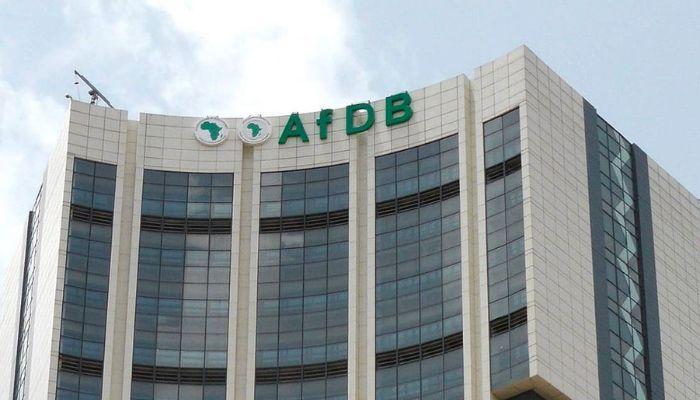
The African Development Bank (AfDB) has announced that the African continent currently need about $811.1 billion per annum in financing to achieve a transformative economic growth.
Abdul Kamara, director general, Nigeria Country Department, AfDB stated this on Thursday at the 2025 Nigerian Economic Society conference held in Abuja.
According to Kamara, driving transformative growth will require significant investments in four key sectors, including infrastructure, energy access, education, and technology and innovation, especially in soft skills and capacity development.
He explained that for transition states in Africa to achieve structural transformation, they would require about $210 billion per annum, with a financing gap of $188.1 billion.

Read also: Afreximbank, ShafDB move to unlock $1bn in investments
Transition States, by the African Development Bank’s nomenclature, are countries in Africa that are characterized by fragilities caused by a combination of economic, political, security, conflict, organized crime, and climate change factors, which threaten their stability and development.
“This policy dialogue is about finding solutions to achieve transformative growth in Africa’s transition states through capacity development and knowledge management. These challenges are not insurmountable. We have the innate capabilities in Africa to find solutions to our problems.
“To achieve transformative GDP growth rates, the continent requires about $811.1 billion per annum in financing, with a financing gap about $680.3 billion per annum.
“For Transition states in Africa to achieve structural transformation, they would require about $210 billion per annum, with a financing gap of $188.1 billion. Indeed, the 24 Africa Transition States face the greatest constraints, stemming from fragile institutions, conflict-affected economies, and limited revenue mobilisation. Their progress will significantly drive progress across Africa,” he said.

He further disclosed that the bank remains committed to driving capacity development on the continent, adding that the Bank has a dedicated funding window for transition states, which amongst others, funds projects on capacity building and knowledge management across the areas of the Bank’s work in the states.
Also speaking Eric Ogunleye, director African Development Institute noted that fragility and conflicts are devastating to Africa’s development, with over 250 million Africans directly affected.
Fragility and conflicts affect economic growth and the transformation needed to achieve the Sustainable Development Goals (SDGs) and the Africa Agenda 2063 both in the transition Ssates and Africa generally.
He explained that several transition states, such as South Sudan entered a deep recession, with its GDP contracting by 26.4 percent mainly because of the adverse effects of the conflict in Sudan, through which it ships its oil to the market.
“To spur and sustain transformative growth, African economies need to grow at a rate of about 7 percent annually and GDP per capita of 3.5 percent consistently for four to five decades.
“This will require high productivity in key economic sectors to drive Africa’s GDP and GDP per capita growth rates to the right levels and then to implement policies that engender social equity (inclusiveness) and environmental sustainability,” he said.
He explained that although transition states account for a smaller share of Africa’s total financing gap in US dollars, their relative financing gap is higher when expressed in per capita terms and as a percent of GDP, with a median annual financing gap of $225.5 and 42.7 percent of GDP, respectively.
Read also: Cote d’ Ivoire to swear in Sidi Ould Tah as 9th AfDB president
For Adeyemi Dipeolu, consultant and faculty member, African Centre for Economic Transformation, issues such as taxation, illicit financial flows, diaspora remittances and debt must be addressed by African leaders. This is as he described finance as the backbone of transformation.
Dipeolu said Africa must boost its tax-to-GDP ratio, block commercial illicit flows that drained nearly 90 billion dollars annually, and leverage remittances more effectively.
He cautioned that debt distress was widespread across the continent, with African sovereign spreads almost double those of other emerging regions, raising borrowing costs.
According to him, while aid dependency was unsustainable, developed nations still had a moral obligation to support vulnerable African states, particularly in health, education, and humanitarian needs.