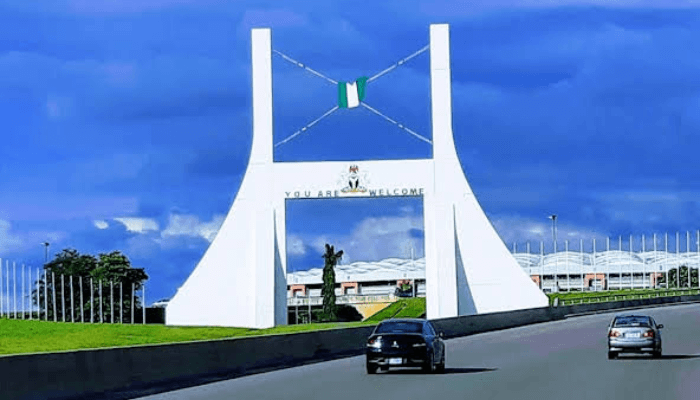
At 50, Abuja is a city of sharp contrasts: luxury estates and power corridors coexist with shanties and street hawkers, while rising living costs and consumption-led growth drive much of its expansion. The capital’s boom is visible—but uneven, reflecting a city growing faster in spending than in productivity.
Conceived in 1976 and officially declared Nigeria’s capital in 1991, Abuja was designed to replace Lagos—a chaotic, coastal megacity—with a centrally located seat of power that would be orderly, inclusive and free from the ethnic and commercial rivalries that defined the old capital. Five decades on, Abuja’s manicured boulevards, master-planned districts and sprawling government complexes stand in stark contrast not only to the economic reality facing most Nigerians, but also to the lives of many of its own residents.

The city’s growth has largely tracked the expansion of the state rather than the private sector. Abuja’s economy is dominated by public administration, diplomacy, construction and services tied directly or indirectly to federal spending. That has made it uniquely sensitive to Nigeria’s fiscal cycles, oil revenues and debt dynamics. When government revenues swell, Abuja booms. When they shrink, the city stalls.

Today, Nigeria is grappling with a cost-of-living crisis driven by fuel subsidy removal, currency reforms and stubborn inflation, though pressures are beginning to ease. Abuja has not been spared. Rents have surged as demand for cheaper housing outpaces supply, fast pushing middle-income workers further into satellite towns such as Kubwa, Karu, Lugbe, Kuje and even neighbouring states like Nasarawa and Niger.
Transport costs have risen, informal markets have expanded and wage pressures are mounting—ironically, in a city built to represent order and balance.

For the poorest residents, the strain is more visible. Informal settlements and shanties have expanded on the fringes of the city and in pockets close to major roads, including areas around Mpape, Durumi, Gishiri and parts of the airport corridor.
Underage beggars and young hawkers weave through vehicles at traffic lights, selling bottled and satchel water, snacks, and cheap wares, or offering unsolicited windscreen cleaning just for a few crumpled notes, or simply asking for alms.
In some parts of Abuja, heaps of refuse and sprawling dumps line the streets, a chaotic mix of discarded food, bottles, plastic, and all manner of waste. Scavengers roam these areas, rooting through waste bins, scraps, and loose items, always searching for what others have thrown away and making a living from what the city leaves behind.


Many spend long hours on the road, exposed to traffic hazards, a sharp contrast to the quiet streets and gated homes of Maitama, Asokoro, Guzape and other high-brow districts just a few kilometres away. That contrast has become one of Abuja’s defining economic features. While the rich elite, diplomats and senior officials frequent upscale restaurants and lounges, a growing underclass survives on informal trade and daily cash earnings. The city’s promise of neutrality and inclusion has given way to a familiar urban divide, shaped by access to land, power and proximity to government.
Yet beneath the formal architecture of power, a quieter economic shift is taking place. Abuja’s nightlife has expanded rapidly over the past decade, with clubs, lounges, gardens, live music venues and late-night restaurants increasingly shaping how the city works—and earns—after dark. Once known for shutting down early, the capital now hosts a growing number of businesses that operate well into the night, or around the clock, responding to a population that no longer conforms to civil service hours.
Retail has followed a similar trajectory. Supermarkets, pharmacies, fuel stations and convenience stores running 24 hours have become more common, particularly in districts such as Wuse, Gwarinpa and parts of the city centre. Shopping malls have multiplied, blending leisure, dining and commerce in ways that were once rare in the capital. While small compared with Lagos’ vast consumer economy, these changes point to a gradual broadening of Abuja’s economic base.

“The city is no longer just a 9-to-5 government town,” Chuks Onwuegbu, who manages a hospitality group with outlets in Abuja and Lagos, said. “There’s demand at night now—from young professionals, security services, and international staff. That demand is creating jobs and pushing investors to think differently about Abuja.”
The shift has provided some insulation against economic headwinds. As public-sector jobs tighten, nightlife and retail offer alternative sources of income, particularly for younger workers locked out of government employment. But these sectors depend on people’s disposable income, which is under pressure as prices keep rising. In Abuja, price pressures are acute: with inflation at 18.0%—the fourth highest in the country in December 2025—and food prices climbing 13.24% year-on-year, even small earnings from nightlife or retail struggle to stretch far enough to cover basic needs.
“These inflation figures are worrying,” Claris Okonkwo, an Abuja-based financial analyst, said. “It’s clear that the cost of living in the capital is putting real pressure on households, and food prices in particular are taking a heavy toll. Policymakers will need to act decisively to ease the burden on residents.”

Abuja also captures Nigeria’s long-term economic bet. Unlike Lagos, whose economy thrives on trade, finance, manufacturing, and a bustling informal sector, Abuja remains dominated by government spending, with much of its growth and employment tied to the public sector.
Private activity is emerging in real estate and services, but the industry has largely stalled, a reality reflected in the Idu Industrial Estate.
Conceived as one of the capital’s industrial anchors for manufacturing, warehousing, and commercial activities, Idu was meant to turn Abuja’s planning ideals into productive economic activity. Years later, poor roads, unreliable power, and years of official neglect have left large sections idle, while businesses struggle to operate. What was designed to generate jobs and manufacturing now underscores how weak follow-through and fragmented governance have blunted the city’s industrial promise, even as demand for productive space in the capital continues to grow.

Infrastructure remains one of Abuja’s defining strengths — and one of its biggest challenges. The city has some of Nigeria’s best roads, planned districts and public buildings, yet the rising cost of completing projects puts growing pressure on public finances, while poorly maintained feeder roads continue to undermine access to residential districts and commercial hubs.
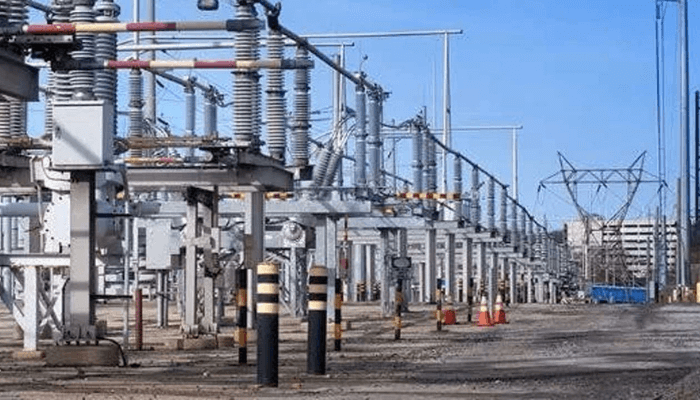
Capital budgets are often crowded out by debt servicing at the federal level, delaying upgrades to transport, water and power systems. For daytime businesses, nightlife venues, and 24-hour retailers, unreliable electricity remains one of the biggest cost drivers, forcing heavy reliance on generators and alternative energy sources.
Transportation remains a persistent weak point. Despite repeated promises by successive ministers of the Federal Capital Territory to deliver an efficient public transport system befitting a modern capital, most residents still rely on private cars, informal taxis and minibuses. The limited reach and dysfunction of Abuja’s rail system since its launch, coupled with inconsistent bus services, have increased insecurity, congestion and costs, particularly for lower-income workers commuting from satellite towns.
Reports of “one chance” operators—criminals posing as taxi drivers—have persisted, defying repeated security clampdowns. For residents and visitors alike, the threat has altered commuting patterns, increased reliance on private transport and raised the cost of living and doing business. “You can feel the tension after dark,” Lara Adeniyi, a civil servant who lives in Gwarinpa, said. “People want the nightlife, but they are also more cautious. The killing of Chinemerem, a nurse at FMC Jabi in Abuja, alongside another professional in the city under similar circumstances, highlights the broader concern over rising insecurity linked to ‘one-chance’ robberies in the Federal Capital Territory.”
Private investment has stepped in selectively—especially in real estate, hospitality and retail—but returns are closely tied to political stability and government activity. “Any slowdown in government business shows up almost immediately,” an executive at a major Abuja-based retail chain, who asked not to be named, discussing sales trends, told BusinessDay. “But when there are conferences, elections or major events, spending jumps.”

The real estate market illustrates the city’s economic contradictions. Luxury developments in Maitama, Asokoro and, lately, Guzape cater to diplomats, politicians and executives, while affordable housing remains scarce. Land allocation and title disputes continue to deter broader private participation.
Still, the growth of entertainment districts and retail clusters has begun to influence property values beyond the traditional elite neighbourhoods. Areas once considered peripheral are attracting developers betting on mixed-use projects that combine housing, shopping and nightlife. That has created pockets of opportunity even as overall affordability worsens.
Abuja’s demographic shift is also reshaping its economy. Originally designed for a few hundred thousand residents, the metropolitan area is now home to several million people. Many work outside the formal public sector, in retail, transport, hospitality and small-scale services that were never central to the city’s original plan. This informal expansion has created jobs, but it has also strained infrastructure, deepened inequality and exposed the limits of planning.
At 50, Abuja faces a strategic question: can it evolve from a government town into a diversified urban economy? Policymakers have long talked about turning the city into a hub for conferences, culture, technology and regional diplomacy. Some progress is visible—international summits, entertainment venues, a growing creative scene and extended retail hours—but these remain peripheral to the city’s core economic engine.
The stakes extend beyond the capital. Abuja’s fortunes are tightly linked to Nigeria’s broader reform agenda. Efforts to widen the tax base, reduce oil dependence, and attract foreign investment will determine whether the city can sustain growth without relying almost exclusively on federal spending. This urgency is underscored by a dramatic collapse in the FCT’s internally generated revenue (IGR), which plunged from N211.1 billion in 2023 to just N9.2 billion in 2024 — a staggering 96% decline, according to data from Budgit’s Tracka report. The unprecedented drop raises serious questions around revenue administration and policy shifts.
For many Nigerians, Abuja at 50 demonstrates what planning and political will can achieve, but it also underscores the limits of state-led development in the absence of a vibrant private sector. The coexistence of shanties and skyscrapers, and underage hawkers and luxury estates, captures that tension more clearly than any statistic.
The next 50 years of Abuja will reveal as much about Nigeria’s economic path as any official policy – measured not in speeches or blueprints, but in the city’s rents, road conditions, evening lights, traffic snarls, security on its streets, and the everyday costs and living standards its residents face.