Governors of Ondo, Ekiti, and Osun States, alongside traditional rulers, women groups, and professional associations, have presented a united front on key issues regarding the ongoing review of the 1999 Constitution.
The positions were submitted to the House of Representatives Committee on the Review of the Constitution of the Federal Republic of Nigeria 1999 (as amended), (Southwest Centre B, Ondo Osun and Ekiti States) chaired by Abiodun Faleke, at a public hearing held in Akure, the Ondo State capital.
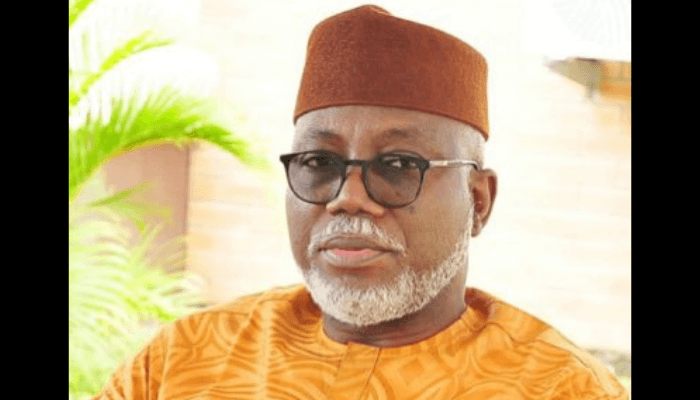
Ondo State Governor, Lucky Aiyedatiwa, who declared the hearing open said the regular review of the constitutional amendments, which fundamentally remains relevant, effective and responsive to the evolving needs of the people.
Aiyedatiwa, however, said the Ondo State was not against the creation of new states as being proposed through constitution review.

According to him, the current exercise would no doubt bring the Constitution in line and strengthen it to accommodate the critical concerns and the most pressing needs of the citizens.
He said; “it is an exercise that presents an opportunity for us to re-examine the framework of our governance structure, to identify areas that require reform and to make informed amendments that will enhance the stability, security and development of our great country.
“The official positions of Ondo State Government on each section are contained in our prepared memorandum for consideration by the House Committee on Constitution Review. We have carefully reviewed the proposed bills and have made recommendations that we believe will enhance our peaceful coexistence as a people of diverse ethnic groups, strengthen our unity and also promote the development and prosperity of our great country.
“However, permit me to state that Ondo State aligns with the progressive aspirations of the South-West Geo-political Zone in advocating for true federalism that reflects socio-political, cultural and economic realities of the federating units. This would be in tandem with true fiscal federalism where states have full control over their resources and revenues, while remitting about 40 per cent of their revenues to the Federal Government.
“Ondo State is of the opinion that not less than 50 per cent of revenue from the federation should be allocated to the states. Furthermore, Ondo State is not opposed to the creation of new States as requested in some of the proposed bills, but the government and good people of Ondo State strongly oppose excising any part of our territory to merge with any new state or join an existing state.”

Ekiti State Governor, Abiodun Oyebanji, represented by the Attorney General and Commissioner for Justice, Dayo Apata, called for equal political representation for women and persons with disabilities, formal recognition of traditional rulers, and restrictions on the indiscriminate movement of herders and livestock across the country.
While the Osun State Governor, Ademola Adeleke, represented by his Deputy, Kola Adewusi, called for the reduction of the high cost of governance and political campaigns, warning that unregulated campaign expenses could lead to desperation and electoral malpractice.
Read also: NASS to transmit constitution review report to States in December
Also speaking, the National President of the Nigeria Union of Journalists (NUJ), Alhassan Yahaya, called for the constitutional protection of media professionals and the establishment of a media bailout fund to support struggling independent media organizations across the country.
Represented by the Ondo State NUJ Chairman, Leke Adegbite, Yahaya, stressed the urgent need to address the growing threats to press freedom, journalist safety, and the economic viability of independent media outlets in Nigeria.
He described journalism as a critical pillar of democracy and transparency, warning that threats to the safety of media professionals and financial instability of media houses are not just industry concerns, but national issues that could undermine good governance and social cohesion.
The NUJ also proposed the inclusion of specific provisions in the constitution that guarantee the safety and security of journalists and their equipment.
Yahaya, therefore, urged the federal lawmakers to align Nigeria’s press freedom protections with international best practices, citing examples of democracies that have adopted media bailout strategies to preserve journalism as a public good.
Speaking in the same vein, the Commandant-General of the Nigeria Security and Civil Defence Corps (NSCDC), Ahmed Abubakar Audi, called on the National Assembly to grant full constitutional recognition to the corps in line with its original mandate of securing lives and property, especially the nation’s critical assets and infrastructure.
Audi, who was represented by Commandant Hammed Abodunrin traced the origin of the corps to the Nigerian Civil War era when it emerged as a voluntary quasi-military organisation to assist the civil populace by providing security education, rescuing the vulnerable, digging trenches and safeguarding critical national assets while the battle lasted.
The NSCDC boss, however, lamented that Section 214 of the 1999 Constitution which states that there shall be only one police force in the country has been misinterpreted over the years, leading to an unhealthy relationship between the corps and the police force.
He added that the appointment of a retired police officer as Acting Commandant of the corps at inception to mentor the personnel also contributed to a misunderstanding of the role of the NSCDC.
He said, “This led to untended consequences of vigorous and repeated attempts of integration instead of collaboration as the expected mentees are subsequently being treated as competitors. It is no longer news that NSCDC personnel are repeatedly harassed, brutalized, arrested, detained and even killed for doing what is always referred to as constitutionally guaranteed exclusive police jobs.
“Sometimes, NSCDC personnel and their commanders were ordered to produce the Act that empower them to be carrying out security and safety assignments. Even as brothers and sisters that share the same goal of protecting lives and property, things always change when it comes to the issue of the constitution.”
Representing traditional rulers, the Olowo of Owo and Chairman, Ondo State Council of Obas, Gbadegesin Ogunoye advocated for the constitutional recognition of monarchs and their inclusion in policymaking processes, noting that they remain the closest authorities to the grassroots.
BusinessDay reports that the Chairman, Southwest Centre B, Faleke had earlier stated that the purpose of the public hearing was to collate the views of citizens across the Southwest toward drafting a constitution that meets the people’s yearnings for development, equity, and justice.