The much-touted agric revolution and food security scheme in the Niger Delta seems to take off with the entry of the Niger Delta Development Commission (NDDC) in the 38,250 agripreneurship scheme.
This is a scheme where the International Fund for Agricultural Development (IFAD) sponsors 25, 500 beneficiaries in six states while the NDDC sponsors 12,750 beneficiaries in three states (Rivers, Akwa Ibom, Imo). The IFAD covered states took off over six years ago when the NDDC was still in the wilderness with high distrust from corruption, highly condemnable leadership style, and rotten funding and procurement system. Now, the NDDC which looks rebranded has joined the scheme by releasing $5m of their pledged $30m.
With this, all the nine states appear to be on fire in the agric revolution scheme with ‘food soldiers’ now marching round the region boosting the agric value chain.
Read also:NDDC Agric revolution in Niger Delta: IFAD/NDDC team begins intensive inspection in Akwa Ibom

Now, over 1050 youths have been trained in the phase one of the first batch while another 1,500 are said to have been profiled to begin their training.

NDDC/LIFE-ND food soldiers in Akwa Ibom
This has made many to confirm that youths and rural dwellers in Rivers, Akwa Ibom, and Imo states are beginning to reap the rewards of the Livelihood Improvement Family Enterprises Project in the Niger Delta (Life-ND) as the National Project Coordinating Office of the NDDC embarked on an inspection tour across several communities in the three states to assess the progress of the initiative’s first batch.
In the benefiting states, the visit, which covered about 12 communities across five local government areas each, revealed a vibrant display of skills, innovation, and business readiness among the 1050 incubatees who have been trained under the project in areas such as aquaculture, cassava, and poultry.
LIFE-ND is being funded by the Niger Delta Development Commission (NDDC), International Fund for Agricultural Development (IFAD), and the Federal Government in a partnership tagged FG/IFAD/NDDC/LIFE-ND project.

Trainee farmers in Ogu Bolo in Okrika LGA of Rivers State
Rivers ‘food soldiers’ ready:

In Rivers State, speaking during the visit to the centres on Wednesday, June 24, 2025, the Rivers State Project Coordinator, Loveday Itatat, expressed satisfaction with the implementation so far.
“We’ve reached 66 communities in just six to eight months. The first batch involved 350 incubatees and 25 incubators. We have now selected the second batch and are currently profiling them.
“Hopefully, results will be out by the first week of July, and we are targeting additional 500 youths”.
According to Itatat, the purpose of the inspection was to provide evidence that the initiative is yielding tangible results.
“We met the incubatees on ground; they showed us what they’ve learnt. It’s real, and the impact is visible. The youths are eager, asking when the next batch will start. This shows our effort is not in vain.”
Incubation centres visited in the state included aquaculture hubs, poultry farms including brood-and-sell broilers. There are also various categories fish business such as fish production, processing, marketing.
One such location was Megalakes Fish Farm in Ogu Bolo, where Ayinde Peter, the farm manager, stated, “We have the capacity to handle over three million tilapia at once. Thirty incubatees are currently being trained here, and the turnout has been impressive.”
Also speaking, Assistant Director at NDDC and the organisation’s representative on the project, Stella Manureh, described the visit as a technical oversight function.
“We asked the incubatees questions. They were confident, knowledgeable, and grateful for the training they’ve received. It’s important we see things ourselves since NDDC is the donor and head of the technical support committee.”
At Defaka-Ama and Ozu-ochie in Opobo/Nkoro LGA, the State Agric Promotions Officer, Jemina Horsfall, confirmed that the apprenticeship stage has been completed for both short and long-term incubatees.
“In Ozu-ochie, we trained 14 incubatees in poultry, and in Defaka-ama, 10 were trained in aquaculture and fish marketing. Some have already received funds to begin their mentorship phase”.
The trainees known as incubatees on the programme expressed thanks to NDDC for the training with high hopes to establish theirs.
Mary Ishmael from Ogu Bolo, in fish production department, described how the programme gave her the skills to be able to manage her own fish pond in the future, saying the training has been amazing.
Also, Ereyika Harrison in fish processing revealed how the project helped her not only process and spice fish but also develop a brand and register her business.
Darling Oruitemeka in fish marketing, said the training changed her perspective. “I now understand the importance of keeping records, marketing on social media, and growing my business to reach rural areas where fish is scarce.”
Chief Executive Officer of Agiotedem Farms and incubator in Bolo Town, who’s centre serves as an incubation site, praised the trainees’ dedication, saying he was shocked by their commitment.
Incubatees like Ben-Iwo Charity and Isaiah Ibim in poultry farming spoke passionately about their newly acquired skills.

The Izombe team of Oguta LGA, Imo State
Akwa Ibom: In love with incubate system:
The incubators and incubatees in Akwa Ibom State under the FG/NDDC/IFAD/Life-ND project have expressed satisfaction with the model which they noted is driving agricultural revolution in the state.
Under the model the incubators are hired to train the incubatees in various aspects of fish and poultry production over a period of time to enable them acquire the requisite knowledge to be self-sustainable.
Speaking during an inspection visit by officials of the NDDC and Life-ND to select farms in Essien Udim Local Government Area on Wednesday, June 25, 2025, the manager of Eteyit Farms, Bassey Eteyit, described the model as laudable and sustainable.
He said he never took it seriously when the inquiries came because of previous disappointments, but that when the NDDC/IFAD/LIFE-ND team came, everything turned out as promised. He said the incubatees under him have got fair knowledge of fish production and can process fish for marketing. ”It is a project that I believe is quite laudable and sustainable,” he said.
One of the Incubatees, Utibe Monday Alexander, said he has learned a lot from the programme. According to him, “This project has helped a lot persons I want to thank the sponsors of the project and I advise them to sustain it. I came here with no knowledge and anything but I now know how to rear fish and even process for marketing.”
Also, Ekaette Offum said the greatest incentive from the project is the payment of stipends to sustain the trainees. She added that she has acquired enough knowledge and if given the opportunity she is ready to train others.
Speaking at Bajims Farms also in Essien Udim LGA, one of the trainees, Rose Alex, expressed appreciation to God and sponsors of the project and called on them to sustain the project.
Some of the trainees expressed concern over delay in payment and called on the sponsors to look into the issue.
Earlier, in his address, Chikezie Munachiso, the team leader to the Akwa Ibom centres, who is an assistant director of Agriculture and Fisheries at NDDC in Port Harcourt, Rivers State, explained that the visit was undertaken to assess the progress and to see how the incubators and the Incubatees were faring.
“We are here on routine checks to know what you people are doing and how you are performing and to listen to your challenges and recommendations,” Munachiso said.
Imo farmers target export:
In Imo State, the inspection team immediately admitted that funds injected were impactful.
The team led by Wale Oretan, Deputy Director, Agric & Fisheries, Port Harcourt, commended the incubator and the incubatees of aquaculture at Izombe, Imo State.
The incubatees at aquaculture and its value chain under Uchegbu Chijioke (incubator) said they were happy with the enterprise and its value chain now that they have been exposed to it and have learned much.
Corroborating one another while speaking, they said: “We have now discovered ourselves and can stand on our own. We commend and thank NDDC, and we say, God bless them.
“We can now do direct and indirect fish marketing businesses as well as handle digitalized fish marketing business”.
Nwoke Ifeanyi said: “We have learned a lot and now, we can feed fish, we can hatch fish, and we can manage the business. We can use the enterprise to feed our families.
“We have learned so much from hatching, how to separate and handle fingerlings, processing, fish smoking (drying), packaging, and marketing. In marketing, we have face-to-face marketing and advertising, and customer service that boosts business relationships. We have also known how to make the price affordable for both the rich and the poor”.
Imo State special cassava farmers say they are eager to join the garri export market soon.
This is because they are being trained by the best hands to produce and process garri under global best practices which may make their products meet international standards, thus non-oil export may be a huge opportunity staring at them.
The NDDC and IFAD have also insisted on regular inspection to ensure the prompt delivery on timelines.
The inspection which was witnessed by media men also led to Izombe town in Oguta LGA where Okorie Emmanuel, an incubator hinted of the export possibility.
He admitted that the NDDC impacted very well on Izombe community. He said: “Things we didn’t know before, we now know. We want to tell you to continue this. Nigeria will be a garri-exporting country and would be a hub of the garri industry with huge value chain”.
The regular inspections are to ascertain how well the incubators/incubatees are doing at the centres, find out their challenges and capture good practices for upscaling in the course of the incubatees passing through the incubators’ tutelage.
This was after the process of sensitization, profiling and selection targeted at meeting the set goal of 4,250 beneficiaries in each of the states of Akwa Ibom, Imo and Rivers over the six-year implementation window for the first phase. The identified beneficiaries are profiled and prospective incubatees and incubators are selected. Imo State has focus for Cassava, Rice, Poultry and Aquaculture.
The NDDC/LIFE-ND project inspection team commended the incubator and the incubatees of cassava and aquaculture at Nnebukwu town in Izombe, Imo State.
The incubatees at aquaculture and its value chain under Uchegbu Chijioke (incubator) said they were happy with the enterprise and its value chain now that they have been exposed to it and have learned much.
Their appeal to the NDDC and LIFE-ND is to help them form cooperatives in the various commodities they have trained on and to help them explore export market. They also pleaded for modern farming tools to make it more modern and even more scientific.
Ifeanyi, an incubatee, appreciated NDDC for bringing this kind of opportunity to the rural areas, especially the rural dwellers in Izombe to ensure that they had food to eat, do business, and earn money”.
Uchegbu Chijioke,an incubator, who is the national vice president of the Catfish and Allied Fish Farmers Association of Nigeria (CAFFAN) described the project as life enhancement-driven devoid of nepotism, tribalism, and devoid of political influence.
At Nnebukwu in Oguta LGA which is the cassava hub with its full value chain, Oretan from the NDDC explained that the NDDC was the major financier of the project (in Imo, Rivers, and Akwa Ibom).
Emmanuel Okorie, an incubator, explained that the programme started around March 2025, adding that they were into cassava production, processing, and marketing. He added that the incubatees have learned a lot about cassava production processes and its value chain enterprise.
They have also known varieties of cassava stems, (sticks) that can give good yields and the incubatees can now process cassava to gari, extract starch, and prepare fufu to sell in the market and make some money.
“LIFE-ND has impacted a lot on them and the incubatees can stand on their own and do very good gari business”, he said.
Some incubatees that spoke in turns explained very well to the satisfaction of NDDC and IFAD teams what they have learned and how they have started practising on their own from land clearing, cleaning, procuring the cassava stems, cutting them into the required measurement (20 cm and 26 cm), spacing (which is one meter apart) and planting the stems in a slanting way.
The incubetees in turn appreciated NDDC and the Federal Government for the empowerment brought to the rural dwellers. The incubatees noted that this has already changed their method of cassava farming. They said with this enterprise, they will see it as a good occupation and can use it to feed their families as well as earn money”. The Nnebukwu cassava hub is made up of 27 incubatees, 15 males and 12 females.
Responding, NDDC’s Oretan said: “Carry on with the zeal you had when it was first introduced to you. In cassava, no part of it is a waste. Try as much as possible to invest more. I can see that this programme has come to add value to your life”.
Oretan said that funds injected into this project was not a waste because it has evidently impacted well on the lives of the people.
Some of the incubatees in the marketing segment explained some of their success stories and much profits they have made.
Oretan commended them, saying; “We are so impressed with what you are doing to be complete business men and women. LIFE-ND wants success stories from you”.
Nigeria is pushing from $2.5bn in 2021 to $5.5bn in 2024 in non-oil export, getting to 15% of the export market for Nigeria.
The FG wants non-export to head to up to 50% in the coming years to wean Nigeria from oil forex dependence.
Experts from the Nigeria Export Promotion Council (NEPC) and the Institute of Export Operations and Management (IEOM) have said Nigeria’s best hope in boost non-oil export is in agric value chain.
They said improving the planting, harvesting, and processing methods to reduce toxins would reduce rejection of Nigerian agric products at entry ports of those importing from Nigeria and help Nigeria play bigger in the international commodity market.
This may be where the IFAD/NDDC scheme may come in with a new army of export-minded farmers especially in cassava.
Background:
The design of the project is such that beneficiaries’ engagement begins with sensitization of the community members and leaders as well as identification of potential (trainers) incubators and incubatees (trainees) within the participating communities and LGAs.
The essence of this is to create community awareness and instill a sense of ownership. A team of project staff from the National and State project coordinating offices usually ensures this exercise is a success across the participating states. After the sensitization exercise, potential incubators and incubatees are profiled. These are the key players in the LIFE-ND incubation model. This model takes its roots from the traditional master-apprenticeship system popularly practiced in the Eastern region of Nigeria. As a set target each state is expected to empower 4,250 beneficiary within the implementation period and there is a deliberate effort at ensuring gender balance is achieved.
1.
Inline image
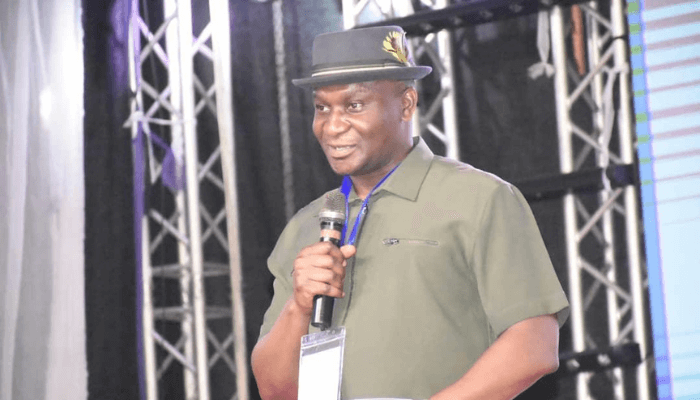
Samuel Ogbuku, NDDC CEO
2.
LIFE-ND national coordinator, Abiodun Sanni
3.
Inline image
Trainee farmers in Ogu Bolo in Okrika LGA of Rivers State
Inline image
NDD/LIFE-ND food soldiers in Akwa Ibom
Inline image
The Izombe team of Oguta LGA, Imo State