I never knew my father.
He died when I was just eight months old, but I was told he was the happiest man alive the day I was born. You see, he had two sons already, and all he ever wanted was a daughter. So when the scan revealed that I was a girl, the excitement that followed was loud. My mother often told me how he danced in the hospital waiting room, telling everyone who cared to listen, “She’s coming — my princess is coming.”
More special still, I was born on his birthday. It was like destiny had carefully tied us together. My mom said those eight months we had together were magical. He doted on me endlessly, but he died after a sudden, mysterious illness that started in the office. And that was the end of my father’s story… or so I thought.
I grew up with my mother’s deep love and my brothers’ protective affection. Our home had a big framed picture of my father — the one where he wore that signature soft smile. I grew to love that picture more than I ever understood.
But everything changed on my 13th birthday.

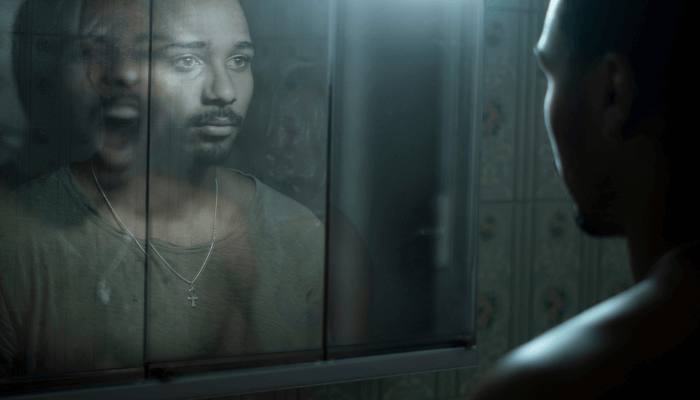
That day, while admiring myself in the mirror, I saw something. At first, I thought it was just my mind playing tricks on me. But there it was — my father’s face. Clear as daylight. That same soft smile that I liked.
I screamed. My mom rushed in. My brothers joined. But when they stood beside me in front of the mirror, the image vanished. They saw nothing.
I kept seeing him, but only when I was alone. I saw him once a year — always on my birthday. He would appear in the mirror, smiling. Silent. Watching. As I got older, I began to embrace it. It wasn’t scary anymore. It became comforting. A strange connection with the father I never knew.
But when I turned 18, it changed.
The reflection came as expected, but this time he wasn’t alone. Another figure stood beside him. A shadowy male figure. My father no longer smiled. His face wore a sad look. And then a faint voice whispered a name I had never heard before:
“Idris Olukunle.”

I asked my mother casually, “Mom, do you know anyone named Idris Olukunle?”
She froze. The mug in her hand slipped and shattered. She looked like she’d seen a ghost. “Where did you hear that name?” she asked, her voice trembling.
I told her everything — the mirror, the reflections, the name. She was shaken.
“I haven’t heard that name in years,” she whispered. “He was your father’s colleague. The last time I saw him was when they brought your dad home from work, already sick. Idris was there. After that, I never saw him again.”
If Mom didn’t believe anything I told her in the past about the reflection in the mirror, she would believe me now, because there was no way I would have known that name unless Dad had told me himself. Mom began to look at me strangely and I could tell that I scared her most time.
Strangely, the mirror stopped showing anything after that birthday. But the name Idris Olukunle burned itself into my memory like a brand.
Years passed. I moved on. Life moved forward. Then came the unexpected.
A friend from work invited me to celebrate Sallah at his family’s home. His uncle, a respected Alhaji, had slaughtered several rams and we were promised a feast of jollof rice, grilled meats and laughter. I was with a few of my friends from work, but the moment we stepped into the compound and our host introduced his uncle, my skin prickled.
“This is Alhaji Idris Olukunle,” he said.
The name struck me like thunder. Who would have thought? Imagine meeting him like this. What are the odds?
He was older, greyer and rounder, but the presence matched the image I saw in the mirror. This was the man who stood beside my father’s ghost. He smiled warmly at me. I didn’t react. I greeted him. I smiled back. But I knew this was the man my father wanted me to find.
It took me almost a year to dig deeper. I pretended to grow close to the family, and I visited often. I observed. And then I found the truth.
It came through one of his ex-staff who spent half of his day drinking. He was drunk on palm wine, but his memory was as clear as day.
He had worked with both my father and Idris, and he remembered them both vividly. Especially “that promotion issue.”
My father had been up for a regional director role. Everyone knew he deserved it, but Idris also wanted the position badly. However, the board had decided that it would go to my dad.
“Idris wasn’t happy,” the man told me. “Your late father — may his soul rest in peace — fell ill just days before the announcement. He just collapsed one afternoon in the office and never recovered. It was too sudden.”
He leaned in, voice low. “There were rumours that Idris used local means. People said he consulted some babalawo in Ibadan, but we couldn’t prove anything. And after your dad died, Idris got the promotion.”
My head spun. All the pieces clicked into place. My father hadn’t just died — he was murdered for ambition. And there I was, eating jollof rice under the same roof as the man who poisoned him.
I didn’t go to the police. They wouldn’t believe a whisper from the past. I didn’t confront him either. That would’ve been too easy or too dangerous. Instead, I became the shadow in his mirror.
It began with anonymous letters — nothing dramatic — just phrases like, “I know what you did,” or “You can run but you can’t hide.”
I used my tech skills to hack his emails and leak shady dealings to his company. They launched an audit, and he lost his position.
Then came the personal hits. I exposed an affair he was having. I leaked all the juicy details about his ‘side dude’ and his wife left. His sons, including my once-close friend, turned their backs on him. Everyone was disappointed in him.
Then I mailed him a picture. A photograph of my father, and on the back, I wrote:
“I’m watching you.”
A year had passed. I hadn’t thought much about Idris since the day I sent that photo. Then I saw a headline in a business blog:
“Former Director Arrested in Corporate Fraud Probe.”
I clicked. And there he was — Alhaji Idris Olukunle. Frail. Unshaven. His agbada looked oversized.
They said he had been laundering money through dummy companies for years. The same position he stole from my father had given him the power. Now it was his curse. A whistleblower snitched on him, and his assets were frozen. A former giant, reduced to rumours and court dates.
But what caught my attention most was a paragraph in the article:
“Sources say Mr. Olukunle has been behaving strangely in detention, refusing to sleep with the lights off, speaking to unseen figures and asking why there’s a mirror in his cell.”
A mirror in his cell! I understood what this meant, and it made me smile.