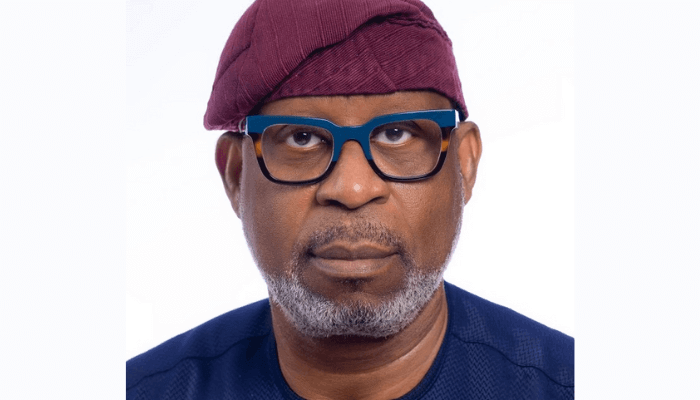
Dele Alake, Minister of Solid Minerals Development, has stressed the need for global collaboration to drive the needed change in energy transition.
Speaking at the Organisation for Economic Cooperation and Development (OECD) Forum held in Paris, France, the Minister underscored the importance of global partnerships in building a resilient and sustainable mining sector.
“With the emergence of the global energy transition, there has never been a more critical moment for decisive leadership. The future of electricity, transportation, telecommunications, and indeed global prosperity depends on the work we do here. Let us embrace this opportunity—not just to discuss change, but to drive it”, he said.
Alake, while highlighting the critical role of mining in the global shift toward greener energy, emphasised the need for smarter site selection, optimised operations, sustainable processing, waste management, and environmental stewardship as a responsibility owed to future generations, not merely a policy aspiration.

The Minister outlined Nigeria’s proactive steps to attract investment into its solid minerals sector, citing investor-friendly incentives such as import duty waivers, accelerated capital allowances, and tax holidays. He stressed that the incentives were being implemented alongside robust reforms prioritising sustainable extraction, domestic processing, and enhanced infrastructure connectivity.
Read also: Nigeria secures major mining investment, targets $25bn GDP boost, $8bn FX – Alake
“These reforms are already delivering results. In the first quarter of 2025 alone, Nigeria generated N6.96 billion in mining license fees, formalised over 1,200 artisanal and small-scale mining cooperatives, and registered 118 private mineral buying centres. Our Mining Cadastral Office processed nearly 1,000 title applications, with hundreds of licenses approved to accelerate responsible development”, he noted.
Alake also highlighted Africa’s strategic importance in the global energy transition, noting the continent’s growing share in the worldwide supply of critical minerals such as cobalt, lithium, copper, and tantalum. He called for a paradigm shift from Africa being mere exporters of raw materials to becoming leaders in value-added processing and high-value mineral supply chains.
He noted that as Chair of the Africa Mineral Strategy Group (AMSG), I work closely with my counterparts across the continent to advance a shared agenda of value addition, resource mobilisation, and responsible development,” he affirmed. “Our focus is clear—unlocking inclusive growth from Africa’s vast mineral wealth.”

Reiterating the need for cooperation, Alake stressed that building resilient, transparent, and ethical mineral supply chains requires multi-stakeholder collaboration between governments, the private sector, civil society, and local communities.
“Nigeria is ready to work with global partners to promote responsible sourcing, encourage beneficiation, and deliver long-term economic value,” he concluded.