As the race to lead the African Development Bank (AfDB) heats up, all eyes are on the upcoming Africa CEO Forum, where the five leading contenders for the presidency will take the stage for a high-stakes debate.
For the first time in the Forum’s 12-year history, candidates vying for the top job at Africa’s premier development finance institution will publicly present their visions for accelerating the continent’s economic transformation.
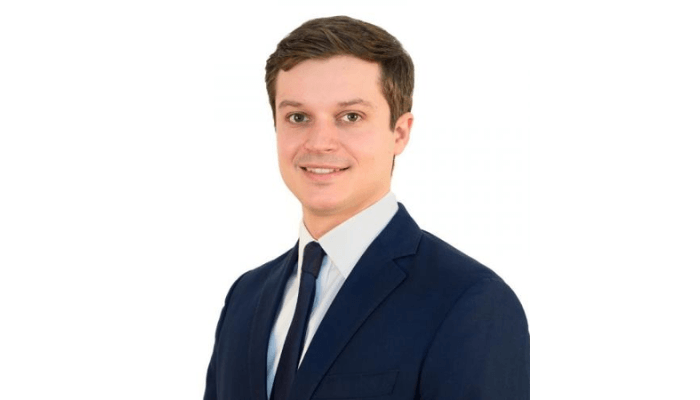
In this exclusive interview with Lolade Akinmurele, deputy editor at BusinessDay, Adrian Fielding, Director of the Africa CEO Forum, shares why this debate could be a turning point not just for the AfDB, but for the future of African development. Fielding also gives a behind-the-scenes look at the thinking behind this year’s theme and why the continent’s private sector is being called upon to lead like never before.
Lolade: The Africa CEO Forum is here again. It’s shaping up to be a very interesting edition. This year’s theme, “Can a new deal between the state and the private sector deliver Africa a winning hand?” caught my attention. Could you walk me through the thought process behind choosing this theme and why it feels particularly important at this moment?

Adrian:
Absolutely. I’m not sure how familiar you are with the Africa CEO Forum, but we’re now in our 12th edition. The themes we select are closely aligned not just with the broader geopolitical and economic landscape, but most importantly, with what is top of mind for African executives. That’s really our DNA.
Historically, the focus was on the need for African executives to have a stronger voice in domestic decision-making processes. Over time, and especially since COVID, the issue of economic sovereignty has gained prominence. If you look at the global landscape today, economic nationalism has resurged. Protectionist tools that would have been unthinkable five years ago are now commonplace, and the international context has become increasingly transactional and mercantile.
In that context, power – the ability to influence and protect national interests – is crucial. At the Africa CEO Forum, we believe that Africa’s “superpower” is its private sector. Deploying that asset effectively to advance African interests is critical. Hence, this year’s theme focuses on forging a new deal between the public and private sectors, one that delivers results not just for businesses and governments, but also, crucially, for citizens.
We structured the approach around three pillars. First is accountability and governance. There is no longer a global governance model for Africa to emulate, if there ever truly was. African executives consistently tell us they want more productive, fast-moving, business-minded, and technology-enabled governments. Such governments can unlock private sector investment and drive infrastructure and economic growth.
Second is a smart industrial policy. We emphasise the word smart. Protectionist tools are back in fashion globally, but poor policy can be more damaging than inaction. Import substitution, tariffs, and export restrictions must be carefully crafted with full consultation with the domestic private sector. Ill-considered measures can backfire badly, and we are already seeing examples of that on the continent.

The third pillar is the African Continental Free Trade Area (AfCFTA).
Since its inception in 2019, the AfCFTA has been a recurring theme at our forums. We believe firmly in its potential. In an increasingly fragmented global economy, the AfCFTA can make Africa a “big fish,” enabling the continent to grow its internal market while still trading externally. It’s about enlarging the African pie, creating a non-zero-sum game where all nations benefit without sacrificing their global partnerships.
As you can imagine, the thought process behind this year’s theme began in November and crystallized by March. It has been a deeply considered process, and I hope you’ll agree it is a timely and meaningful focus.
Read also: Tah time: Mauritanian contender for AfDB’s top job to unveil vision
Lolade: Let’s talk about the confirmed speakers. Who can participants expect to see at the forum this year?
Adrian:
Of course. While we are fundamentally a private-sector-driven forum, the public sector plays an essential role. Governments set the regulatory framework within which the private sector operates, so their participation is vital.
I often recall a moment from last year where Aliko Dangote and Patrick Pouyanné were on stage discussing the challenges of intra-African trade. Sitting in the front row were five heads of state and three heads of government. Dangote’s constructive criticism, particularly about the inconsistency of regulations following government transitions, went viral. It encapsulated what the Africa CEO Forum aims to achieve: public-sector leaders listening directly to the private sector.
For this year, we are pleased to have confirmations from the Presidents of Côte d’Ivoire, Senegal, Ghana, South Africa, Rwanda, and Ethiopia. We also expect the Prime Ministers of Cabo Verde, Guinea, Tanzania, Mauritania, and Cameroon. Additionally, Nigeria will be represented by Minister Jumoke Oduwole (Trade and Investment), and Morocco’s Minister of Trade will also attend on behalf of the Prime Minister.
On the international front, interest is at an all-time high. We have confirmation from the African Union Commission Chair, the Secretary-General of the OECD, the UAE’s Minister of Foreign Affairs Sheikh Shakhbout, representatives from the Saudi Exim Bank and Development Fund, the US State Department, the UK’s Trade Commissioner for Africa, and Japan’s Deputy Minister of Trade.
As for private-sector leaders, I’m particularly pleased about the strong Nigerian presence, including Segun Agbaje (GTBank), Aigboje Aig-Imoukhuede, Ladi Delano (Tolaram), Henry Oroh (Zenith Bank), Lawrence Nazare (Continental Reinsurance), Tunde Kehinde (Moniepoint), Samaila Zubairu (Africa Finance Corporation), Edu Okeke (Azura Power), Gbenga Oyebode (Africa Philanthropy Forum), Uzoma Dozie (Sparkle), and John Olajide (Cavista).
Lolade: Fantastic lineup! Now to the headline event, the “Great Debate” that’s set to feature the five leading contenders for the presidency of the African Development Bank (AfDB). What are your expectations?
Adrian:
It’s going to be a landmark session. As I keep emphasising, while we are a private-sector platform and non-political, the AfDB is critically important for Africa’s economic development.
We intend to ask the candidates one fundamental question: “What will you do to drive economic growth and development in Africa?”
They will pitch their visions for an AfDB that is innovative, dynamic, and a catalyst for transformative development. The AfDB’s role over the past decade has been significant, both in terms of disbursements and project financing. As we continue emphasising domestic financing as a way to build resilience, institutions like the AfDB become even more critical.
There’s a lot riding on this election. A strong AfDB leadership can accelerate Africa’s development trajectory, while a weak one could set it back significantly. It will be a pivotal moment.
Lolade:
Historically, the Forum has often catalysed major investment deals. Do you have figures for last year’s deals, and are there any internal targets for this year?
Adrian:
Yes, last year, the deals signed, including MOUs, were valued at approximately $1.2 billion. It’s worth noting that around 75% of that amount came from the International Finance Corporation (IFC), our co-host, which has made significant investments in Africa.
As for this year, we don’t set internal targets. However, we are establishing a dedicated Deals Monitor during the Forum to better capture the investment commitments announced during the event.
While we certainly welcome deal announcements, our primary mission is to foster deeper public-private dialogue, catalyze cooperation, and build relationships that outlast the Forum itself.
Lolade:
What lessons did you take from last year’s Forum, and how are you applying them to improve this year’s event?
Adrian:
A major takeaway was the need for sustained engagement beyond the Forum itself. We want the conversations, commitments, and initiatives launched during the Forum to continue throughout the year.
In that vein, we launched several initiatives which include the Fair Climate Transition Initiative; Women Working for Change; and Tech Powerhouse Africa.
Through these initiatives, we have worked to ensure that African CEOs have a seat at key global decision-making tables, at COP summits, the International Energy Agency, and other major forums. It’s a mutually beneficial goal: international organizations want African voices at the table, and we help facilitate that presence.
This is an area where we are doubling down, ensuring that the impact of the Africa CEO Forum extends far beyond the two days of the conference itself.
Lolade:
Why Cote d’Ivoire for this year’s forum?
I was in Ivory Coast last year, so I have a bit of an idea why you might have chosen to host the Forum there this year. They’ve made huge strides in infrastructure. Electricity, for instance, they’ve increased access to about 80% of communities, which is quite remarkable. And that’s just one example among several improvements. I’d love to hear from you directly: why Ivory Coast this year?
Adrian:
Ultimately, Cote d’Ivoire offers a very strong business environment. When you’re organising something like the Africa CEO Forum’s annual summit, you need more than just a good venue. You need convening power, strong relationships with partners across the continent, our sponsors, our collaborators, and organizations like the IFC, but, crucially, you also need a very supportive host government.
The government of Côte d’Ivoire has consistently shown itself to be an exceptional partner. They go out of their way to facilitate the process and ensure that everything runs at the highest standard, from participation to logistics. The Africa CEO Forum brings together very high-level delegates, and so everything needs to be elevated: VIP treatment, fast-tracked processes, seamless experiences. That participant experience is absolutely critical. It’s not necessarily what you read about in the headlines, but it’s a major part of what I focus on day to day. Côte d’Ivoire has proven to be an outstanding ally in delivering that experience.
There’s also a very practical reason: infrastructure. You need a world-class summit venue with plenty of quality hotels nearby. The Sofitel Hôtel Ivoire in Abidjan offers exactly that. It is a prime location surrounded by numerous hotel options.
Hopefully that gives you a good sense of why we chose Cote d’Ivoire this year.