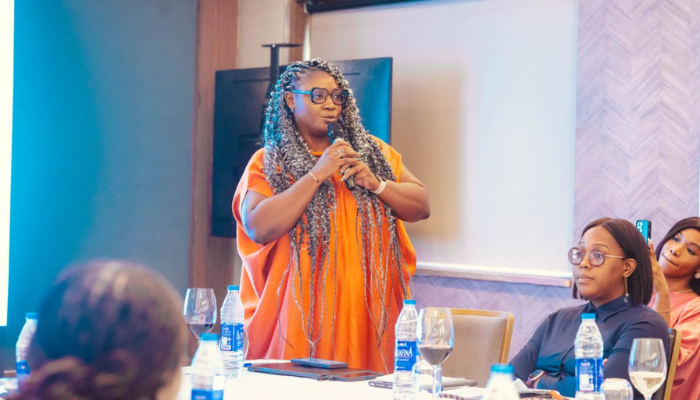
A new report has drawn attention to gender disparities in Nigeria’s health sector leadership. Titled A Balanced Prescription: Leadership & Innovation in Nigeria’s Health Sector, the report was previewed at a roundtable in Lagos. The event brought together senior professionals working in and around healthcare.
Published by African Women on Board (AWB), the report calls for structural change to enable more women to lead. It presents this not only as a goal for equity but also as a necessary move to improve the country’s health outcomes.
The roundtable was organised by AWB in collaboration with eHealth Africa, Avon HMO, Capital Club, BellaNaija and The Macallan. Stakeholders at the event included health leaders, policymakers, and others committed to charting a way forward. Discussions focused on the report’s findings and practical steps to enhance women’s leadership and strengthen the sector.
The report preview comes ahead of its full launch at the third Remarkable Women’s Leadership Conference (RAW), to be held during the Africa Soft Power Summit in Nairobi, Kenya, in May 2025. The upcoming event will explore women’s leadership beyond the health sector and across different industries.

Speaking on the event, Nkiru Balonwu, Founder of AWB and Africa Soft Power (ASP), said, “RAW provides not only a stage for African female leaders, but a spotlight under which to scrutinise and study the vast array of new ideas and approaches that this often still neglected section of the business community can bring. Our public and private sectors face huge collective challenges – and opportunities – right now. In order to meet them in the right way and maximise our outcomes, we need to hear from the full spectrum of today’s leaders and potential leaders, and use these learnings to create a more robust economic future for all.”
To support institutional change, AWB has also introduced a Gender Equity Commitment (GEC) Toolkit. The toolkit is designed to align with global standards while reflecting African realities. It supports organisations to improve their Environmental, Social, and Governance (ESG) standards through gender inclusion, ethics, and sustainable growth. A pilot programme for the GEC is currently underway in West Africa.
At the event, participants stressed the importance of reliable data in addressing gender gaps. Audrey Odogu, Senior Manager at eHealth Africa, said, “Gender equity is rooted in data. Without data, we can’t make informed decisions.” Other speakers highlighted the need to use data to track progress and guide policies. They also noted the importance of ensuring that artificial intelligence platforms are trained on datasets that reflect the healthcare experiences of African women.
Dr Olayemi Dawodu, Managing Director of Cerba Lancet Nigeria, spoke about the role of training in building a leadership pipeline. She called for executive programmes and university-level interventions. She also urged formalised mentorship for female medical students and stressed the importance of financial independence. “If a woman can achieve financial independence, she can escape situations like violence or other challenges,” she said.
Dr Dawodu addressed one of the report’s recommendations: breaking the culture of silence around perimenopause and menopause. She called for more experts to openly discuss these issues and support those going through them.

Dr Mories Atoki, CEO of the African Business Coalition for Health (ABC Health), encouraged younger people to recognise their influence. “You are not the generation of victims. You are the generation of the loudest advocates for women that has ever existed,” she said.
Nnenna Onyewuchi, Executive Director of Strategy and Innovation at Yellow Brick Road, spoke about the deeper systems that contribute to inequality. “We operate within legacy systems and structures designed for Victorian men who are long gone. We must ask ourselves if these structures still serve us. Those in policy and education must rethink whether our systems are truly fit for purpose.”
Mary Edoro, Chief of Staff and Head of Strategy at BellaNaija, spoke about the role of media. She urged a move from simply “empowering” women to placing them in positions of authority. “Let’s move beyond ‘empowering women,’ which often implies permission, to placing women in actual positions of power,” she said. She also stressed the need for more women in decision-making spaces, including political office.