Nigeria’s senior women team needed nothing short of victory against the United States of America to fulfill their dream of reaching the next stage of the Women’s World Cup.
But their hope was dashed as the Super Falcons fell to the powers of the United States. Abby Wambach’s volley seconds before half-time was what the USA needed to qualify for the next round of the tournament. The African champions can only boast of a point from three games.

Nigeria, which is making its seventh appearance in the tournament having qualified for each previous edition of the competition, should at least progress to the round of sixteen.
From the first game the Super Falcons played against Sweden, where they came back from two goals down to level up, we saw a resilient and dogged side but with poor tactical prowess. Australian girls exposed the weakness of the Nigerian girls.
Poor preparations prior to the World Cup affected the performance of the African champions, also, the non functional of the female league in Nigeria could be major factor.
“Investments in women’s football are constantly increasing worldwide, so I think it’s right to talk of an evolution. In terms of tactics, this is the best tournament I’ve ever seen,” Jill Ellis, USA coach said.
Lets take a brief background of the four coaches in Group D; Super Falcons of Nigeria, USA, Sweden and Australia.

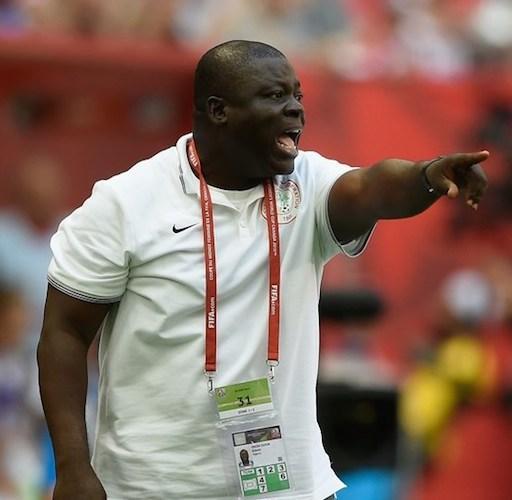
Edwin Okon, Super Falcons coach
Edwin Okon took over as coach of Super Falcons after leading Falconets (Nigeria’s U-20 team) to a fourth place finish at the U-20 World Cup in Japan. He is also in charge of Port Harcourt Premier League club Rivers.
Pia Sundhage, Sweden coach
Pia Sundhage is a two-time Olympic gold-winner and former FIFA World Coach of the Year for Women’s Football, one of the most respected voices in female football, with 146 caps.
Sweden is in the seventh appearance at the Women’s World Cup, maintaining their perfect record of qualifying, got to the final in 2003.
Alen Stajcic, Australia coach
Alen Stajcic only assumed the reins on a permanent basis last September, having taken over on an interim basis for the AFC Women’s Asian Cup. With a lengthy background in junior female development, Stajcic led Sydney FC to two W-League titles with his sides typically playing a modern attacking brand of football.
Australia have twice reached the quarter-finals in 2007 and 2011 editions. Canada 2015 will be Australia’s sixth appearance at the FIFA Women’s World Cup.
Jill Ellis, USA coach
Jill Ellis took over from Tom Sermanni in May 2014. Very familiar with the USA women’s soccer, Director of Devlopment of USA women’s soccer programmes since 2011 and has been heavily involved in all aspects of the Americans’ successes on the senior and youth levels.
The United States have won the Women’s World Cup twice, in the event’s inaugural competition 1991 and as hosts in 1999, and the worst the Stars and Stripes have ever finished is third.
Nigerian coaches need to wake up to the realities of modern football, where detail, comprehensive and in-depth knowledge is required to be relevant on the job.
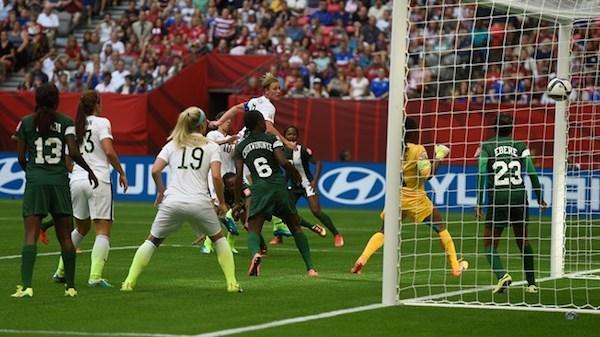
The failure of our indigenous coaches to improve on their technical and tactical competence to meet up with modern style of coaching has dropped the ranks of our national team in major global competitions, as seen with the Super Falcons poor and woeful performance at 2015 FIFA Women’s World Cup.
A team that parades young, skilled and talented Asisat Oshoala, the BBC Women’s Player of the Year, reigning African Women Footballer of the Year and first African football to play in the English Women’s Super League after joining Liverpool Ladies in January 2015.
From this analysis, it’s clear that NFF needs to improve our female football.
Anthony Nlebem
@AnthonyNlebem