Business moving into Nigeria will now have to take into account the added risk of relevant skill unavailability as they look to tap into the expanding economies of frontier markets such as Nigeria.
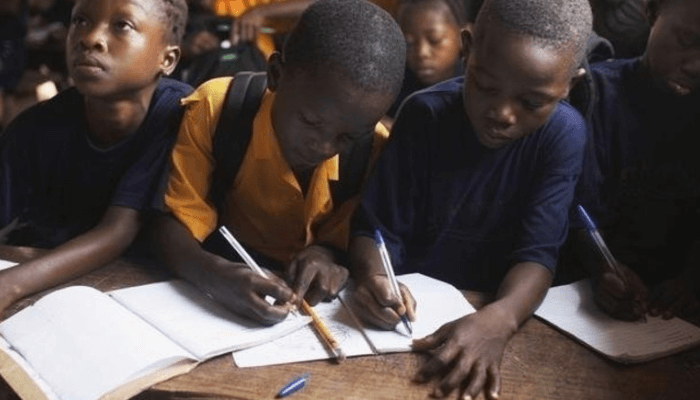
The glaring shortfall in education and relevant skills has been identified as Africa’s biggest challenge, even as Africa gets set to become home to 50 percent of the world’s illiterate population.
This was revealed by the World Economic Forum in its Global Outlook 2015.
The WEF also revealed that of all stake holder groups surveyed, universities were the only group in Africa not to rate education and skills development as their number one challenge. Businesses and the government sector emerged as the worst sufferers.

Success rates in the WAEC-administered SSCE have been on a downward spiral for three years in a row. In 2014, success rate was 31.2 percent as against 36.57 percent in 2013 and 38.81 percent in 2012. In 2014, the Nigerian Law School recorded a success rate of only 29.05 percent.
“We must make sure that governments remain focused on funding and investing in education and skills improvement, and that they encourage partnerships with donors, business and local communities” says Maria Ramos, Chair of the Global Agenda Council on Africa and CEO of Barclays Africa Group.
On the global level, staggering levels of income inequality and jobless growth emerged as the most worrying trend for 2015.
Read also: ‘Incisive strategies pivotal to addressing education shortfall’
As wealth increases along with economic recovery, an increasing portion of the additional wealth accrues to a minority of the population, while wages of the majority remain at stagnant levels. ‘Jobless growth’ is an economic phenomenon in which an economy experiences growth while the level of employment decreases or remains stagnant.

“In developed and developing countries alike, the poorest half of the population often controls less than 10% of its wealth”, says Amina Mohammed, Special Adviser on Post-2015 Development Planning at the United Nations.
According to the Outlook, the danger of neglecting inequality is that “young people who have been excluded from the mainstream end up feeling disenfranchised and become easy fodder for conflict”. This in turn reduces sustainability of economic growth, weakens security, undermines the democracy, and cripples hope for a peaceful society.
“Poor policies and bad planning have produced youth vulnerability and exclusion from mainstream life” says Funmi Olonisakin Founding Director of the African Leadership Centre, Kings College London (KCL). “This is doubly so in northern Nigeria, where class divides have further created a community of people with ‘nothing to lose’”.
According to her, Nigeria continues to experience the “youth bulge” — a growing youth population. The resulting pressure on socio-economic systems is evident in limited education and dwindling economic opportunities for young people.
“Nigeria’s power elite remains far removed from the realities of life experienced by ordinary citizens”, she says further.
“The breakdown of the education system, growing youth unemployment and insecurity amid rampant corruption swelled the ranks of Boko Haram.”
Boko Haram’s assertion of influence is accepted by a significant number of people who see no change in their primary condition.