The House of Representatives has asked the Central Bank of Nigeria to review the Monetary Policy Rates (MPR) and its implementation, putting into consideration the cost of doing business by banks.
It also urged the National Economic Council to critically consider how to reduce the cost of doing business in Nigeria in a manner that the common man will feel the impact.
The House mandated the Committee on Banking and Currency to interface with commercial banks to ascertain the justification for the big gap between the MPR and the lending rates.
It also mandated the Committees on Banking and Currency, Finance, and Industry to organize a round-table session with the Central Bank of Nigeria (CBN), Banks, the Nigerian Deposit Insurance Corporation (NDIC), Small and Medium Enterprises (SMEs), the Manufacturers Association of Nigeria, Industrialists and Industry Experts with a view to finding immediate, sustainable and lasting solutions that would help usher in a new interest rate regime that would support enterprise development in Nigeria.

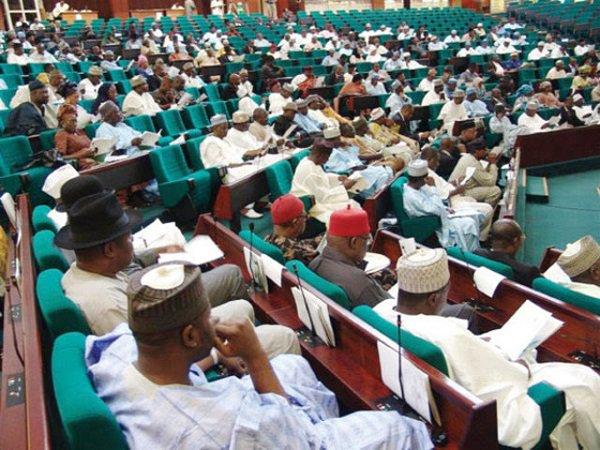
The House reached these resolutions Wednesday during plenary on adoption of a motion on: “Need to Investigate Banks’ Lending Practices, Protect Borrowers from Exploitative Interest Rates and Promote Economic Development moved by Fatoba Olusola Steven (APC, Ekiti).
The Lawmaker while presenting the motion said the House notes that the current lending interest rates of commercial banks are as high as 30%, making Nigeria one of the countries with the highest lending rates in Africa, and probably the world.
According to him, the House: “also notes that lending rates are largely determined by the Monetary Policy Rate (MPR) set out by the Central Bank of Nigeria (CBN), hence the higher the MPR, the higher the interest rates charged by commercial banks.
“Further notes that the MPR is held at 14% while that of South Africa, the longtime economic rival of Nigeria is at 6.5%, thus making Nigeria one of the top five countries in Africa with the highest interest rates.
“Concerned that the lending interest rates of banks restrict lending, particularly to Small and Medium Enterprises (SMEs), manufacturers and Industrialists, all belonging to a sector which employed a large percentage of the workforce in Nigeria.

“Worried that the lending rates impede economic growth as they impact negatively on the performance of the manufacturing sector due to the difficulty of accessing loans from banks.
“Cognizant that banks are the primary sources of capital for manufacturers and industrialists, but when lending at a high interest rate, profits in the Nigeria maturing process are eroded which makes it difficult or unattractive for manufacturers to continue in business.
“Also concerned that the resolve of President Muhammadu Buhari to lift 100 million Nigerians out of poverty may be difficult to achieve if the issue of high lending rates and the challenges of having access to loans are not critically addressed.
“Also worried that when interest rates are high, investors and banks are often willing to invest in government securities only which pay high returns, a phenomenon known as crowding out, as high interest rates on government securities draw investments away from other areas of the economy.
“Further concerned that high interest rates cannot both contain inflation and stimulate economic growth at the same time, while in reality citizens, Small and Medium Enterprises, manufacturers and investors are bearing the brunt of the “cut throat” lending rates where the banks and their directors remain the major beneficiaries of the high lending rates”.
James Kwen, Abuja