As the realities and opportunities inherent in the ongoing power reforms in Nigeria become apparent, telecommunication operators, under a strong coalition, are planning to hold discussions with distribution companies (Discos) in a bid to forge strategic alliances that would bring about secure, dedicated power supply to their 24,252 cell sites nationwide.
A senior executive at one of the GSM companies, who is familiar with the development, told BusinessDay that this rather direct approach became necessary in view of the rising cost of fuelling generators.
“The recent degradation in national grid power supply has increased the pressure on our generators, increased maintenance costs and outstripped local market capacity for supply of generators to telecoms operators,” he explained.
In 2012 alone, mobile operators spent about N45.9 billion to fuel generators that power cell sites, according to the Association of Telecommunications Companies of Nigeria (ATCON). Burning diesel, according to industry analysts, is the single most inefficient way to generate power. 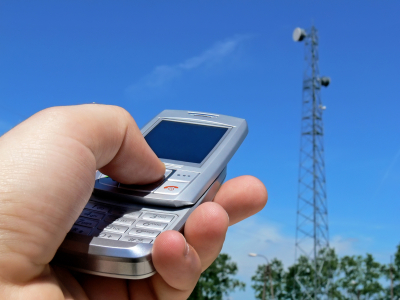

“Available records show that telecoms operators in the country spend over 60 percent of their operating cost on power generation. This is the major reason why most operating companies are desperately considering alternative sources of energy that are not only cheaper but also environment-friendly,” Emeka Opara, director, corporate communications, Airtel Nigeria, was quoted as saying in a report.
Rising running costs, widespread diesel pilferage and a myriad of state taxes, according to him, are taking a massive toll on the cash flow of mobile networks.
Security officials monitoring telecoms towers also estimate that around 15-20 percent of total diesel consumption is pilfered.
According to analysts, intense pressure from the telecoms regulator and holders of Nigeria’s 120 million mobile lines to improve Quality of Service (QoS) levels has compelled Mobile Network Operators (MNOs) to look in this direction. The GSMA estimates that over 81 percent of mobile operators’ on-grid sites suffer power outages for up to six hours a day. This situation, according to them, contributes immensely to poor QoS rendered by operators to customers on their respective networks.
Kamar Abass, managing director, Ericsson Nigeria, told BusinessDay in an interview that lack of power supply was a fundamental drawback to achieving superior QoS in the country.

“Many operators are thinking about talking to the Discos to address the problem. If you think about Lagos, Abuja and a few other big cities, if you had dedicated generation facilities in those locations, plus the transmission to the cell sites which are mostly in the urban areas, that would solve a significant part of the problem,” he added.
There are currently 11 Discos spread out across the country, and 10 of them have been fully privatised. An informed source in one of the Discos in Lagos, who pleaded anonymity, told BusinessDay that they would be open to such discussion.
“Telcos can make arrangements with electricity distribution companies to secure stable power supply to their masts and base stations through dedicated lines, but it is going to be very expensive to do that. There may be need to run separate dedicated 33KV lines, dedicated feeders, transmission injection substations and distribution injection substations,” he said, adding that considering the sparse locations of telecoms masts, the cost of securing dedicated power could be enormous.
By: Ben Uzor Jr