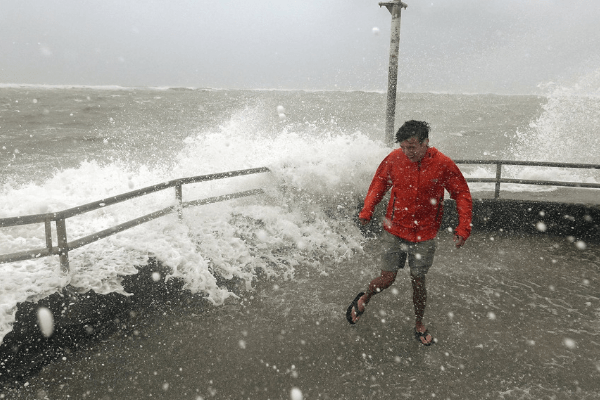
Americans are bracing themselves for the arrival of Hurricane Dorian as the powerful storm slowly makes its way across the Atlantic and toward the US coastline after it brought “catastrophic” winds and a storm surge to the Bahamas.
Dorian, which has been downgraded to category 3, was “stationary” just north of Grand Bahama Island with maximum sustained winds of 120mph and higher gusts, according to an update on Tuesday morning from the US National Hurricane Center.
The storm is expected to begin moving north-northwestward towards the eastern coast of Florida
later on, Tuesday morning, leading to a prolonged period of devastating effects in the region.

Hubert Minnis, the Bahamian prime minister, said there had been five confirmed deaths in the Abaco Islands, in the northern part of the Bahamas, as Dorian continued to hover over Grand Bahama.
The storm destroyed or severely damaged as many as 13,000 homes in the Bahamas, according to the Red Cross.
The NHC said a life-threatening storm surge and dangerous winds were expected along portions of the Florida and Georgia coasts, regardless of the exact track Dorian takes. It also said the risk of these effects continued to rise for the Carolinas.
The governors of Florida, Georgia, North Carolina, and South Carolina declared states of emergency, and officials ordered mandatory evacuations affecting millions of Americans.
President Donald Trump, who cancelled a planned trip to Poland to remain in Washington, has far approved emergency declarations for the three southernmost states, freeing up federal resources to co-ordinate and assist with relief efforts there.

In Florida, as evacuations began, governor Ron Desantis said highway patrol officers would escort fuel trucks to help maintain supplies at petrol stations. By Monday afternoon local time, roughly a third of stations in the Gainesville, Miami-fort Lauderdale and West Palm Beach-fort Pierce areas were out of fuel, according to the website Gasbuddy.