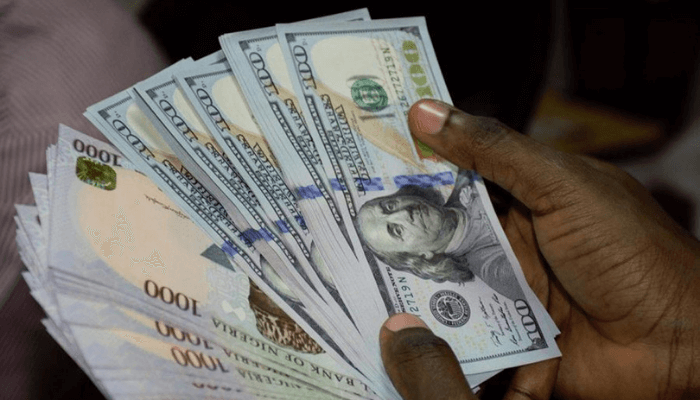
Nigeria may have lost over $18 billion in the last two years due to lack of knowledge in adequate risk management techniques in the oil industry. The loss which occurred as a result of steep slide in oil prices, could have been averted if government had put in place proactive risk management structures, such as hedging, while the prices were high.
Hedging against investment risk means strategically using instruments in the market to offset the risk of any adverse price movements. In other words, if Nigeria had hedged a substantial percent of its crude oil exports at $70 per barrel, the country would have continued to sell at that price even when the price fell to sub-$30 per dollars.

“The loss can be looked at in various ways. The most obvious would be the average total number of barrels produced per day, multiplied by the average fall in oil prices. A loss of $60 per barrel for over 1.8million barrels per day approximates close to an average of $100m per day.
But since the Federal Government only owns about 52 percent of the Joint Ventures, they may never really have hedged more than 50 percent of that. So in that instance, government’s loss would be roughly about $25 million per day. A loss of $25 million per day comes to over $18 billion in two years ”, Zeal Akaraiwe, CEO, Graeme Blaque Advisory, told BusinessDay on the sidelines of the recent Energy Finance Forum organised by the Centre for Petroleum Information (CPI) in Lagos recently.
“In addition to the loss in revenue from the fall in unhedged oil price, there were huge losses in opportunity cost, as well as the corresponding slump in both support and ancillary businesses, all of which would be very difficult to quantify but certainly at least equal to the loss in oil revenues”, Akaraiwe added.
Experts identify massive knowledge gaps and lack of knowledge in adequate risk management techniques in the oil industry as major hindrance to financing oil and gas projects. According to Akaiwe, “there is still sub-optimal knowledge and even less appreciation for the relevant risk mitigating tools when it comes to managing oil price risk.
The oil markets have proven to be extremely volatile and oil producers are natural risk takers but their risk appetite is more honed on production and technical risk. The financiers are those that should have a keen sense of and appreciation for price risk and therefore the onus is on them to ensure that adequate measures are taken to mitigate oil price risk to the extent that the project’s viability is not compromised”.
Akaraiwe said that “there are abundant derivative structures that would fit whatever financing model the financiers choose to pursue but knowledge here remains lacking and sadly, not sought after”, adding that at the current $50 per barrel levels, there is still need for hedging.
“The question is could oil prices fall below $50? If they do, would the project remain viable?” if the answer is yes, then clearly, hedging is still needed. There are other factors like tenor, credit limits, current exposure levels and oil market outlook that would determine what structures would be most appropriate and it would vary from project to project. The structures to be employed for $50 oil (subject to the deck price used in the models) would be different from those to be used for a $75 oil price regime”.
The oil and gas industry has faced huge challenges finding financing solutions in an era of recession, with massive cut in CAPEX giving rise to projects either being delayed or suspended.
Dolapo Oni, Energy Research Analyst at Ecobank identified three key areas where gaps exists in financing oil and gas projects in Nigeria.
“First, is proper understanding of the risks in oil and gas – banks should not be financing acquisition as a stand-alone project without financing for field development and production.
“Second, hedging is not only a pre-condition to completing the deal, it is the financier’s protection. A lot of deals were done with no hedging in last two years.
“Third, not enough pure equity in deals. I think the traditional 30/70 or 20/80 mix of equity/debt is not good enough in this climes. We need to push the divide towards 50/50 or 60/40 or lower. Place more emphasis on corporate governance structures in companies and also disqualify equity composed of personal loans taken by company promoters”, Oni said.
There is a growing call for creative financing models for the oil industry. According to Oni, “the thing about financing oil and gas projects is that it is never really based on the season. You can still finance projects with a mixture of debt and equity now, as in any other season but at times like these, you tend to want more equity in the financing pool than debt.
For Nigerian independents, many are likely to be in the market for cheap refinancing of their existing loans to give them some breathing space on interest expense commitments. Most actually need to consider diluting ownership and bringing in more equity, so they can continue investing in appraisals, field development”.
FRANK UZUEGBUNAM