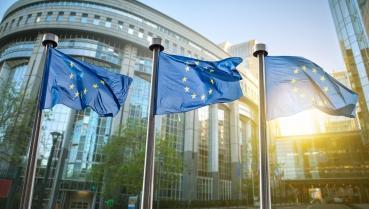
As Britain’s 64 million citizens decide today, on a possible exit from the European Union (EU), indications are emerging that a Brexit will rock emerging markets; and frontier markets like Nigeria to some extent.
The Brexit campaign has gained traction so far, as a good number of Britons increasingly seek independence from Brussels central control.
Latest polls from the Bloomberg Brexit tracker shows the leave camp with 45 percent, remain at 44.7 percent and undecided voters at 10.3 percent as at June 22.
Britain’s exit from the EU portends an adverse undertone for the global markets. For Nigeria the immediate threat is to the country’s trade and development ties with Britain, BusinessDay findings show.

“If the UK leaves the European Union, the British economy may shrink, and if it does, they may be unable to do the same level of business they used to do with Nigeria,” said Bismarck Rewane, managing director of Financial Derivatives Company Limited, an economics advisory firm, by phone.
“This means the trade merchandise from London will dip, hence affecting balance of payment between the two countries. Also, for Nigerians who own properties in the UK, rental income from such assets will come down,” said Rewane.
Trade volume between Nigeria and the UK currently stands at 6 billion pounds (N 2.48 trillion).
The UK Department for International Development invests 222 million pounds a year in Nigeria.
Adding this to contributions made to the World Bank, Britain invests about 400 million pounds a year in development aid to Nigeria.

With Brexit, Nigeria and the United Kingdom (UK) may have to reach a new understanding on tariffs, BusinessDay analysis show.
Stemming from this, analysts at FBN Quest say the traditionally close ties between both countries would give way to smooth tariff arrangements and significantly allay apprehension on trade disruptions.
“We can identify one clear advantage from the UK’s withdrawal for Nigerian (and other non-EU) nationals with professional qualifications,” the analysts said in a note to BusinessDay.
“Currently, many large companies in the UK will only consider such applications once all EU candidates have been considered.”
In stating upsides, the FBN Quest analysts noted the possible downsides for Nigeria.
According to them, “The only EU member to have walked away to date has been Greenland. If the UK takes the same step, there would be a period of legal uncertainty as several treaty obligations would have to be unwound.”
The Brexit camp argues that leaving the EU would not be obstructive since the UK runs a substantial trade deficit with the union, according to BusinessDay checks.
The pound sterling has sold off ahead of the referendum, and some investment banks are suggesting a further fall as far as 1.10 percent for GBP/USD in the event of Brexit.
Renewed weakness is likely to be consistent with a period of legal uncertainty.
“The path of GBP/EUR is less clear since some market analysis centres on the possibility that other EU members might favour their own Brexit.
“This fear is overdone in our view. London’s role as a financial centre would be diminished by the loss of some EUR-denominated activity in currencies and fixed income,” the note penned by Gregory Kronsten of FBN Quest stated.
Britain is set to hold a referendum on whether or not to remain in the EU, today.
Broadly speaking, the referendum will help decide the future political and economic character of the United Kingdom and the European Union.
The issues range from economic governance, immigration and welfare benefits to competitiveness. But no one is quite sure what will happen if the UK leaves the EU.
Proponents for Britain remaining in the EU, spearheaded by Prime Minister David Cameron, believe that the UK “will be safer, we will be stronger, and we will be better off inside the EU,” and Brexit will only offer the “illusion of sovereignty” and be a huge “leap in the dark.”
BALA AUGIE & LOLADE AKINMURELE