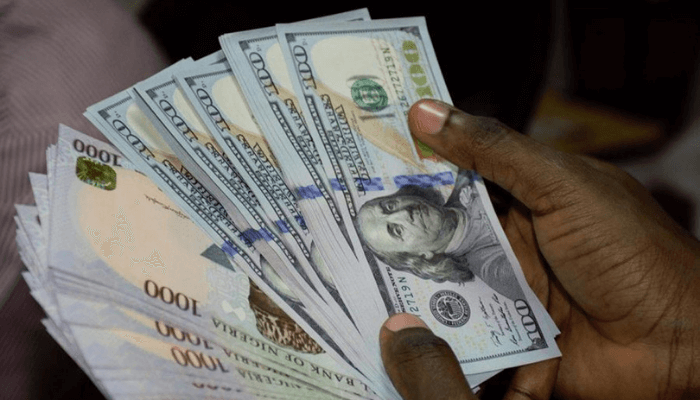
Most Nigerians who hitherto were medium-to-big level merchants of goods from the United States of America and European countries are reducing their wagers in fear of being caught-up by the current web of unstable foreign exchange (FX).
These diaspora Nigerians have resorted to keeping their monies in offshore banks, contrary to their tradition of repatriating funds for local investment in hotel businesses, real estate, fairly used vehicles and motor spare parts exports and some household ware.
Our reporter who is in Dallas, Texas, spoke to several of them in person, on phone and by mail. Most said the naira exchanging for almost N200 at the official market and about N225 on the Bureau De Change (BDC) segment, in addition to the Central Bank of Nigeria (CBN) forex management policy, is a crunch on their businesses. They added that they also face high borrowing cost from banks and declining demand for their exported goods, due to FX driven price spike.
“A lot of us here have withdrawn from the common US car auctions because when we stake our money to buy cars here and export to Nigeria, it is difficult for our Nigerian associates to resend our dollar denominated capital to us because of FX policies,” said a Dallas Texas-based Nigerian who simply identified himself as Desmond.

This man who exports used cars to Nigeria which he buys from US auctions, observed that “when we pay all the export bills here in dollars, it is expected that with the current exchange rate, it will increase the price of the vehicle when it reaches Nigeria. This affects demand as well. Even when the vehicles are sold, you cant get your money easily”.
Further enquiries revealed that most diaspora Nigerians in the United States have rather chosen to increase their account balances in banks abroad, not minding the tax bills. Banks like Chase Bank and Bank of America are the preferred destinations for these idle funds –as they believe they could easily have access to credit facilities whenever they are in need, as well as low or no charges on their accounts.
Another Nigerian who owns a hotel in Owerri, Imo State but stays in Dallas Texas, told BusinessDay that, “Everyday, my hotel (in Owerri) makes minimum turnover of N500,000. But to my hotel staff, they are making much money for me and they expect improved conditions at work. Unknown to them, this income at the current exchange rate is equivalent to $2,500”.
He further questioned the business sense in investing more in an environment where the value of returns an investor gets is lower because of the country’s FX rate; adding that “The only thing we are asking is for President Muhammadu Buhari to stabilise the naira. Even if it is the only thing he (Buhari) does, it is good for us who are here doing businesses because we want to bring the gains back home and also have value.”
Recall that Muhammad Lamido Sanusi II, immediate past governor, Central Bank of Nigeria (CBN) who is currently the Emir of Kano, said recently in an event broadcast by CNBC that, “The CBN adopted a demand management exchange policy, whereby it had deprived certain industries of imports. Those that can afford to import are not able to do so because they have been excluded from the market”.

At the Lagos Business School breakfast earlier this month, the Bismarck Rewane-led team of analysts from the Financial Derivatives Company noted in their presentation that naira pressure continues, adding that, “Fair value of the naira was the ‘Elephant in the room’ at the MPC meeting.”
“The CBN continues to use administrative measures to manage the currency. However, it cannot control the price of crude oil. Oil prices have stayed below $50 per barrel (pb) for six out of the last seven weeks (before the October 13 presentation). A currency adjustment is more likely if oil price stays below $50pb through October”, the analysts noted, while expecting that “forex demand will spike as soon as a cabinet is in place.”
Iheanyi Nwachukwu