The global aviation sector may have identified its most viable decarbonisation pathway in Sustainable Aviation Fuel (SAF), but a critical financing gap is now threatening to slow progress, according to a new experts brief outlining efforts by the International Renewable Energy Agency (IRENA) and the International Civil Aviation Organization (ICAO).
Aviation currently accounts for between 2 and 3 percent of global carbon dioxide emissions, based on ICAO’s climate overview. With passenger and freight traffic expected to continue expanding over the coming decades, sectoral emissions risk rising further unless low-carbon alternatives are deployed at scale.
However, aviation remains one of the hardest sectors to decarbonise, particularly long-haul flights, where electrification is not technically feasible with current battery technology.
SAF, liquid aviation fuel produced from renewable or waste-based feedstocks, is widely recognised as the most immediate and scalable emissions-reduction solution for the sector.

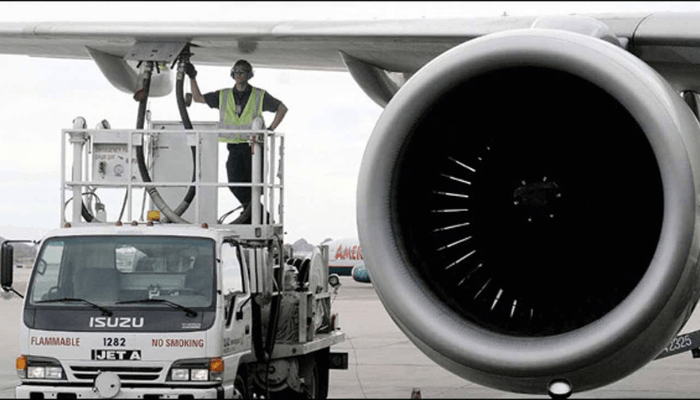
IRENA stated that SAF can be blended with conventional jet fuel and used in existing aircraft and airport infrastructure, avoiding the need for wholesale fleet replacement.
Read also: Sustainable aviation fuel production represents only 0.6% of total consumption – IATA
According to the experts brief done by Haliru Audu and Job Mutyaba, both programme officers, Project Financing, IRENA, lifecycle greenhouse gas emissions from SAF can be up to 80 percent lower than those of fossil-based jet fuel, depending on feedstock and production pathway.
Despite this technical viability and growing policy momentum, deployment remains limited. The central obstacle, the document argues, is not technology readiness but capital mobilisation.
SAF projects face high initial capital expenditure, elevated production costs and constrained supply chains. Beyond these structural issues, developers must navigate first-of-a-kind project risks, certification requirements and long-term offtake uncertainty.

Compared with conventional renewable energy projects, SAF facilities often lack proven revenue models and face greater investor hesitation. As a result, many projects stall before reaching financial close.
To address these constraints, IRENA and ICAO have launched Finvest@ETAF, a dedicated initiative aimed at converting SAF ambitions into bankable investment opportunities. The platform applies the project facilitation model of the Energy Transition Accelerator Financing (ETAF) framework to the aviation fuel segment.
ETAF, which brings together 14 partners and more than $4.15 billion in pledged capital for clean energy deployment, provides the financial backbone for the initiative.
Through Finvest@ETAF, SAF developers receive structured support ranging from initial screening and bankability assessment to advisory services and technical assistance. Projects are then connected to financing partners and, where appropriate, de-risking instruments designed to improve investment readiness.
The partnership reflected a division of institutional strengths. IRENA contributes expertise in project facilitation, financial structuring and engagement with capital providers, while ICAO provides guidance on aviation sustainability standards, certification frameworks and global policy mechanisms, including the Carbon Offsetting and Reduction Scheme for International Aviation, the sector’s international carbon offsetting scheme.
The initiative also came at a time of accelerating policy support. In Europe, the ReFuelEU Aviation regulation mandates increasing SAF blending requirements across EU airports.
In the US, the SAF Grand Challenge aimed to expand domestic SAF production significantly over the coming decades. These measures are expected to stimulate demand, but supply expansion will depend on investment certainty and scalable financing models.
The document concluded that while regulatory ambition is strengthened and technical pathways are established, translating policy signals into operational SAF capacity will require coordinated engagement among governments, project developers and financial institutions.
Without mechanisms to reduce risk and improve bankability, SAF production may struggle to scale at the pace required to align aviation with global climate targets.
In effect, the decarbonisation of aviation now hinges less on technological feasibility and more on financial architecture, and whether capital can be mobilised quickly enough to close the gap.