Three ambassador-designates to the United States (US), the United Kingdom (UK), and Francehave been appointed by Bola Tinubu, Nigeria’s president, as part of a partial reactivation of Nigeria’s diplomatic corps, more than two years after the recall of its envoys.
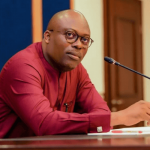
They include Lateef Arew, who has been assigned to Washington, D.C., Aminu Dalhatu to London and Ayodele Oke to Paris.
These appointments follow Tinubu’s decision in September 2023 to recall all ambassadors from Nigeria’s 109 foreign missions, including 76 embassies, 22 high commissions and 11 consulates, in a move that created an extended leadership vacuum across the country’s external representations.
In the intervening period, most missions were overseen by chargés d’affaires or senior consular officers, whose mandates are typically confined to routine administration rather than high-level diplomatic bargaining or strategic engagement.

Are’s posting comes against the backdrop of renewed diplomatic scrutiny, particularly in Nigeria–US relations, following recent comments by US officials on Nigeria’s internal security pressures.
The decision to deploy him and others suggests a recalibration of Nigeria’s foreign policy posture after a prolonged period of limited ambassadorial representation.
Military formation and academic grounding
Now designated as Nigeria’s envoy to the US, is an indigene of Ogun state and was commissioned as a Second Lieutenant in December 1974 after graduating from the Nigerian Defence Academy as part of regular course 12. He finished among the top ten officers of his cohort. He was subsequently posted to the Nigerian Army Intelligence Corps, marking the start of a career rooted in security and intelligence work.
Several of his contemporaries later emerged as central figures in Nigeria’s security architecture, including General Owoye Andrew Azazi, Colonel Sambo Dasuki and Admiral Ganiyu Adekeye.
Alongside his military training, he pursued a rigorous academic path. In 1980, he graduated with a first-class honours degree in psychology from the University of Ibadan, securing the university senate prize, the faculty of social sciences prize and the department of psychology prize as the institution’s best graduating student.

He later obtained a master’s degree in international law and diplomacy from the University of Lagos in 1987, reinforcing his credentials at the intersection of security policy and international affairs.
Senior intelligence roles
During his military career, Are worked closely with Aliyu Gusau, a general at the Directorate of Military Intelligence. When Gusau was appointed National Security Adviser in 1999, he recommended Are to Olusegun Obasanjo, Nigeria’s former president, who subsequently named him director-general of the State Security Service (SSS).
The appointment drew public scrutiny, with sections of the press suggesting that shared Owu ties between Are and Obasanjo may have shaped the decision, claims neither man publicly addressed.
In April 2010, Goodluck Jonathan, the former Nigerian president, appointed Are as deputy national security adviser. Following Gusau’s resignation, Are briefly assumed the role of acting national security adviser before Jonathan appointed Azazi, a general, as substantive NSA with effect from October 4, 2010.
Post-office dispute
He reentered public discourse in 2015 following a legal dispute with the SSS over a residential property in Ikoyi, Lagos, which he said had been allocated to him as a post-service entitlement.
After being asked to vacate the residence, Atheychallenged the directive in court. Speaking at the time, he alleged that security operatives forcibly evicted his family in defiance of a court order.
A Federal High Court subsequently ordered that Are and his family be reinstated in the property pending the determination of the suit.