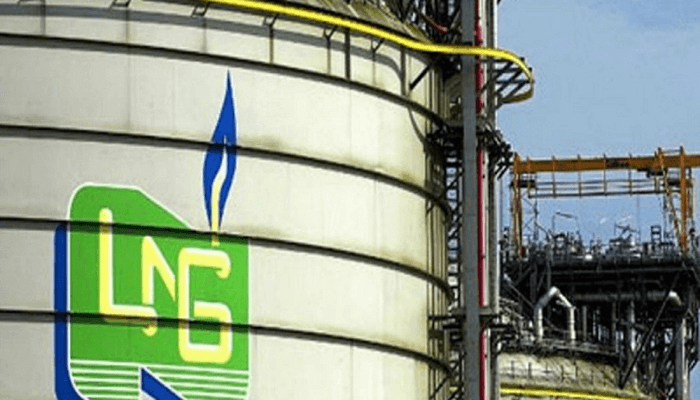
An LNG tanker laden with Nigerian gas became the first Atlantic cargo to reroute to Asia on Wednesday, an early signal that the Middle East war is triggering a scramble for liquefied natural gas supplies that could push energy-starved Europe back into crisis less than four years after Russia’s full-scale invasion of Ukraine.
The BW Brussels, originally bound for France, made a U-turn in the Atlantic and set course south towards the Cape of Good Hope, according to Kpler, a commodities intelligence provider.
The diversion came as European gas prices hit their highest level since 2023, having surged 53 per cent since Friday after Iranian strikes forced Qatar, the world’s second-biggest LNG supplier, to halt production and brought shipping through the critical Strait of Hormuz to an effective standstill.
Read also: Qatar halts LNG output after Iran drone attacks, Europe gas prices surge 50%

“It’s a double punch. Europe is only coming out of an industrial energy crunch and now we’ve got the next one,” Henning Gloystein, Eurasia Group.
The rerouting of the BW Brussels illustrates the emerging contest between European and Asian buyers to lock up replacement supplies. Asian economies, which weathered competition for LNG throughout the 2022 crisis, moved swiftly. For Europe, the timing could scarcely be worse.
Depleted reserves, depleted time
A particularly cold winter has left European gas reserves at less than 30 per cent of capacity, according to data from Gas Infrastructure Europe, well below the five-year average of around 45 per cent for this time of year. Countries including the Netherlands, Sweden, Croatia and Latvia are running especially low.
“Stocks have never been so low over this point of the year,” said Simeone Tagliapetra, a senior fellow at think-tank Bruegel. “Refilling the gas storages for the next winter starts now. If that has to happen at these prices, it would be a huge burden for Europe.”

European benchmark gas prices stood at around €48.77 per megawatt hour on Wednesday, painful, but still far below the €340/MWh record reached in 2022.
A senior energy trader said that under normal circumstances, little gas is withdrawn from European storage beyond the end of March, and that with current mild weather, “we are pretty much ceasing withdrawals already.”
The relief, however, may only be temporary: the contest to refill storage for next winter is about to begin at the worst possible moment.
Rob Jetten, Dutch Prime Minister, said the Netherlands was not in danger of running out of gas, but acknowledged he was preparing support measures.
An EU official said it remained possible to refill storage to 90 per cent before next winter. No coordinated price-limiting measures were called for at a meeting of member states on Wednesday morning.
Inflation Risk and Industrial Strain
Europe sources only about 10 per cent of its LNG from Qatar, having spent yearsInflation Risk and Industrial Strain since 2022 diversifying away from Russian supply towards American gas and Norwegian pipeline flows. But sustained higher prices for LNG globally risk reigniting inflation across the continent, with Italy and Germany, both more dependent on gas imports than most, particularly exposed.
Read also: ANOH delivers first gas to NLNG, transitions to full commercial operations
Annual Eurozone inflation had already crept up to a higher-than-expected 1.9 per cent in February, even before this week’s price surge. European Central Bank chief economist Philip Lane has warned that a protracted Middle East conflict could deliver “a substantial spike in energy-driven inflation and a sharp drop in output.”
The crisis is already reshaping political calculations in European capitals. German Chancellor Friedrich Merz travelled to Washington on Tuesday to discuss trade relations with President Donald Trump, amid expectations that the conflict could accelerate a shift in European LNG purchasing towards the United States, which has sharply expanded exports to Europe since the reduction of Russian supply.