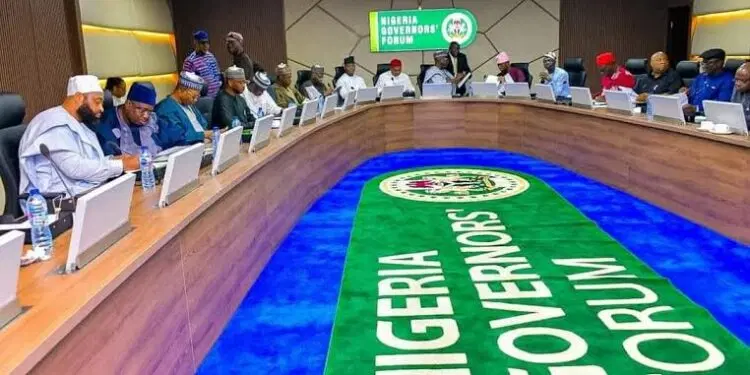
The Nigeria Governors’ Forum (NGF) has thrown its weight behind ongoing reforms mandating the direct remittance of oil and gas revenue entitlements into the Federation Account, describing the move as vital for fiscal transparency, predictability, and constitutional compliance.
The position was contained in a press statement signed by Yunusa Tanko Abdullahi, Director of Media and Strategic Communications of the NGF on Monday
According to the Forum, it has taken note of Executive Order 9 signed by President Bola Tinubu on February 13, 2026, which seeks to realign oil and gas revenue flows with constitutional provisions and clarify regulatory responsibilities within the petroleum sector.
Read also: Federation account inflows jump to N35tn in 2025 — AGF

The NGF stated that the Executive Order mandates that government entitlements under production-sharing and related contracts—including royalty oil, tax oil, profit oil, and profit gas—be paid directly into the Federation Account. It also strengthens the delineation of regulatory mandates within the sector.
AbdulRahman AbdulRazaq, Chairman of the Forum and Governor of Kwara State, said the integrity and predictability of Federation Account inflows are central to Nigeria’s fiscal federalism.
“The Federation Account is the backbone of Nigeria’s intergovernmental fiscal system. Structural clarity in the remittance of nationally owned resources strengthens fiscal stability across all tiers of government. Predictability improves planning. Planning improves delivery,” AbdulRazaq stated.
The Forum noted that oil and gas revenues remain a major component of the country’s distributable national income, directly impacting capital planning, debt sustainability, infrastructure development, and public service delivery at federal, state, and local government levels.
It also referenced recent communiqués of the Federation Account Allocation Committee (FAAC), which have shown disparities between gross revenue collections and the final distributable amounts. According to the NGF, it is the latter that ultimately determines the fiscal capacity of subnational governments.

The governors warned that when remittance processes are complex or difficult to reconcile, fiscal predictability weakens, affecting capital planning cycles across all tiers of government.
With Nigeria’s population now estimated at over 220 million, the Forum stressed that states remain at the frontline of delivering education, primary healthcare, infrastructure, and security. It argued that predictable revenue flows are essential to meeting these growing responsibilities.
Read also: Nigeria begins implementation of executive order on direct oil revenues remittance to FAAC
The NGF reaffirmed its commitment to working collaboratively with the Federal Government and other stakeholders to ensure that fiscal reforms translate into tangible development outcomes for Nigerians.