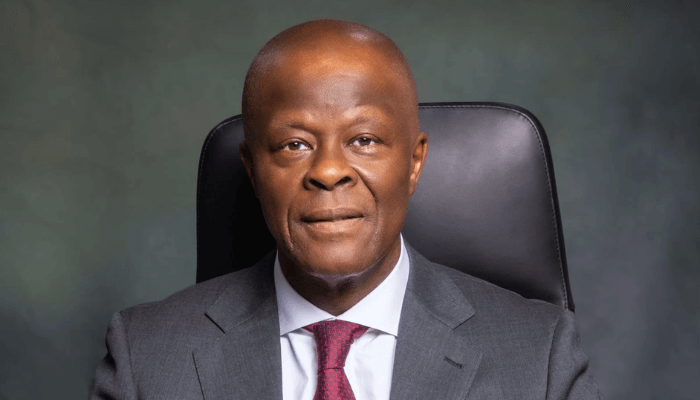
About 30 subsectors of Nigeria’s economy recorded growth above 3 percent in the fourth quarter of 2025, a trend that, according to Wale Edun, minister of finance and coordinating minister of the economy, highlights the structural depth and diversification of the country’s expansion.
Real GDP grew 4.07 percent in the period, marking only the second time in a decade—excluding the immediate post-pandemic rebound—that quarterly growth has exceeded 4 percent.
Edun said the numbers reflect the widening impact of the federal government’s reform programme under President Bola Tinubu. “Growth is now broad-based, and the economy continues to hold above 4%,” he said in a statement friday night, welcoming the latest data from the National Bureau of Statistics.(NBS).
The quarterly acceleration builds on a 4.23 percent increase in Q2 2025 and a 3.76 percent rise in Q3 2024. Officials said the results underscore strengthened macroeconomic stability, disciplined fiscal management, and the tangible effects of structural reforms designed to attract investor confidence.

All three major sectors contributed to the expansion. Agriculture grew 4 percent, up from 2.54 percent in the same quarter a year earlier, benefiting from improved security in key food-producing regions, greater access to inputs, and targeted productivity interventions.
Industry expanded 3.88 percent, supported by energy sector reforms, enhanced foreign exchange liquidity, and renewed investor confidence. Services rose 4.15 percent, driven by finance, telecommunications, trade, and technology-oriented segments.
For the full year 2025, Nigeria’s GDP grew 3.87 percent, improving on the 3.38 percent recorded in 2024, while the economy’s nominal size increased to N441.5 trillion from N372.8 trillion.
The minister further noted that the latest data sends a strong signal to foreign investors, multilateral institutions, and global economic stakeholders that Nigeria’s reform trajectory is gaining traction and is being consolidated. He also highlighted the investment significance of the data, saying, “With improving macroeconomic coordination, strengthening revenue mobilisation, enhanced transparency in public finance, and ongoing structural reforms, Nigeria is positioning itself as a stable and competitive destination for long-term capital.”
Officials added that the reforms, spanning fiscal discipline, energy, and revenue management, have strengthened the business environment and reduced systemic risks.

Economists note that sustaining growth above 3 percent across multiple sectors is a milestone for investor confidence. Services, particularly technology-driven industries, alongside gains in agriculture and industry, suggest Nigeria’s growth is diversifying, which may encourage further inflows of foreign capital from institutional investors and multilateral lenders evaluating emerging markets.
Challenges remain, including double digit inflationary pressures and energy supply bottlenecks. They say that even though growth remains largely non-inclusive, the breadth of the expansion indicates the economy is navigating these constraints more effectively than in previous years, reinforcing Nigeria’s positioning as an attractive destination for long-term investment.
The finance ministry reiterated commitment to disciplined reform implementation, strategic coordination across institutions, and transparent engagement with domestic and international stakeholders.