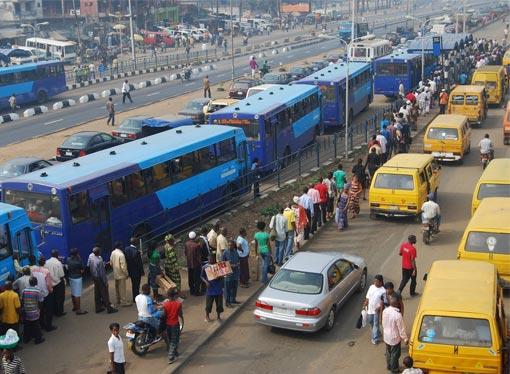
A newly approved 13 percent fare increase across Lagos State’s Bus Reform Initiative (BRI), including Bus Rapid Transit (BRT) and standard routes, is raising concerns among economists and commuters over a potential spike in transport inflation in Nigeria’s commercial capital.
Analysts warn that the fare adjustment, approved by Babajide Sanwo-Olu, the governor, and scheduled to take effect on Monday, March 2, 2026, could have ripple effects across the broader transport ecosystem, as private operators often benchmark their fares against government-regulated BRT services.
“With this development, the government will create additional inflation on transportation in Lagos State. Because transporters usually benchmark their fares against BRT fares, this will likely trigger wider fare increases,” said Oluwole Crowther, a Lagos-based economist.
“This shouldn’t be, given that the state recently increased fares by 18 percent in February 2025, and energy prices have been modest in recent times.”

Transport costs are a major component of urban inflation, particularly in Lagos, where millions rely on buses for daily commuting. Analysts caution that higher transport fares could cascade into increased prices for food, goods, and services, as traders and service providers factor transportation expenses into their pricing.
“How can the government be the source of inflation it is trying to fight? This situation will always have a multiplier effect, as food sellers, vendors, and others largely depend on public transportation for their economic activities,”Crowther added.
Read also: Commuters lament 13% BRT fare increase in Lagos
The Lagos State Government said the fare adjustment followed appeals from regulated public transport operators, who cited mounting operational costs and sustainability concerns. According to officials, the review aligns with the state’s annual fare adjustment mechanism and reflects prevailing economic realities.
The government also referenced inflationary pressures, noting that “Nigeria’s inflation rate closed 2025 at 15.2 percent, according to data from the National Bureau of Statistics.”

Bus Operating Companies (BOCs) have faced rising costs linked to vehicle maintenance, spare parts, and staff salaries, particularly after the implementation of the new national minimum wage.
Despite the government’s justification, some analysts argue that the inflation rationale is weak, pointing to declining diesel prices and broader disinflation trends in recent months.
Commuters have also expressed concern that the increase, though seemingly modest, could trigger wider fare hikes by privately operated yellow buses, which already charge higher rates on many routes.
“The BRT fare from Egbeda to Oshodi is currently N600, while yellow buses range between N700 and N800. With the new increment, BRT is expected to be around N700. Of course, yellow buses will not charge the same price with BRT; we should be expecting them to hike theirs also, probably between N800 and N1000,” said Olawunmi Moshood, a regular commuter on the route.
Others questioned the continued reliance on diesel-powered buses, asking why cleaner alternatives such as compressed natural gas (CNG) and electric buses have not been fully deployed.
However, the Lagos Metropolitan Area Transport Authority (LAMATA), said in a statement justifying the fare hike that operators are also investing in newer, cleaner, and more fuel-efficient buses to improve service delivery and environmental performance.
Commuters also raised concerns about declining service quality, citing frequent breakdowns, long waiting times, and the disappearance of amenities such as air conditioning and charging ports.
“Many of the buses plying Abule Egba to Obalende are not different from Molue,” said Adewale Musbau. “They are not road worthy.”
The government, however, reassured residents of its commitment to balancing affordability with sustainable transit operations, while maintaining safe and efficient public transport services across the state.