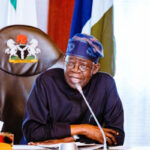
Olatunji Disu has assumed office as the 23rd Indigenous Inspector-General of Police, declaring an end to impunity and unveiling an ambitious reform agenda in the Nigeria Police Force.
Just as his predecessor, Kayode Egbetokun, bowed out with a call for continuity and accelerated institutional transformation.
At the handing-over ceremony in Abuja, Disu pledged to modernise the Force, enforce accountability across all ranks, and rebuild public trust through a renewed commitment to community partnership.
In his inaugural address, the new police chief paid tribute to former Inspectors-General, acknowledging their sacrifices and the institutional foundation they laid.

“My colleagues and I are very grateful. I am called to build on that foundation,” he said.
Disu described himself as “first and foremost a police officer” before being Inspector-General, assuring officers, from fresh recruits to veterans, that he understands the realities of policing, including standing guard in harsh conditions and responding to distress calls under risk.
Read also: Why Tinubu swapped Egbetokun for Disu as Police IG
“I know what it means to stand a post in the rain. I know the risks involved. Those experiences will live in every decision I make in this office,” he stated.
While expressing confidence in the Force’s bravery, resilience and institutional knowledge, Disu acknowledged lingering challenges, including a trust deficit with communities, outdated systems, resource gaps and instances of misconduct that have stained the institution’s image.

“These are not comfortable truths. But they are truths we must face,” he said, stressing the need to reposition the Police as a trusted, people-oriented institution.
He outlined a three-pillar reform agenda centred on professionalism and modernisation, accountability and integrity, and community partnership.
Under professionalism and modernisation, Disu said intelligence-led policing, forensic investigation, digital tools and evidence-based practices would define operations, warning that intimidation, abuse of authority and shortcuts would no longer be tolerated.
On accountability, he declared unequivocally that “the days of impunity are over,” adding that the badge represents public trust and that any officer who violates that trust, regardless of rank, will face disciplinary consequences.
“I will not ask the public to trust a Service that does not first hold itself accountable,” he said.
Disu also pledged to entrench community policing as a philosophy rather than a token programme, promising deeper engagement with citizens in markets, schools, town halls and neighbourhoods.
“We are not your adversaries. We are your neighbours in uniform,” he told Nigerians, urging them to partner with the Police by reporting crimes and holding officers accountable when necessary.
He assured personnel that while he would demand integrity, compassion and courage, he would also fight for improved welfare and working conditions.
“You will not be asked to perform miracles with nothing,” he promised.
In his farewell remarks, outgoing IGP Kayode Egbetokun expressed gratitude to President Bola Ahmed Tinubu for the confidence reposed in him, describing his appointment as a constitutional trust at a critical time in Nigeria’s security landscape.
He also acknowledged the oversight of the Police Service Commission and collaboration with the Federal Ministry of Police Affairs, which he said ensured policy coherence and reform continuity.
Reflecting on his tenure, Egbetokun noted that he assumed office amid asymmetric security threats, technologically enabled crimes and heightened public expectations, circumstances he said required “decisive recalibration, not incremental adjustment.”
According to him, his administration strengthened intelligence-led policing architecture, expanded digital crime-tracking and forensic capabilities, reinforced internal accountability systems and modernised tactical assets nationwide.
He said targeted operations disrupted organised kidnapping networks and violent criminal syndicates, while community-centred policing was deepened as a strategic doctrine.
Egbetokun also highlighted efforts to improve officer welfare through accelerated promotions, enhanced insurance frameworks, housing initiatives and expanded training.
“Public trust cannot be commanded by authority; it must be earned through integrity, transparency and measurable results,” he said.
He urged his successor to consolidate gains, deepen intelligence integration, expand technological modernisation and entrench accountability systems.
“Institutional progress must not pause; it must accelerate,” he advised.
As he relinquished command, Egbetokun expressed confidence that the Nigeria Police Force stands stronger than when it was entrusted to his care.