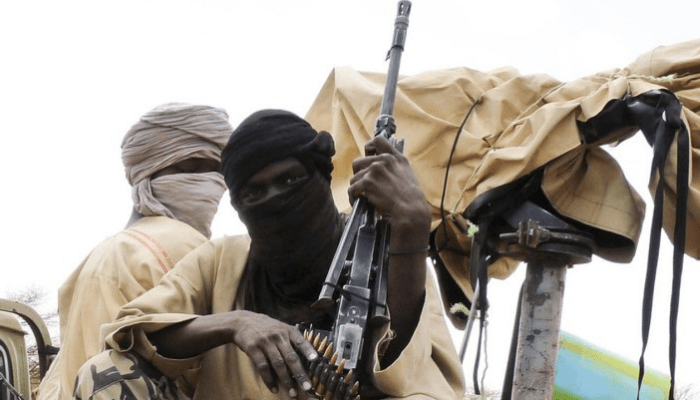
Armed groups operating across parts of Nigeria are shifting from opportunistic kidnappings to more coordinated and territorially assertive strategies, with the Yikpata orientation camp of the National Youth Service Corps (NYSC) in Kwara State, identified as a potential soft target in the North Central region, a new report by SBM Intelligence has revealed.
In its latest weekly security report, SBM said recent violent incidents in parts of Kwara and neighbouring states suggest an evolving pattern in which criminal networks are testing the limits of overstretched security formations.
The proximity of the NYSC camp to emerging flashpoints, the report noted, places corps members and staff within what it described as a “high-risk corridor.”
“Due to its proximity to the violence, corps members and staff at Yikpata are now in a high-risk area.

“Any spillover would place them in immediate danger, as the camp is a soft target.
“Given the current trajectory, the Yikpata NYSC orientation camp is no longer just “at risk”. It is likely being mapped as a strategic hostage asset”, part of the report stated.
According to SBM, armed groups in the region are increasingly deploying what analysts term “saturation tactics”, mobilising in numbers to overwhelm small security posts and exploiting gaps in reinforcement.
In some cases, officers are deliberately targeted to seize service rifles, further weakening local resistance capacity.
The report also highlighted a “revolving-door kidnapping economy” in parts of Kwara South, where fresh abductions occur shortly after victims are freed.

Read also: Plateau killings brutal assault on Christians – ECWA president
This pattern, SBM said, strains security deployments and creates opportunities for secondary attacks or diversionary operations designed to confuse response teams.
Beyond the North Central, the report pointed to similar tactical shifts nationwide.
In the North West, Kaduna continues to record frequent abductions of Catholic clergy, while in the North East, fighters linked to the Islamic State West Africa Province (ISWAP) are reportedly experimenting with economic disruption tactics, including the destruction of transport vehicles along key supply routes without looting cargo, a move interpreted as an attempt to assert territorial control.
In the South East, SBM linked recent violence in Ogidi to suspected cult reprisals involving the Neo-Black Movement (NBM), warning that delayed law enforcement action could trigger retaliatory attacks.
The report also referenced isolated incidents attributed to elements of the Indigenous People of Biafra (IPOB), despite an overall decline in sit-at-home enforcement activities.
SBM report concluded that the emerging pattern reflects a broader transition from isolated ransom-driven crimes to operations aimed at controlling territory, intimidating communities, and exploiting manpower shortages within security agencies.
It urged proactive deployments, improved intelligence coordination, and strengthened protection for vulnerable public institutions to prevent further escalation in the coming weeks.