…Tackles economy team on unrealistic budget assumptions, implementation failures
…Chides Edun, Finance minister, others over poor execution of prior budgets
The Senate has signalled it may trim the N58.47trillion 2026 Appropriation Bill over concerns that the proposal is built on shaky revenue assumptions and a troubling record of poor implementation.
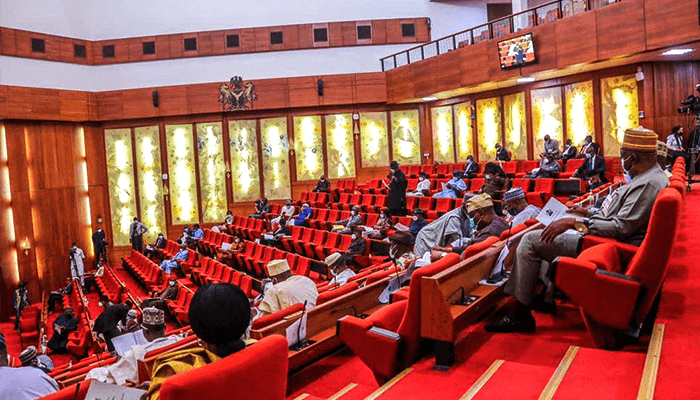
Lawmakers, during a tense session with the federal government’s economic team on Thursday, questioned the credibility of key projections underpinning the budget and warned that approving figures that cannot be funded would only widen the country’s debt burden.

The pushback came at an interactive meeting between the Senate Committee on Appropriations, chaired by Solomon Adeola (Ogun West), and top fiscal officials to review the feasibility of implementing the 2026 budget and to assess progress on the capital components of the 2024 and 2025 budgets, which are expected to be concluded by March 31, 2026.
Read also: Cardoso says cross-border payments too slow, costly for developing economies
Wale Edun, the Finance and Coordinating Minister of the Economy, was the first to face scrutiny.
His explanation that the capital components of the 2024 and 2025 budgets were still being funded failed to convince the committee.
However, Zacch Adedeji, the Nigeria Revenue Service chairman, defended the implementation challenges, telling lawmakers that unrealistic projections inevitably lead to weak execution.

“Budget funding must come from realistic projections.
“Efficiency is not about the size of the budget but about how much can actually be implemented.
” If you think you have ten units and spend accordingly, that is manageable.”
He added. “But if you assume you have one hundred and spend based on that assumption, you may run into serious problems if the funds do not materialize”, he said.
But the committee, through its Chairman, Adeola, reminded the NRS boss that budget documents originated from the Executive, which NRS is part of.
“This document before us originated from the executive.
“The projections and challenges came from the executive arm, not the legislature.
“The gap between projected and realized oil revenue is wide.
“For example, how do we explain 18 percent performance in one year and projections of 36.5 percent the next year when actual performance is still below expectations?
“So the question is: Do we reduce the N58.472trillion 2026 budget, or do we proceed and make adjustments? Debt financing is already high.
“If certain assets were disposed of and used to reduce debt, two things would happen: the overall debt stock would reduce, and future borrowing costs could also decline”, he said.
Read also: Nigeria’s failing education, health system hurt earnings — World Bank
Doris Uzoka-Anite, the Minister of State for Finance, however, assured the committee that full implementation of the 30 percent capital components of the 2024 and 2025 budgets would be completed before March 31, 2026.
She said, “Regarding the 2025 budget, funding processes are beginning. Payments for outstanding 2024 capital projects start today.
“The financial management system is back online. For 2025, MDAs have been asked to upload their cash plans by Monday, after which payments will commence.
“We are ready to start, but the MDAs must complete their documentation requirements”.
The committee subsequently proceeded into a closed-door session with the economic team, which lasted about two hours.
Atiku Bagudu, the Budget and Economic Planning Minister, and Shamseldeen Ogunjimi, the Accountant-General of the Federation, were also in attendance.